 Widely read:


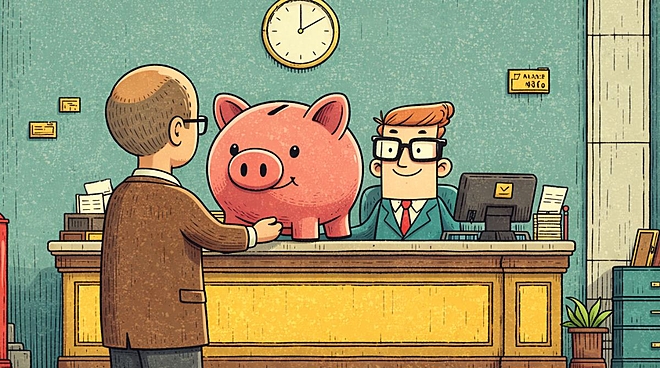 Aditya Roy/AI-Generated Image

Summary: When a friend texted asking whether to sell his equity funds for a short-term crunch, the answer wasn't yes or no. It was a question he hadn't thought to ask himself first.
"I need Rs 3 lakh urgently. Should I redeem my mutual funds?"
A friend texted me last month. When we spoke, his voice was steady, but there was an undercurrent of hurry.
"What happened?" I asked.
"Nothing big. Just a short-term cash crunch. I'll rebuild it in a few months anyway."
To him, it was already settled. Money needed, investments sold, problem gone. Clean and simple.
That's the default move for most investors. When life needs cash, the portfolio is the first place they look.
The cost you don't see coming
"Which fund are you thinking of selling?" I asked.
"My equity fund. It's done well. I'll just pull some out."
That's where I had to slow him down.
When you redeem, three things happen in the background.
You will owe tax. You might get hit with an exit load. And then there's the third thing, the one nobody talks about enough: you break the chain of compounding.
That last one is invisible on paper. But over time, it's the most expensive of the three.
"Think of it this way," I said. "You're not just withdrawing Rs 3 lakh. You're also giving up everything that money was going to grow into."
He was quiet for a moment.
"But I'll put it back," he said.
"Maybe," I said. "But the market won't wait for you. And honestly, how many of us actually follow through on 'I'll invest it back later'?"
The option most investors don't even know exists
"So what do I do instead?" he asked.
"You don't have to sell at all," I said. "You can borrow against your mutual funds."
A beat of silence.
"That's actually a thing?"
It is. And it surprises me how few investors know about it.
A loan against mutual funds lets you pledge your units as collateral and borrow a portion of their value. Your investments stay untouched. They keep compounding. You get the cash you need without actually exiting the market.
"You pay interest only on what you borrow," I explained. "And your money keeps working in the background."
"Sounds like a no-brainer," he said.
That's exactly where I had to pump the brakes.
When it actually makes sense
"It's not a no-brainer," I said. "It's a tool. And tools only work when you use them right."
It makes sense when the need is real and short-term. When you're confident you can repay within a few months. When you want to sidestep the tax hit or exit load. When you genuinely don't want to disturb a long-term position.
Think of it as a bridge. You need to cross a short gap, so you use a bridge, not tear down your house to pave a temporary road.
"That's basically my situation," he said. "I need it for maybe two months."
"Then it could work," I said. "As long as you're serious about closing it on time."
Where it goes wrong
"What's the catch?" he asked.
There's always one.
"The interest, for starters," I said. "This isn't free money. You're paying for the breathing room."
He nodded.
"And if you drag it out, it stops being a short-term fix."
Loans have a way of stretching. A two-month bridge has a funny way of becoming a twelve-month habit.
"There's also a market risk," I added. "If your pledged funds drop sharply, the lender can ask for more collateral or partial repayment. A lot of people don't see that coming."
"So it's not risk-free," he said.
"No. It's just a different kind of risk."
But the bigger danger is behavioural. Some investors start treating this as easy liquidity—borrowing for convenience, rolling over loans, pushing repayment down the road. When that happens, the tool turns on you.
The right order of questions
He was quiet for a bit, thinking it through.
"So what would you do in my place?" he asked.
"Before anything else," I said, "answer three questions honestly."
Do you have an emergency fund you can tap first? Is there a cheaper borrowing option available? And is this genuinely a short-term need or are you telling yourself it is?
Only once you've worked through those does a loan against mutual funds even belong in the conversation.
"And if I do go that route," he asked, "where does redemption fit?"
"Last," I said. "Not because selling is wrong. But because it's permanent. When you redeem, you close a chapter of compounding that you can't reopen. When you borrow, you're just buying time. And time, at least, has a price tag."
A few days later
He called back.
"I'm going to take the loan," he said. "I'll close it in two months."
"Good," I said. "Just make sure two months actually means two months."
He laughed. "Why do you sound like you're already sceptical?"
"I'm not sceptical of you," I said. "I'm sceptical of how easy it is for short-term decisions to become long-term ones."
A pause.
"Fair point," he said.
The real question underneath all of it
Investors often believe that not selling is always the smarter call. Sometimes it is.
But borrowing against your investments isn't a free pass to dodge hard decisions. It's just a different choice, with its own costs and risks attached.
Used with intention, it can protect what you've built. Used carelessly, it creates a new set of problems you didn't sign up for.
The difference isn't in the product, but in the honesty and discipline you bring to it.
In investing, the hardest decisions are rarely about what's available to you. They're about what's actually appropriate for you.
And sometimes the smartest move isn't just avoiding the sale. It's being honest, first, about why you need the money at all.
Also read: Is there a best date to start a SIP?
This article was originally published on March 19, 2026.
Disclaimer: This content is for information only and should not be considered investment advice or a recommendation.
For grievances: [email protected]
Ask Value Research 
 New episodes every Friday






 New Process Alert
 Seems like you've uploaded a wrong QR code. Please upload the QR code downloaded from MF Central platform.


