 Widely read:


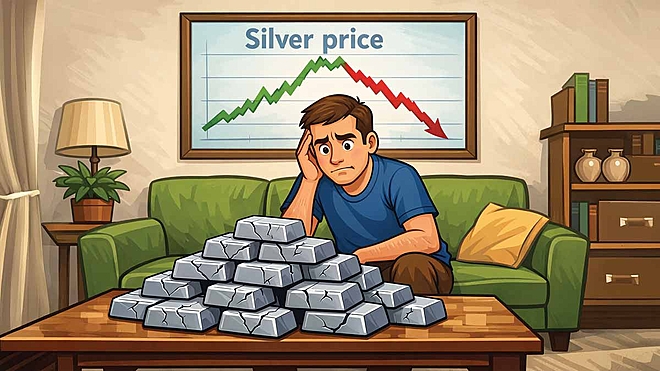
Summary: Silver ETFs have gone from quiet to frenzied in a year. Volumes have exploded. Prices have surged. But here’s the catch: when demand runs ahead of value, investors can overpay without realising it. This piece explains what to check before you click ‘buy’.
Summary: Silver ETFs have gone from quiet to frenzied in a year. Volumes have exploded. Prices have surged. But here’s the catch: when demand runs ahead of value, investors can overpay without realising it. This piece explains what to check before you click ‘buy’. A good way to gauge how ‘hot’ an asset is at any moment is to consider its trading activity. As volumes jump, what once may have been a quiet corner of the market instead becomes a noisy, one-way trade. That is exactly what has happened with silver or more precisely silver ETFs. Over the past year, turnover in silver ETFs (total value bought and sold daily) has exploded. In January 2025, average daily turnover sat at Rs 4 crore and a year later, it is Rs 327 crore. One obvious reason was the metal’s rally. And another was the convenience of ETFs (that can be bought from an exchange just like any share), which made them an investor favourite. High activity however, becomes a problem even in simple instruments like ETFs when excess demand pushes prices away from the actual value of the underlying metal. Price is not always value An ETF has a net asset value or NAV. That is the per-unit value of the assets the fund holds. Then there is the trading or market price on the exchange at which the ETF is bought or sold. In an ideal world, t
This article was originally published on February 20, 2026.
This story is not available as it is from the Mutual Fund Insight March 2026 issue
Read other available articlesAdvertisement
 New episodes every Friday











 New Process Alert
 Seems like you've uploaded a wrong QR code. Please upload the QR code downloaded from MF Central platform.


