 Widely read:


 Anand Kumar
Summary: Checking your portfolio often feels responsible. But what if it’s hurting your returns? This story explores why measuring every market move can backfire and how a simple shift in approach can make investing calmer, steadier and far more effective.
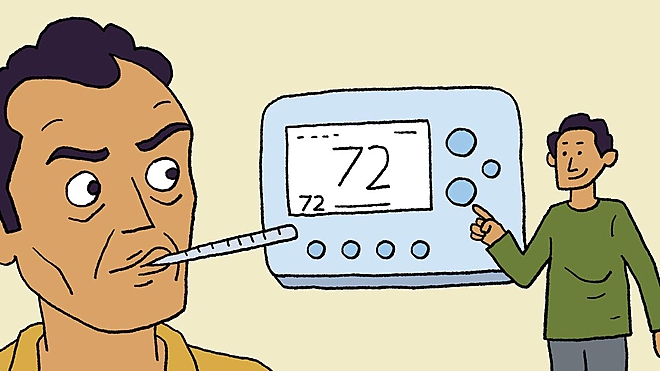
Summary: Checking your portfolio often feels responsible. But what if it’s hurting your returns? This story explores why measuring every market move can backfire and how a simple shift in approach can make investing calmer, steadier and far more effective. It was 3 AM when Rahul checked his portfolio for the seventh time that day. The Indian markets had closed hours ago, but the US markets were open, and his tech-heavy portfolio was down another 2 per cent. He had already moved 15 per cent to cash that afternoon. Should he move more? By morning, he had changed his mind multiple times. A few weeks later, those same holdings had recovered. But Rahul’s portfolio lagged; he had locked in losses and missed the rebound. His problem wasn’t that he was measuring his portfolio’s temperature. It was that he had no thermostat. The thermometer trap How many times last week did you check your portfolio? If you are like most investors, probably more often than you would admit. We have become obsessed with taking our portfolio’s temperature, tracking daily swings, refreshing apps, watching every tick. But here’s the paradox: the more you measure, the worse you tend to perform. Constant monitoring creates an illusion of control. Each check feels responsible. In reality, it exposes us to noise. Daily swings are mostly meaningless, yet our brains treat every dip as danger and every spike as opportunity. Loss aversi
This story is not available as it is from the Mutual Fund Insight March 2026 issue
Read other available articlesAdvertisement
 New episodes every Friday











 New Process Alert
 Seems like you've uploaded a wrong QR code. Please upload the QR code downloaded from MF Central platform.


