 Widely read:


 Anand Kumar
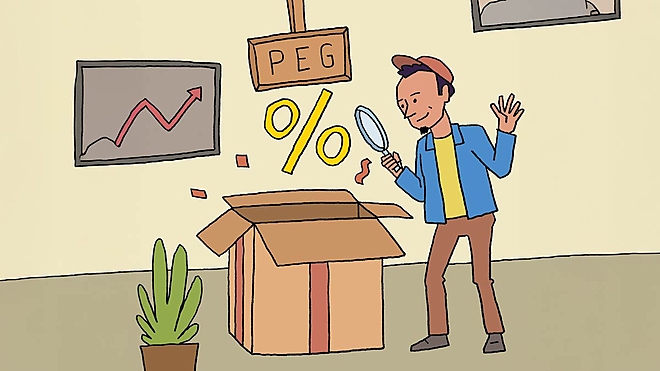
Summary: PEG looks like a neat shortcut to balance price and growth, but real market winners do not cluster at ‘low PEG’ levels. Turnarounds, cyclicals and durable compounders often break the ratio’s logic because the real risk is not valuation, it is expectations.
Summary: PEG looks like a neat shortcut to balance price and growth, but real market winners do not cluster at ‘low PEG’ levels. Turnarounds, cyclicals and durable compounders often break the ratio’s logic because the real risk is not valuation, it is expectations. Since September last year, Indian equity indices have largely gone nowhere. At the headline level, very little seems to have happened. However, at the stock level, a lot has. Of a universe of more than 4,500 listed companies, only about a quarter are in the green. The rest have suffered declines ranging from mild corrections to 20-30 per cent drawdowns. A striking 17 per cent of stocks are down more than half. This has not simply been a market crash, but a slow, selective unwinding of excess. For investors, this is usually when the hunt begins: flat indices, bruised stocks and the temptation to believe that ‘value has reappeared’. But the hunt quickly runs into an old problem: How does one balance growth with valuation when the future is uncertain and the past looks deceptively precise? The seduction of the PEG ratio This is where simple heuristics gain power. When uncertainty rises, investors reach for ratios that promise clarity. Few have acquired as much near-automatic authority as the price/earnings-to-growth or the PEG ratio. In theory, PEG offers an elegant answer. It adjusts valuation for growth and is meant to show whether a stock is cheap or expensive relative to its potential. A high P/E may be justified if growth is strong; a low one may not be cheap if growth is weak. In practice, PEG quickly becomes a rul
This article was originally published on February 01, 2026.
This story is not available as it is from the Wealth Insight February 2026 issue
Read other available articlesAdvertisement
 New episodes every Friday











 New Process Alert
 Seems like you've uploaded a wrong QR code. Please upload the QR code downloaded from MF Central platform.


