




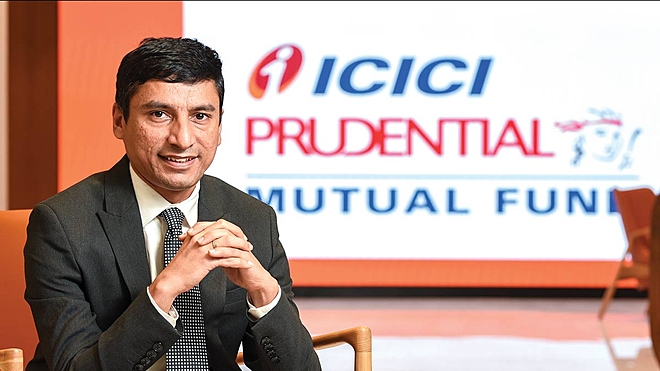
Summary: Indian pharma may look fully priced, but Dharmesh Kakkad of ICICI Prudential AMC argues that the strongest growth is still ahead. With regulatory support boosting biosimilars, innovators outsourcing more to CDMOs, and specialty therapies gaining traction, he believes select companies can deliver sustained, long-term compounding.
Summary: Indian pharma may look fully priced, but Dharmesh Kakkad of ICICI Prudential AMC argues that the strongest growth is still ahead. With regulatory support boosting biosimilars, innovators outsourcing more to CDMOs, and specialty therapies gaining traction, he believes select companies can deliver sustained, long-term compounding. Pharma stocks may look fully valued to many investors, but ICICI Prudential AMC’s Dharmesh Kakkad believes the market is underestimating how much growth still lies ahead. According to him, this is not a case of growth being “over and done with”. With Indian pharma companies expanding beyond plain-vanilla generics into specialty therapies, complex formulations and export-led opportunities, especially in the US, the growth runway, in his view, remains intact. Presently, Kakkad, Senior Fund Manager – MF at the fund house, manages multiple equity and hybrid schemes, including the five-star-rated ICICI Prudential Pharma Healthcare and Diagnostics (P.H.D) Fund, which has an asset base of Rs 6,460 crore. In this interview, he discusses how he evaluates pharma valuations bottom-up, identifies long-term winners across sub-segments such as CDMO and biosimilars and applies valuation discipline across healthcare themes. Large-cap pharma companies remain the default choice for most investors. Is this mainly about safety and scale, or is the opportunity set outside large caps genuinely limited? At their current size, can these companies still compound meaningfully? Large-cap pharmaceutical companies have done a fairly good job in delivering performance over time. Importantly, this growth has not stalled. Even today, the largest pharma companies are growing faster than the overall domestic market. In addition, they have meaningful exposure to export markets, particularly the US, which continues to offer growth potential. This is not a case of growth being over and done with. The US market remains a large opportunity. For example, one large pharma company began focusing on the specialty segment in the US about five years ago. That space itself is very large, and while the strategy was initiated some time back, the growth phase is only now starting to play out. There is still considerable headroom for growth in that segment. Broadly, companies are investing meaningfully in R&D (research and development) to scale up their product propositions. Earlier, Indian pharma companies were largely focused on US generics, and while that remains an impo

 New episodes every Friday











 New Process Alert
  Seems like you've uploaded a wrong QR code. Please upload the QR code downloaded from MF Central platform.


