





An index fund is a type of mutual fund that simply tries to copy the performance of a market index like the Nifty 50 and the Sensex. It does this by investing in the same companies in the same proportion as the index.
When choosing such a fund, two key metrics matter apart from the index’s performance: expense ratio and tracking error. The expense ratio tells you how much the fund charges every year to manage your money, lower is better. Tracking error shows how closely the fund mirrors the index’s returns. A higher tracking error means the fund is deviating more than it should.
Tracking errors happen because of things like delays in portfolio rebalancing, handling dividends or dealing with corporate actions. For example, when a company is added or removed from an index, the fund may take time to adjust its holdings.
Also, price differences and low trading volumes can make it hard for the fund to buy or sell stocks at the exact index price. All this can create small differences between the fund’s returns and the index.
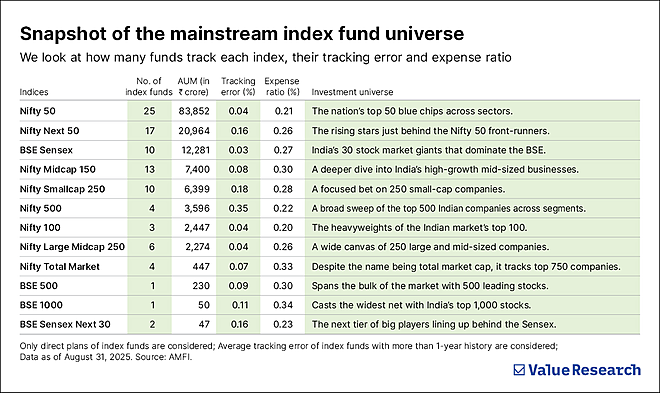
Now that we know what index funds are, let’s look at some mainstream Indian indices, the funds that track them, along with their tracking error and expense ratios.
This article was originally published on October 27, 2025.
Ask Value Research 











 New Process Alert
  Seems like you've uploaded a wrong QR code. Please upload the QR code downloaded from MF Central platform.


