 Widely read:


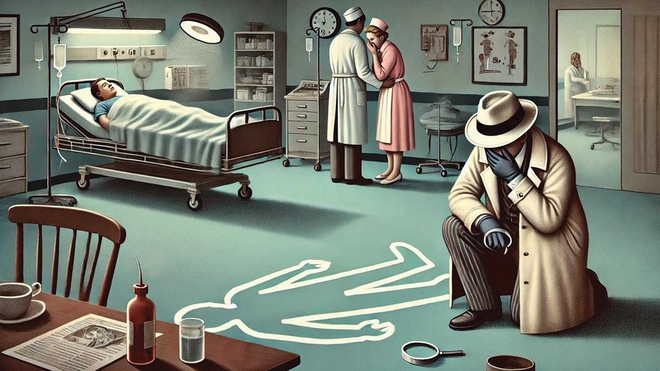 AI-generated image
After a powerful Editor’s Note on the dark side of health insurance, reader Kasturika shared her own troubling experience with claim denial and systemic bias. The response from our CEO, Dhirendra Kumar, turns this into a must-read exchange on fairness, frustration and the need for change.
This month’s Readers’ Voice brings us back to a powerful Editor’s Note written by Dhirendra Kumar from December 2024, ‘Insurance, disease, and murder’. A recent letter from reader Kasturika, written after a deeply personal experience with the health insurance system, echoes the original concerns about fairness, access and the quiet failures built into health insurance systems.
Our CEO Dhirendra Kumar responded to her personally, and we believe the exchange is worth sharing.
Summary
Brian Thompson, the CEO of UnitedHealth’s insurance unit, was assassinated on December 4, 2024, outside a New York hotel. The assailant, described as skilled in firearm use, shot Thompson with a weapon equipped with a silencer. The motive is still under investigation but suggested to be linked to his role in the health insurance industry.
Bullet casings at the scene bore inscriptions like ‘deny’, ‘defend’ and ‘depose’, hinting at a motive related to insurance practices. These appear to reference the book Delay Deny Defend: Why Insurance Companies Don’t Pay Claims and What You Can Do About It. The incident has triggered discussions on the broader implications of insurance claim denials in healthcare.
What stood out was the ‘serves him right’ attitude on social media towards Thompson’s murder.
These reactions reflect deep frustration with health insurance companies, often criticised for denying claims and prioritising profits over patient care.
Regardless of the killer’s motive, the reactions are a warning signal.
The health insurance industry in India mirrors such practices. Insurers often engage in aggressive claim denials, leaving many patients financially strained. The system seems designed more for extraction than serving customers.
Hospitals and insurers blame each other for malpractices. For the people, all they know is that the disease industry and the insurance industry combine to extract everything from victims’ pockets. The murder, while extreme, highlights deep frustrations and the urgent need for systemic change.
Health insurance, which should provide peace of mind, has become a source of anxiety. Claims are denied over technicalities and endless documentation demands wear down policyholders.
The anger towards insurance companies should serve as a wake-up call. The industry must shift from a culture of ‘deny first’ to one that prioritises fair claim settlement and genuine customer service.
What our reader says
Kasturika - I was going through my email archives and stumbled upon this old newsletter that has suddenly become very relevant to me. Health insurance is a critical part of our financial security. However, the way insurance companies operate makes me question if health insurance is still relevant. Insurance providers, it appears, want to offer coverage only to those individuals who are least likely to claim. The elderly and those with pre-existing diseases get slapped with a higher premium. Women, in particular, get the shorter end of the stick as some providers do not fully understand women’s health and flatly refuse coverage.
Last week, I applied to port my existing insurance policy to a different provider because the older provider has seen a spike in operational complaints. The provider I wanted to port to has the best claim settlement ratio in India and the fewest complaints against its name (as opposed to my current provider). However, the new provider rejected my application because I was hospitalised some 10 years ago for an issue that commonly affects women. Now, every medical professional I have spoken to has said that my hospitalisation in the past does not correlate with any future incidence. However, the insurance provider flatly refused to cover me. This indicates that the insurance provider either has poor medical understanding or knows something the medical community doesn’t and is refusing to cover an individual who might require insurance in the future.
I still have an insurance cover (albeit a substandard one). But there may be several who have been denied coverage altogether. It makes me wonder if we should now dedicate a portion of our savings to medical emergencies (similar to how we might create a retirement corpus) instead of relying on predatory insurance companies that charge exorbitant premiums and may still reject claims.
As always, thank you for your thought-provoking insights and advice.
Dhirendra Kumar - Thank you for taking the time to write such a thoughtful note and for following my column so closely. I’m sorry you’ve had to face the very obstacles that the piece was meant to spotlight.
Your story highlights the urgent need for insurers and regulators to bridge the gap between policy language and lived reality.
Setting aside a dedicated healthcare fund, as you suggest, is a wise parallel strategy. But please don’t give up on proper cover just yet. Consider appealing the decision (most insurers have an escalation matrix) or working with a specialised health insurance broker who deals with complex cases; persistence often pays off. Meanwhile, I’ll continue to press for greater transparency and fairer underwriting.
I value readers who push the conversation forward. Your mail does exactly that. Thank you again for writing, and do keep sharing your insights.
This article was originally published on July 20, 2025.
Ask Value Research 
 New episodes every Friday











 New Process Alert
 Seems like you've uploaded a wrong QR code. Please upload the QR code downloaded from MF Central platform.


