




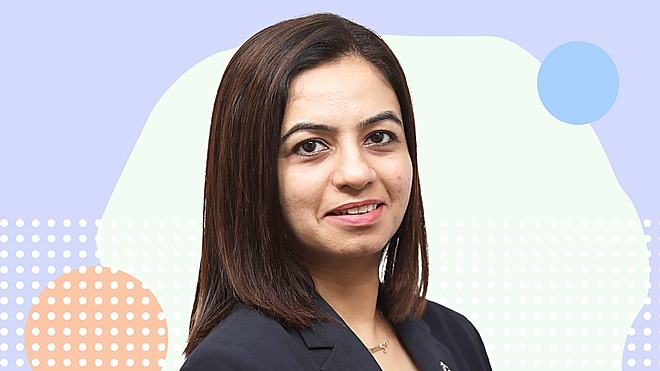

After a volatile few months in the markets, finding attractively priced stocks—especially in the mid- and small-cap segments—is getting tougher. But for Meeta Shetty, Fund Manager at Tata Asset Management, that’s precisely where the hunt begins. With a bottom-up strategy focused on inflection points and improving ROCE profiles, Shetty is recalibrating portfolios like the Tata Focused and Multicap funds to restore performance.
At Tata AMC, Shetty oversees six schemes, with a collective AUM (assets under management) of Rs 28,000 crore. In this interview, she talks about her investing lens, the alpha-compounder balance she seeks and the course correction underway in her funds. Below is an edited transcript of the conversation.
What's your outlook on the Indian equity markets right now? Given the sharp run-up in several sectors, is it tough to find reasonable valuations for deployment?
Yes, I think so. Over the last three to four months, we've seen quite a bit unfold. Initially, there was a sharp correction, especially in some of the mid- and small-cap names. This was followed by a strong recovery, equal to or even slightly higher than the earlier decline, in just the last couple of weeks.
So, yes, from here on, finding opportunities – particularly in the mid- and small-cap segments – is becoming somewhat of a challenge. However, at least when I look at the small-cap universe, it remains quite broad. Today, the small-cap category starts at around Rs 33,000 crore in market capitalisation, and investable ideas can extend to companies with market caps of around Rs 7,000 crore. The investable universe is still large.
Therefore, I wouldn't want to bucket the entire small-cap space as being expensive. There are still opportunities, but they are far fewer than what we had three or four months ago during the sharp correction we saw on the downside.
Can you walk us through your core investment philosophy?
I have a very clear approach to portfolio construction. What I try to do is ensure that the core is bottom-up. I don't like to take sectoral calls. And when I say bottom-up, I am essentially trying to assess whether companies are getting closer to their inflection point compared to their own history, where things may not have been going right for various reasons.
Suppose I'm able to identify such companies at that specific point in time or during that phase of turnaround. In that case, the kind of re-rating opportunity we get in those names is substantially higher. That's what typically generates an alpha for the fund.
The idea is that when I construct the fund, I aim to ensure that at least 50 per cent of the portfolio comprises these types of ideas. The remaining 50 per cent I generally try to allocate to more stable compounders, which help the portfolio remain steady during volatile periods. That's the usual thought process, regardless of whether I'm managing a sectoral, thematic, or diversified fund. If I can structure the fund in this way, over the next three to four years, we will generally be well-positioned in terms of alpha generation. So that's the clear and simple thought process I follow. This is how I like to think and build positions around the portfolio.
Do you follow any specific frameworks or mental models for stock evaluation or building portfolios? What are the key factors you consider while identifying potential stocks for your portfolios?
Yes, absolutely. I think it starts with identifying companies that exhibit an improving return on capital employed (ROCE) profile. A strong ROCE is obviously a good starting point, but if I'm hunting for alpha-generating ideas, I need to find businesses where ROCE is expected to expand going forward.
That expansion could be driven by higher revenue, better margins, a more efficient working capital cycle and/or operational improvements. There can be multiple drivers at play, but a consistently improving ROCE profile is something I keep a very close watch on.
Additionally, we regularly assess growth visibility – where will future growth originate? We engage with industry experts, speak with company management, study the balance sheet in detail and also evaluate the risk profile to evaluate the potential downside risk. If things don't play out as expected, on the positive side, then how much drawdown could we be exposed to? That's an important consideration.
So, I'd say the key elements are a rising ROCE over the next three years, strong long-term growth visibility and assessing the size of the addressable market. Even the best management can only do so much if the industry itself is structurally constrained; therefore, we factor that in as well.
Finally, we examine valuation: Am I buying the stock at a level where the re-rating potential is significant? All of these factors together help shape both my stock selection and portfolio construction process.
From the broad universe of stocks, how do you identify potential ideas for your portfolios? Could you elaborate on your process?
To be honest, there is no clear-cut scientific formula for this. It's a continuous and dynamic process. We regularly meet with companies and conduct our checks and balances. Ideas begin to form gradually through these ongoing interactions.
Within the team, we constantly discuss various companies, sectors and developments. Often, idea generation happens somewhere in between all these conversations and research inputs. There isn't one fixed method; it's not formula-driven. The role of a fund manager is quite fluid, and we're processing a lot of information daily.
Given the experience each of us brings to the table, along with our expertise in managing funds and support from the analyst teams, idea evaluation is an integral part of our daily workflow. Over time, as we continue to track companies and the comfort level builds, especially on parameters such as improving ROCE, visible growth recovery and valuation comfort, that's when we become more constructive with our ideas.
Once those factors start aligning, that's when I begin to look at a stock as an opportunity and start evaluating it from an allocation perspective.
The Tata Focused Fund has consistently been in the third quartile over both one- and three-year periods and currently holds around 8 per cent of its portfolio in cash. What, in your view, has led to this prolonged underperformance? How do you plan to reposition the fund to revive returns?
Sure. Until December, we had been holding steady in the second quartile, both on a one-year and three-year basis. However, over the last six months, we've seen some slippage, primarily due to a few stock-level issues, particularly within the alpha bucket that I mentioned earlier, which is part of the compounder portion of the portfolio.
Some of those alpha ideas didn't pan out as I had expected, and that impacted performance. As for the cash holding, it reflects a transition phase. We're currently in a rejig mode, where we are reassessing and replacing some of the alpha ideas that haven't worked out. I've created a pipeline of new alpha candidates, and we are in the process of adding them to the portfolio.
Therefore, the current underperformance is primarily attributable to a few alpha positions that have not delivered their expected returns. However, as new ideas are introduced and the mix of alpha and compounders is rebalanced, you should begin to see a recovery in performance.
The Tata Multicap Fund is relatively new but has underperformed its peers and the benchmark over the last one year. Since you've just taken over, what changes do you plan to make?
It has only been about three to four months since I took over the Multicap Fund, but I've already implemented a couple of key changes that I'd like to highlight.
First, the fund previously held close to 80 stocks, and the portfolio had a long tail, which I've worked on trimming. We are now down to roughly 65 stocks. It's not that we exited a particular sector. Instead, these were positions with minimal allocations where I wasn't entirely comfortable with the names.
The second major change relates to small-cap exposure, which was around 36 per cent earlier. It has now been brought down to about 25-26 per cent. This isn't due to any top-down call on the small-cap segment or a shift in preference toward other market caps. Rather, it reflects my comfort level with the individual names. We've also added a few small-cap stocks over the past few months. However, because the long tail has been cut, the overall small-cap allocation has naturally decreased. At the same time, we've increased our large-cap exposure from about 34-35 per cent to around 43-44 per cent.
On the sector side, we made a meaningful shift in the BFSI segment. In the very first month after I took charge, we increased our weight here, from an underweight position to now being more neutral or equal weight.
These are the key changes I've implemented so far to streamline the portfolio and enhance its positioning going forward.
Also read: High-quality stocks are back in favour: Vinay Paharia
Ask Value Research 
 New episodes every Friday








 New Process Alert
  Seems like you've uploaded a wrong QR code. Please upload the QR code downloaded from MF Central platform.


