 Widely read:


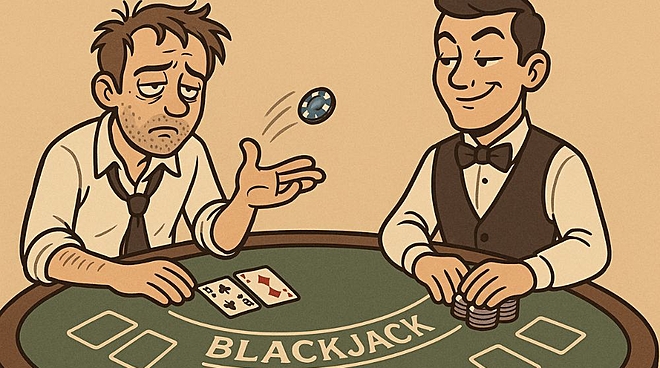 AI-generated image


The meteoric rise of fantasy gaming platforms like Dream11, with its staggering revenue of Rs 6,400 crore in FY23, reveals something fundamental about human nature. These gaming apps have masterfully tapped into our inherent gambling instinct while carefully navigating India's legal landscape by positioning themselves as "games of skill." This distinction - skill versus chance - is crucial yet increasingly blurred in today's financial landscape.
It is fascinating how this same gambling impulse manifests in supposedly sophisticated financial markets. The explosive growth of Futures and Options (F&O) trading among retail investors mirrors the gaming app phenomenon. Both activities offer the same psychological cocktail: the thrill of potential quick gains, the dopamine rush of a win, and the "just one more try" mentality after a loss. Both wrap themselves in a veneer of expertise and skill while primarily operating on chance for most participants.
Suggested read: India's gambling industry
Here's an uncomfortable truth: for the average participant, both fantasy gaming and F&O trading are mathematically designed to favour the house. The platform takes a cut in these gaming apps regardless of which user wins. With F&O, the brokers collect fees on every transaction, while market makers and institutional players with sophisticated algorithms and information advantages consistently extract value from retail traders. The SEBI report showing that 9 out of 10 individual F&O traders lose money isn't surprising - it's the expected outcome of a system built this way.
The contrarian perspective, which has merit, suggests that if you absolutely must scratch the gambling itch, fantasy gaming platforms might be less financially destructive than F&O trading. At least with gaming apps, your losses are typically capped. With leveraged F&O positions, however, losses can quickly spiral into multiples of your initial capital.
Suggested read: Derivative delusion
Both activities share another common trait: they're marketed as games of skill and analysis. Fantasy gaming app users pore over player statistics and match conditions, convinced their superior knowledge will yield consistent returns. F&O traders similarly believe their technical analysis of charts, understanding of market psychology, or insight into economic trends gives them an edge. For a tiny minority, this might be true. For most, it's an expensive illusion.
The most insidious aspect is how both activities distract from genuine wealth-building. Time spent optimising fantasy teams or day-trading options is time not spent on developing career skills, building businesses, or constructing sensible long-term investment portfolios. The mental bandwidth consumed by these activities represents an opportunity cost rarely factored into the equation.
Some emerging fintech startups are attempting to bridge this gap with "fantasy stock trading" apps - platforms that harness the engaging elements of gaming while teaching investing principles without real money at risk. This approach might effectively channel the gambling instinct toward educational ends, though the real-world application remains questionable.
The fundamental challenge isn't eliminating the gambling instinct - it's likely hardwired into us through evolutionary rewards for risk-taking. Rather, it's about developing a conscious relationship with this instinct. Understanding that the urge to place speculative bets is natural doesn't mean we must act on it unchecked.
Successful investors learn to separate their gambling instinct from their investment process. They might allocate a small "play money" account - perhaps 5 per cent of their capital - to satisfy the craving for action and excitement. Meanwhile, they manage most of their wealth with disciplined, evidence-based approaches focused on long-term growth rather than immediate gratification.
The most valuable investment skill may not be picking winners but understanding yourself. Recognising when your decisions are driven by the gambling instinct rather than sound analysis is the first step toward financial wisdom. As Charlie Munger wisely observed, "The first rule of compounding is never to interrupt it unnecessarily."
Whether through fantasy sports or financial markets, the house always wins when you play their game. The truly skilled investor knows when not to play at all.
Also read: Taking it easy with Charlie Munger
Ask Value Research 
 New episodes every Friday









 New Process Alert
 Seems like you've uploaded a wrong QR code. Please upload the QR code downloaded from MF Central platform.


