 Widely read:


 Anand Kumar
Whenever the stock markets behave how they did at the end of 2024 and the first quarter of 2025, they set us thinking - are we in the right funds? Are we with the right sectors and stocks? Did our advisors give us the right advice? Well, fortunately or unfortunately, it depends on how you look at it; this is not only or not even directly about your portfolio, but also not about the right sectors or stocks! So, the right question is not whether we are in the right fund, portfolio, sector or stocks; you can always do something better. The right question is probably whether we are on the right planet and in the right asset class.
It's not like someone woke up one fine morning and decided India is a bad market, and that let me sell India. This is global uncertainty amidst Mr Trump's initiative to change the world order. If globally, emerging markets' funds see a withdrawal of $100 billion, it's not unlikely that we in India would have $15-20 billion of withdrawal from our markets.
- This is not just about your portfolio; it is much larger.
- Don't sell because foreigners are selling.
Let me illustrate this with a story from the Panchatantra tales - The Cap Seller and the Monkeys. Once upon a time, a cap seller travelled from village to village selling colourful caps. One day, feeling tired, he decided to nap under a tree and soon fell asleep, leaving his basket of caps beside him.
Quite unknown to him, the tree was home to a troop of mischievous monkeys. The curious monkeys came down, took the caps and wore them. When the cap seller awoke, he was horrified to find his caps gone. But then he noticed the monkeys in the tree wearing his caps and mocking him.
He tried everything to get them back, shouting and gesturing, but to no avail. Frustratedly, he took off his cap and threw it on the ground. To his surprise, the monkeys imitated him and threw their caps down, too. The cap seller quickly gathered all the caps and went on his way, grateful for the lesson in cleverness.
Don't throw your caps because someone else is throwing them in frustration. Selling in Indian markets for fear of global trade war is making our markets cheaper, even as we will likely be a significant relative gainer in the medium to long term. So, while recent times have been about digging into and re-evaluating portfolios, the question remains: is this even about your portfolio? The message still stays - avoid panic and remain invested. On the other hand, if you have your wits about yourself, take benefit of the panic.
We can have long debates and discussions about how ugly the rearview mirror looks in the markets in early 2025 and what you or your advisor could have done differently. Still, the following rules about investing in equities are eternal:
- When the rearview mirror looks bad, that is when the windscreen starts to look bright and sunny.
- People who invest when the results of existing investments look great and hold back when the results of existing investments look bad will never create wealth.
- Wealth is not created in bull markets. Wealth is created by investing amidst tough times which shows up as appreciation in the account statements in good times.
- People sometimes say they will invest when some clarity will emerge. When clarity emerges, you will not reach these levels. The brownies are for investing amidst a lack of clarity.
- People sometimes lack confidence in investing; the problem is that you will feel confident after past returns look great. Your current level of confidence has nothing to do with your future returns.
Amidst such uncertainties, gold has gone up a lot and is scaling new all-time highs, so that's what generates confidence nowadays. Two years back, when I was involved in creating a true-to-label multi-asset allocation fund, which was tasked with providing fixed income plus returns with low volatility, our models suggested a 24 per cent allocation to gold and a 26 per cent allocation to equity. When such a proposal was put up, some asked what you would achieve with such high exposure to gold. It has been Rs 60,000 per 10 grams or $1800-1900 per ounce for ages; equity, on the other hand, is the place to be in.
Now, when equity has disappointed and gold is reaching new highs, everyone is asking whether to invest in gold. I believe that gold will be in play till there is global uncertainty, especially involving currencies and trade. These are times when, after taking a beating for being overexposed to any one asset class like equity in the current scenario, willingness to invest in other asset classes or hybrid funds or asset allocation is high. For the record, gold is now at 15 per cent, and equity is at the higher end of its band, nearing 35 per cent. The key is not to change any asset class but to understand the importance of asset allocation.
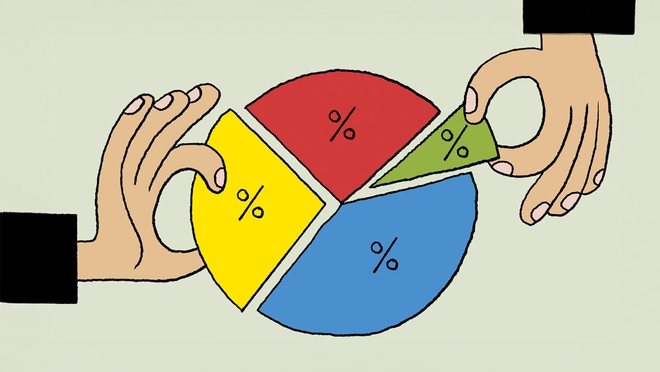
Disciplined investors understand that asset allocation is crucial for long-term financial success. The principle behind asset allocation is diversification, which ensures that even if one asset class underperforms, others may balance the overall portfolio performance.
But who can do asset allocation and stick to it, and under what conditions can it be done and adhered to? Successful asset allocators remain steadfast during market volatility, resisting the temptation to make impulsive decisions based on short-term market trends. They possess a contrarian mindset, willing to invest in an asset that no one is willing to consider, like understanding the value of investing in gold when everyone was 'dead' sure about equities. It cannot be done by people who are too sure about any asset class or market pattern. Successful asset allocators must invest in undervalued assets during downturns and reap the benefits when the market recovers. However, to take advantage of a downturn, you need to have money in debt or gold or some other asset class to switch or rebalance from equity. Open-mindedness and flexibility are also essential, as these individuals reassess and adjust their portfolios in response to changing economic conditions, not just their own financial goals.
By maintaining a disciplined approach, being contrarian, open-minded and probabilistic, i.e. being open to all possibilities and not being 'dead' sure about anything, one can effectively navigate the complexities of the market and achieve sustainable growth in wealth with low volatility over time.
Aashish P Somaiyaa spearheads WhiteOak Capital Asset Management Limited as their CEO.
Ask Value Research 
 New episodes every Friday











 New Process Alert
 Seems like you've uploaded a wrong QR code. Please upload the QR code downloaded from MF Central platform.


