




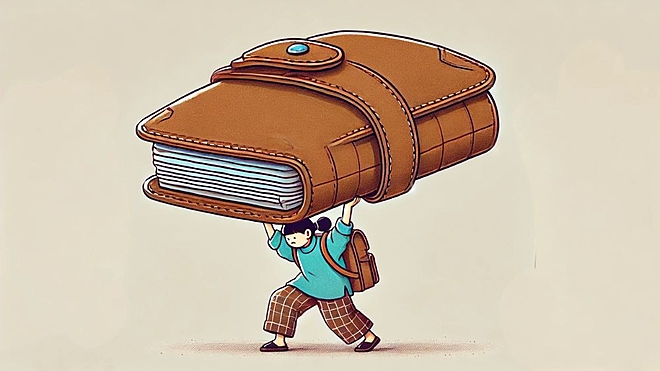
 AI-generated image

Summary: Money anxiety rarely announces itself loudly. It creeps into everyday decisions that feel heavier than they should, and the constant mental math runs in the background. This story traces how those feelings showed up in my life, and the small shifts that helped me feel steadier.
Rent day used to arrive with a tightness in my chest and a faint, sour nausea, the kind that makes you refresh your UPI screen as if willpower can fix a failed payment. It took me a while to admit that what I was feeling wasn't just 'being bad with money'. It was anxiety, and it was showing up right where life is most ordinary.
When I was a child, most of my pretend games were elaborate rehearsals of adulthood, with one unspoken requirement: my adult self would have money. Whether I imagined being an astronaut, shopkeeper, chef or Ferrari-driving movie star, the future always looked comfortably funded. Children don't dream big so much as they dream well, buoyed by the quiet security of being protected by parents. Then we grow up, and the dreams take a backseat to survival.
We probably feel money's presence in our lives much more once we grow up, because it's then that we are expected to manage it. And money, it turns out, is emotional. It touches everything: our mood, our sleep, our relationships, even our self-worth. It isn't just about how much you have. It's about how safe it makes you feel.
Last December, I had to make a decision. A trip with friends – our first get-together since graduation – was coming up, but the flight ticket alone would cost me half my salary. I assumed others might skip it, too, but it turns out they had credit card points to soften the blow. I didn't. I was about to be the only one not going. So I had to decide: bank balance or joy?
I bought the tickets on impulse. It was terrifying. But also strangely empowering. I was the only one funding the trip from my salary while also living independently. That fact alone helped me feel better about the decision, even though I had to dip into my emergency fund the next month. I had an emergency fund to dip into! That trip was the most expensive one I had taken since college began, and not once did I have to ask my parents for help or permission. That was the win.
Financial security isn't about never spending - it's about giving yourself the confidence to make meaningful choices, even if they come with a little risk. It isn't just about having money to save for a new TV or a vacation, either; it's knowing you can handle a broken phone or a surprise medical bill without spiralling.
Nine months ago, a heavy pressure in my chest and a little nausea (which I later identified as dread) came along with rent day. My landlord had very helpfully set the date up near the end of the month. Maslow's hierarchy of needs tells us that safety and security form the foundation for growth. You can't chase your dreams or become your most creative, fulfilled self when your rent is unpaid, and your UPI keeps failing. So I adopted some behaviours to manage my money, and now, even though rent day is not my favourite day of the month by far, it doesn't make me feel like throwing up. Here's what I did and what you can do, too.
If you want a quick, no-fuss way to sanity-check your plan, start with Value Research's tools and calculators.
On strong encouragement from Value Research and other entities in my life, I rebalanced my SIP to still stay consistent while recovering my emergency fund. Stopping or pausing could have meant being reluctant to start again. I also ran the numbers on the SIP calculator so I could feel confident about the plan. When it came to my safety net, I also revisited where to park my emergency fund (this quick explainer helped: Where can I park my emergency fund?). Moreover, I started to journal my spending. Keeping track of what you spend on and how it makes you feel helps separate necessary expenses from impulsive and needless ones.
And for my investments, having a clear view of everything in one place helped too, so I used My Investments to track my portfolio.
No one else should get to decide what you spend on. Money might not buy happiness, but it buys mental peace, which is arguably worth more. If not this, financial security can at least guarantee dessert without having to hear your parents say that there's a Mother Dairy cart outside the restaurant. That's still a win.
Also read:
How to fund a trip without having an income
A homemaker's guide to financial freedom
This article was originally published on April 02, 2025, and last updated on March 02, 2026.
Ask Value Research 

 New episodes every Friday








 New Process Alert
  Seems like you've uploaded a wrong QR code. Please upload the QR code downloaded from MF Central platform.


