 Widely read:


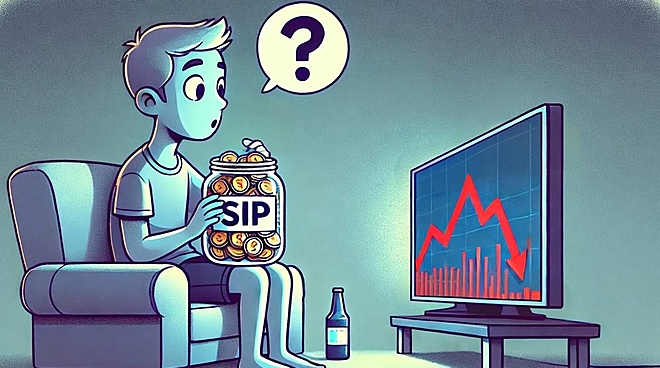 AI-generated image
Small-cap mutual funds have taken a beating this year. As of February 11, the average small-cap fund has been down by over 13 per cent since the beginning of the year. This correction has come swiftly, in less than two months, making many investors anxious about what to do next.
If you are investing in small-cap mutual funds, you may be asking yourself:
-
Should I stop my
SIPs
to avoid further losses?
-
Should I invest more to take advantage of lower prices?
- Will small caps recover, or is this the start of a prolonged downturn?
While these concerns are natural, it is important to remember that small caps are inherently volatile. They tend to experience sharper corrections compared to large caps but have historically rewarded long-term investors who stay invested.
How do small caps usually behave?
History shows that small-cap funds often go through extreme ups and downs within the same year. To understand this better, here's a look at how small-cap funds have performed over the years, how much they fell within the year, their highest return point and where they ended.
The rollercoaster ride of small-cap funds
| Year | Highest return | Lowest return | Returns for the year |
|---|---|---|---|
| 2006 | 40% | -13% | 31% |
| 2007 | 56% | -13% | 56% |
| 2008 | 2% | -66% | -62% |
| 2009 | 99% | -20% | 99% |
| 2010 | 29% | -6% | 19% |
| 2011 | 1% | -27% | -26% |
| 2012 | 42% | 0% | 40% |
| 2013 | 5% | -21% | 5% |
| 2014 | 89% | -5% | 89% |
| 2015 | 11% | -4% | 9% |
| 2016 | 16% | -19% | 5% |
| 2017 | 50% | 1% | 50% |
| 2018 | 3% | -23% | -17% |
| 2019 | 5% | -13% | -1% |
| 2020 | 24% | -36% | 24% |
| 2021 | 62% | -1% | 59% |
| 2022 | 7% | -16% | 2% |
| 2023 | 42% | -5% | 41% |
| 2024 | 29% | -5% | 24% |
| Note: Based on regular plans of small-cap funds with over 10 years of history. | |||
Key takeaways from the data
-
Sharp falls within a year are common: Even in years when small caps delivered positive returns, there were significant drawdowns.
-
Recovery after a crash is often quick: 2008 was a disastrous year (-62 per cent), but those who stayed invested saw a 99 per cent return in 2009.
- Short-term declines don't always mean losses: Even when markets fell during the year, the final returns were often positive.
This reinforces a simple point: if you are investing in small caps, be prepared for sharp corrections. But history shows that those who stayed invested have been rewarded.
Should you stop your SIPs in small caps?
The simple answer: No, unless your asset allocation suggests otherwise.
The key to small-cap investing is having a 7-10-year horizon and being prepared for volatility. If you have been investing with a structured financial plan, stopping SIPs due to a short-term decline could be counterproductive.
Here's why:
-
SIPs work best in volatile markets - By continuing your investments, you buy units at lower prices, improving your long-term cost average.
-
Recoveries tend to be sharp - Small caps often rebound faster than large caps after downturns.
- Long-term returns outweigh short-term falls - As seen in past market crashes, staying invested has delivered better results over time.
However, if small caps make up more than 25 per cent of your equity portfolio, it might be time to rebalance rather than stop SIPs altogether.
Should you invest more now?
While small caps may look attractive after a fall, we do not recommend increasing exposure just because markets are down.
-
If your financial plan already includes small caps, just stick to it.
-
If your portfolio allocation to small caps is already optimal (20-25 per cent), there's no need to add more.
- Market timing rarely works. It's better to stay invested consistently rather than make short-term tactical changes.
What should investors do now?
1. Continue your SIPs. If small caps are part of your long-term plan, stay the course.
2. Review your asset allocation. If small caps have grown beyond 25 per cent of your portfolio, consider rebalancing.
3. Avoid emotional investing. Making investment decisions based on short-term market movements often leads to regret.
4. Stay patient. Small caps can be volatile, but long-term investors have historically been rewarded.
Final thoughts
Market corrections in small-cap funds are normal. They happen frequently, and each time, they test investors' patience. However, history shows that investors who stick to their plans, keep their SIPs running and avoid emotional decisions tend to come out ahead.
Instead of reacting to market movements, ensure your investment strategy is well-structured and aligned with your financial goals. Time in the market is more important than timing the market.
Also read: I invested Rs 3 lakh in small-cap funds last year. Big mistake?
Disclaimer: This content is for information only and should not be considered investment advice or a recommendation.
For grievances: [email protected]
Ask Value Research 
 New episodes every Friday









 New Process Alert
 Seems like you've uploaded a wrong QR code. Please upload the QR code downloaded from MF Central platform.


