 Widely read:


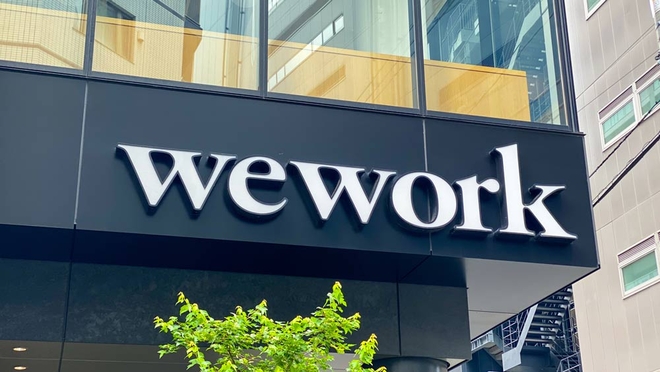
WeWork India is gearing up for a public debut. The company has filed its draft red herring prospectus (DRHP) with the Securities and Exchange Board of India (SEBI), signalling its intent to list on the stock exchanges.
WeWork India: Financial overview
WeWork entered the Indian market in 2017 through a joint venture between WeWork Inc. and Embassy Group, a leading Indian real estate developer. The company offers shared workspaces, private offices, and managed office solutions across eight cities.
WeWork India recently turned profitable for the six months ending September 30, 2024, with a net profit of Rs 175 crore due to deferred tax credit. But this comes after years of heavy losses—Rs 136 crore in FY24 and Rs 147 crore in FY23, mainly due to high depreciation costs of Rs 394 crore.
Numbers at a glance
| Particulars | FY24 | FY23 | FY22 | Growth (% pa) |
|---|---|---|---|---|
| Revenue (Rs cr) | 1,665 | 1,315 | 784 | 45.7 |
| Operating profit (Rs cr) | 357 | 190 | -270 | 82.3 |
| Operating margin (%) | 21.4 | 14.4 | -34.4 | 61.9 |
| Profit after tax (Rs cr) | -136 | -147 | -643 | 33.7* |
| Total debt# (Rs cr) | 4,146 | 4,012 | 3,634 | 6.8 |
| *Fall in losses. #Includes lease liabilities. | ||||
Industry outlook for WeWork India
The Indian office space market has been growing steadily in recent years. It is expected to grow at a modest 6.6 per cent annually till 2027, driven by demand for flexible office space.
Riding the boom, the company expanded its total leasable area and number of desks by 25 per cent and 29 per cent annually, respectively, between FY22-24. However, its client number has dropped 7 per cent annually, with renewal rate declining from 84 per cent to 73 per cent during the same period, mainly due to the shift to hybrid working in recent years.
Also read: Tax relief brings cheer, but savings could take a hit
Disclaimer: This content is for information only and should not be considered investment advice or a recommendation.
For grievances: [email protected]
Ask Value Research 
 New episodes every Friday











 New Process Alert
 Seems like you've uploaded a wrong QR code. Please upload the QR code downloaded from MF Central platform.


