 Widely read:




When it comes to government spending, we often picture shiny new highways, grand defence deals, or cutting-edge infrastructure. But what about the less glamorous costs that keep the country's wheels turning — like paying doctors, funding schools, or subsidising fertilisers? That's revenue expenditure for you: the unsung hero of public finance, quietly keeping things running while others steal the limelight.
What is revenue expenditure?
Think of it as a household's monthly bills. It's the money you spend on groceries, electricity, and Netflix — not flashy, but necessary to keep life humming. Similarly, revenue expenditure covers the government's day-to-day costs, from paying salaries and pensions to funding healthcare and education.
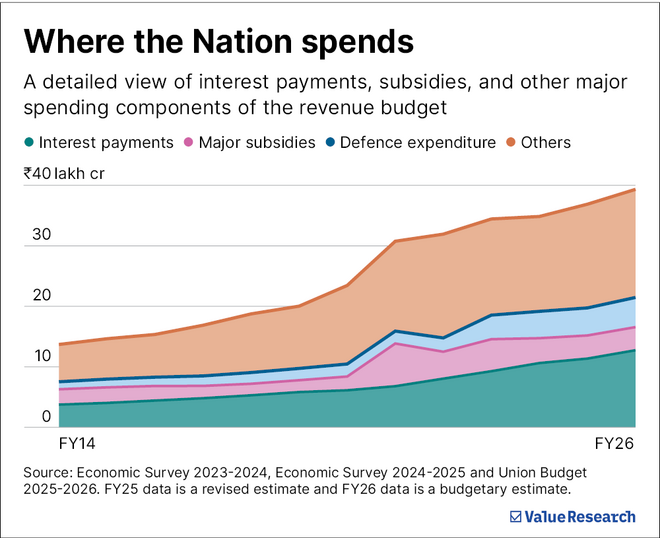
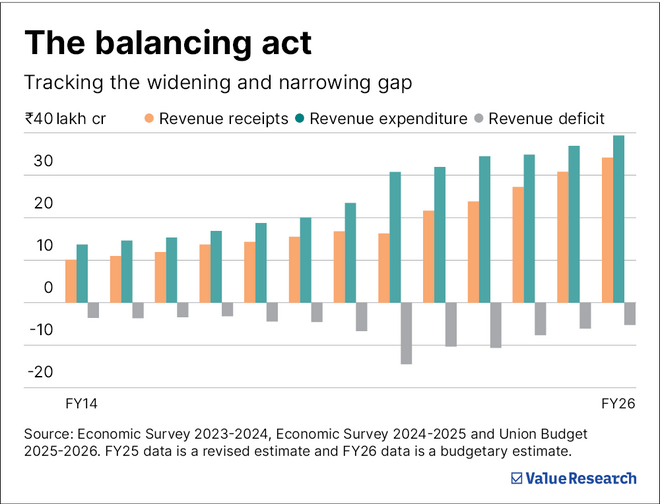
In the Union Budget 2024-25, revenue expenditure is pegged at Rs 39.4 lakh crore — about 78 per cent of the government's total spending. While it doesn't create long-term assets like bridges or power plants, it ensures essential services reach citizens and keeps the economic engine running.
Why does it matter?
Revenue expenditure might not build physical assets, but it plays a crucial role in sustaining the country. Here's how:
- Healthcare and education: Funding for government hospitals and schools ensures better access for all.
- Public safety: Salaries for police and defence forces maintain national security.
- Economic stimulus: Paying government employees puts money in their pockets, boosting consumer spending and demand.
Take this fun stat: Of the Rs 39.4 lakh crore revenue expenditure, Rs 12.8 lakh crore goes to interest payments and Rs 4.9 lakh crore to defence. It's not just about running the country — it's about ensuring safety and honouring past commitments.
A quick history lesson
Did you know the Green Revolution of the 1960s leaned heavily on revenue expenditure? Subsidies on fertilisers and minimum support prices for crops didn't create physical assets but transformed India from a food-deficient country to one of self-sufficiency. It's proof that revenue expenditure can have long-term benefits even without building a single road.
A word of caution
Mismanaging revenue expenditure can lead to fiscal chaos. Overdoing it — say, with excessive subsidies or unproductive spending — can squeeze resources for growth-driving capital investments. On the flip side, cutting it too much can cripple essential services, as seen during the 2008 financial crisis in Europe, when austerity measures led to public service cuts.
Making sense of the numbers
Budget 2025 offers some optimistic insights:
- Revenue deficit reduction: The gap between revenue receipts and revenue expenditure is projected to narrow to Rs 5.20 lakh crore, down from Rs 6.1 lakh crore in 2024-25. This signals better fiscal management.
- Focused spending: Defence and interest payments take centre stage, reflecting the government's priorities on security and debt obligations.
Closing thoughts: A balancing act
Revenue expenditure may not build skyscrapers or headline-worthy projects, but it's the glue holding the nation together. It funds services that impact millions, from a child's education to a farmer's livelihood. For policymakers, the challenge is clear: balance revenue spending with capital investments to address immediate needs without compromising long-term growth.
So, the next time you hear about revenue expenditure, don't dismiss it as another dry economic term — it's the lifeblood of governance, quietly working behind the scenes to keep the nation moving forward.
Keep playing "Budget Lingo"
Revisit the previous term: Revenue receipts: The salary that keeps India running
Learn the next term: Capital receipts unplugged: How governments fund and build
Stay with us as we continue to decode the terms that demystify India's Union Budget.
Disclaimer: This content is for information only and should not be considered investment advice or a recommendation.
For grievances: [email protected]
Ask Value Research 
 New episodes every Friday









 New Process Alert
 Seems like you've uploaded a wrong QR code. Please upload the QR code downloaded from MF Central platform.


