





Everyone wants to make the most of their investments. We all aspire to pick the next multi-bagger stock or invest in a thematic fund that will provide the highest possible returns. Often, we hear friends and relatives asking for investment recommendations, adding a side note that they are willing to take risks but want the maximum returns, especially after witnessing strong past market performance.
Investment returns ≠ Investor returns
Over the long term, equity markets have delivered reasonably good returns. In fact, many equity mutual fund schemes with over 20 years of history have generated superior results. Yet, only a few investors consistently achieve similar returns on their total investment. Why is that? To understand this, let's delve into two interconnected concepts - volatility and sizing.
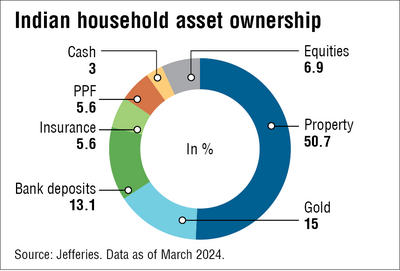
While the equity market has given reasonable returns on average, it has rarely generated the average return every year. As a result, very few investors remain invested to fully benefit from market movements. This makes volatility a crucial factor in determining whether one can truly enjoy the advantages of investment returns over time.
How sizing can help create more wealth
Volatility is inversely correlated with confidence. In simple terms, the more volatile the returns of an asset (equity) or a sub-asset class (small-cap stocks), the less confident we feel about its prospects in the near future. This often leads us to invest only a tiny portion of our investable corpus, even if we believe the investment has the potential to deliver better returns than traditional avenues in the long run.
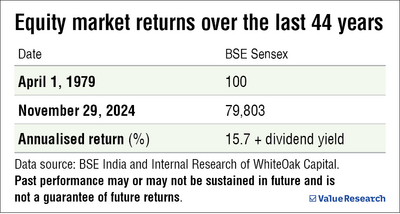
The outcome? Even when these high-potential investments perform well and generate impressive percentage returns, the absolute wealth creation remains insignificant. For instance, consider earning 10 per cent on a Rs 1 crore investment versus earning 15 per cent on a Rs 10 lakh investment, with the remaining Rs 90 lakh earning only 7.5 per cent. Thus, the difference lies in sizing (note: the percentage returns used in the example are intended to explain the concept of sizing and volatility in investments and are not indicative of future returns).
Sizing is directly proportional to confidence, which, in turn, negatively correlates with volatility. This means if we can find an investment avenue that reduces volatility without significantly compromising on returns, we will have greater confidence in its short- to medium-term performance. As a result, instead of earning disproportionately higher returns on only a small fraction of our investment, the entire corpus can generate moderate but higher absolute returns.

Asset allocation: A potential solution
Two investment avenues that aim to achieve this balance are mutual fund schemes under the BAF (balanced advantage fund) and MAAF (multi-asset allocation fund) categories. These schemes aim to manage volatility while targeting reasonable returns over time. They do so by rebalancing between equity (a volatile asset class with the potential to earn high long-term returns), debt (a stable asset class with relatively lower returns) and other permissible asset classes based on market valuations.
While these schemes may not necessarily generate the highest possible returns, they instil confidence to invest a greater portion of your corpus due to their inherent structure. It's important to keep in mind that not all BAF and MAAF schemes are the same. This is because different fund houses target varying risk-return profiles, use different valuation models and operate within different net equity ranges. Therefore, it's advisable to consult a financial advisor to select a scheme that aligns with your investment objectives.
Manuj Jain, a CFA charterholder, is a Director and Head of Product and Strategies at WhiteOak Capital Asset Management Company. He has been with the company for three years and has over 16 years of experience in asset management. Part of the WhiteOak Capital Group, WhiteOak Capital Asset Management Company is the sponsoring entity of WhiteOak Capital Mutual Fund.
Ask Value Research 

 New episodes every Friday











 New Process Alert
  Seems like you've uploaded a wrong QR code. Please upload the QR code downloaded from MF Central platform.


