 Widely read:


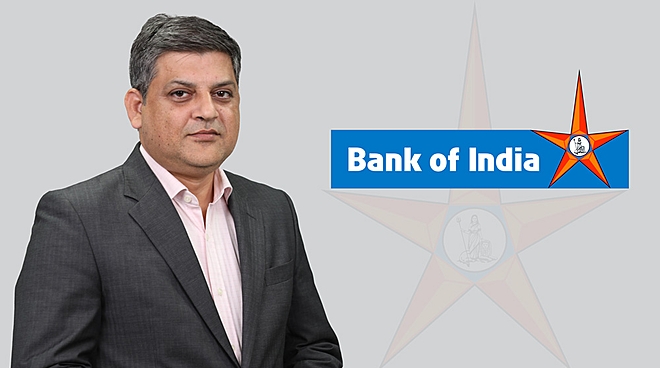


Over the two decades of working in finance, Alok Singh has donned many hats—from beginning his career as a proprietary trader at UTI Bank (now Axis Bank) to managing fixed income and equity assets at prestigious AMCs.
Singh joined Bank of India Investment Managers 12 years ago and stepped into the role of Chief Investment Officer in 2015-16. Under his leadership, the Bank of India Flexi Cap Fund, Small Cap Fund, and the ELSS Tax Saver Fund have, in particular, thrived. The fund manager highlights risk management as a critical factor behind the success. In this interview, he shares his investment framework and takes us through the fund house's journey of managing assets worth Rs 100 crore to over Rs 10,000 crore over his tenure.
Below is the edited transcript.
What's your core approach in managing equity portfolios? How do you navigate different market conditions and sectors?
With a background in fixed income, I understand the significance of concepts such as internal rate of return (IRR) and cash flows. Using the same principles in equities, return on equity (ROE) replaces the IRR, while cash flows remain crucial in both. These are the core of my investment thesis for any financial asset-debt or equity.
The second aspect involves allocations, exposures, and pool of capital required for market investment. For me, it's not just about the perspective but also about the pool of capital, the considerations it carries, the risk it exposes, and how to navigate by combining these factors.
How do you select stocks for your portfolios?
We track around 1,000 stocks based on market capitalisation, and about 250 stocks form part of our active universe. We select these stocks using a top-down and bottom-up approach, analysing each business individually. The top-down approach is based on the various data that is received and its potential impact on a large number of companies. Later, the focus shifts to a bottom-up approach, starting with business management and cash flows. Every business has different nuances, and one should consider whether they are sustainable.
After conducting quantitative and qualitative deliberations, we strive to formulate a straightforward hypothesis, not based on a percentage return but on our belief that the margins or the market share will increase. We regularly track these predictions. As long as the hypothesis is intact, we continue to hold that in our portfolio, allowing us to have a longer holding period where we don't get disturbed by some intermediate noises. That has helped us capture a larger part of the journey in our portfolios.
There's been a lot of buzz around mid- and small-cap stocks recently. Some say they're overvalued, while others see growth potential. Where do you stand in the current market cycle?
Let me give some perspective. If we look at the five-year mean of Nifty 50, it would be 23. Today, it is around 23.5. With 10 per cent earning growth, we are below the mean of 23, and it will be much lower with an earnings growth of 15 or 20 per cent. So, you have to look from an earnings point of view, and we believe that valuations are not excessively high.
Similarly, if I look at small caps, the five-year mean is around 29; currently, it may be around 32. With 10 per cent earnings growth, we are near the mean.
But if I see the five-year mean of mid caps, it's 27. Currently, it's near 44. With a 20 per cent growth rate, it's far off from the mean of 27. With regards to the mid caps, I would like to say that this 'club of 150' was created in 2016-17, and ever since, this part of the market has been common across all the parts of the mutual fund portfolios-whether large caps, mid caps, small caps or even hybrids.
A decent amount of capital has been chasing these 150 stocks, which may have led to this excessiveness. Correction might occur if this 'club of 150' expands or if there are sharp outflows. Either has to happen. Otherwise, there is a scarcity premium-these 150 stocks will continue to command a premium.
As said earlier, I don't see excesses developing in large and small caps. We are higher than our previous mean, but we also have to look at the conjunction that we have become a far more stable country now, and our macros are far more stable on all fronts. So, as the stability and the predictability increase, the premium also increases.
Obviously, there can be some disappointments in the markets, which may lead to some volatility. Every bull market has many intermediate corrections. From 2004 to 2007, there were eight or nine instances where the markets corrected by 8-10 per cent. There was one instance where the market corrected by 20 per cent.
A few of your equity funds, like the Bank of India Flexi Cap, Multicap, and ELSS Tax Saver, have done well in the past year or two. What do you think are the key factors behind their strong performance?
Our flexi-cap fund is four years old, while the ELSS fund has completed 15 years. Our small-cap fund has six years of history, and our multi-cap is a year-old fund. Now, if you look at all these old funds, they have done well over a five-year and 10-year period.
If we look at the ELSS fund, it has given compound annual growth rate (CAGR) returns of 20 per cent in the 15 years of its existence, whereas the small-cap fund has given 35 per cent returns in the last five years. We have crossed the 'thresholds' in the last two to three years. Our industry considers these thresholds in terms of size, and while we have started to gain recognition in the last one to two years, our performance has remained consistent over a longer period.
Apart from our strategy, our risk management has played a significant role. It has prevented us from experiencing excessive exuberance at any given time and enabled us to maintain a balanced portfolio. If I analyse the performance of my fund over the last three to five years, I believe we have done quite well in terms of both allocation and selection. We have fared well in both the flexi-cap and ELSS funds because we manage them similarly.
Given the recent strong performance of some of your funds, is there a strategy at your AMC to leverage this success and attract more investors?
To answer this question, I would like to delve into the past. When I first joined Bank of India Mutual Fund in 2012, it was known as Bharti AXA Mutual Fund, boasting assets under management (AUM) of Rs 100 crore. We faced numerous challenges. In 2018, the debt crisis happened, and in 2020, we went through the challenging Covid period. It took us approximately three to four years to navigate these issues.
However, as we speak today, we are beginning to regain our footing. Our folios have grown to over five lakh, our monthly systematic investment plan (SIP) book in the last three years has increased from Rs 5 crore to 71 crore, and the number of mutual fund distributors (MFDs) has also increased. Typically, in a bank-sponsored fund house, the bank has a larger share of selling the funds than the MFDs or direct channel. Currently, around 25 per cent of our business comes from banks, and the rest comes from MFDs and direct participation.
While we have slightly delayed our approach for various reasons, I believe the current management and the bank are keen to grow this business and remain committed. We are nearing a phase where we can increase market share by doing the right things. The markets have moved up quite a bit, and our AUM (assets under management) of Rs 10,000-11,000 crore is quite small. However, we have to do the right things, and the expectation is that when we meet next time, the numbers will be much bigger.
New-age tech companies have become a hot topic, but you've kept limited exposure to them in your funds. What's your take on these companies and their role in your portfolios?
Innovation is very important, and it's always been a wealth creator. If we look back at history, innovations have made the most money, whether it's product innovation or process innovation. Therefore, we maintain a positive outlook on new-age tech companies.
However, our distance from them stems from the excessive expectations placed on these businesses. We all know what happened in 2021; they languished for two years. All of a sudden, in the past year, they have performed well. We remain constructive on them where we find reasonability in terms of the business expectations, even though they all remain expensive today. It's not that we won't purchase them; we have some exposure to certain brands.
There has been a complete drought in this space since 2021, when several players entered the market. As a fund manager, I adhere to investing in classic cash flow companies, even though we may see more players entering the market soon. One has to be conscious of the cash flow. We think profits should be sustainable, as some have started making them.
Also read: Interview with Niket Shah of Motilal Oswal Mutual Fund
Disclaimer: This content is for information only and should not be considered investment advice or a recommendation.
For grievances: [email protected]
Ask Value Research 
 New episodes every Friday






 New Process Alert
 Seems like you've uploaded a wrong QR code. Please upload the QR code downloaded from MF Central platform.


