




A seasoned banker and ex-CEO of the Indian Bankers' Association, H N Sinor was pulled out of retirement this year to become the CEO of the Association of Mutual Funds in India (AMFI), a position specially created for him.
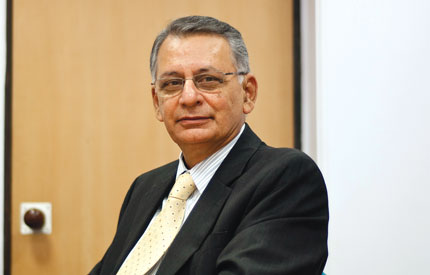
Sinor is currently on the board of 12 companies, including three from the Tata stable. He was also on the board of ICICI Prudential Mutual Fund but resigned once he took over this new role, due to potential conflict of interest.
You joined AMFI as CEO on February 25, 2010, at a time when the industry is going through so much of change. What is your starting point?
We at AMFI are working on a road-map on what we need to do over this entire financial year. And it is by and large in consonance with what the Regulator would like to see done. I do not think it's necessary for the Association to keep having a confrontationist approach towards the Regulator, after all we are both working towards the same end - transparency and the benefit of the investor.
AMFI is a bridge between the Regulator and the industry and we need to work together and understand each other's concerns. We should also introspect and see what we can do on our own so that the Regulator's concerns are taken care of considerably, rather than them imposing their views on the industry.
The industry participants are of the view that till date AMFI has not articulated their views and concerns well to the Regulator.
I have just come on board and need to understand what it is that the AMFI members expect from this association and what goals we need to work towards. We need to articulate amongst ourselves what needs to be done not only in the immediate 12 months, but over the next three years.
A lot of introspection is needed to see where we have gone wrong, where we can improve and how to rectify mistakes made. We need to convey to the Regulator that it is not our aim to short-change the small investor. Once that comfort is established, there will be a lot more communication and dialogue between SEBI and the fund industry, represented by AMFI.
Right now the fund industry has numerous challenges facing it....
The fund industry has grown rapidly. And after it has grown there has been a need to put in place some of the best practices.
As I look at it today, there are numerous issues to be dealt with. And that must be expected simply because it is a fragmented industry. Unlike other industries, this one has three pivotal players - the manufacturers, the distributors and those providing the back-end support. So it is basically a tripod on which the industry is based. Unfortunately, it's not uncommon to see lack of appropriate co-ordination amongst all these industry participants. Consequently, a move made by one could hurt the other.
What do you think is the biggest challenge facing the mutual fund industry today?
There are many challenges to be dealt with, not just one.
The most predominant has been the mis-selling of schemes by distributors. Then you have the AMCs stating that they find it difficult to control them. There are service related issues with R&Ts, which again will have an impact on the AMC. Where AMCs themselves are concerned, there are disclosure issues that also need to be addressed.
I see a major challenge in bringing them all together and co-ordinating efforts to ensure a healthy growth of the industry. But ultimately, I have to ensure that the benefit is passed on to the retail investor.
In fact, I believe that the key issue which the Regulator (SEBI) is focussed on is with regard to protecting the rights of the investor. Are there financial literacy programmes? Is investor awareness and education being carried out as an ongoing exercise? Do the retail investors understand the products? Is the cost paid by the investor appropriate? Are investors being taken for a ride? Are they being short-changed? These are questions that the Regulator is asking.
SEBI is focused on investor protection. Does not AMFI view investor education as a need of the hour?
Most certainly. But investor education and awareness is an ongoing exercise. Just by holding, say, 50 seminars, one cannot bring about financial literacy.
Let's take a look at the small investor whose numbers touch 3 crore, which is large. Now even if 20 per cent of them are investment savvy, that leaves us with 2.4 crore who are not. What is the broad profile of such investors? The bulk of them would be salaried employees. They must be made aware of the nuances of a capital market product. They would gravitate towards a plain vanilla diversified fund and conduct their investments via an SIP. However, only a part of their income would go into such funds, a substantial amount would still be invested in fixed return instruments.
Investors in mutual funds are mainly from 28 cities - metros, mini-metros and key towns. Almost 98 per cent of fund investors will come from these key locations. However, investor education and awareness must not only take place here but even amongst other locations in India. There are millions who are clueless about what a mutual fund is.
It is a mammoth task.
Can you tell us something about your investor awareness programme?
This financial year we have targeted 2,000+ programmes across the country. These will be held under the umbrella of the AMFI Investor Awareness Programme but conducted by members. These programmes will not be specific scheme related. You will not find Fund House A pushing its schemes. The focus here is awareness and understanding of mutual funds as an investment vehicle.
We are also looking at other cost-effective ways of creating awareness. One of them right now is looking at how to tap into the national television network - Doordharshan, which has the largest reach in the smaller towns. Maybe a short programme on investor education in vernacular languages, in addition to Hindi.
The effects of all these initiatives won't be instantaneous but will be seen over the long term. There is a need to create some sort of curiosity about this industry from those who have not been in it at all. Only from there stems the next level of a desire to invest.
Eventually, we will have to use technology too - in the form of cell phones, emails and internet. Though the reach would be limited when we are looking at a pan-India penetration, technology will certainly be of help going forward.
A mindset change is also required on part of the investors who are unwilling to pay distributors for services rendered
The industry is in a transition phase. Distributors must provide advisory services in addition to mere transaction. And they will find a way to convince investors that they have to pay for a service. All the participants will have to find different ways to conduct business. Eventually things will settle down. India has enormous enterprise.
There were reports that SEBI and AMFI are putting processes in place to train and certify distributors. Even the examination initiated in 2000 is undergoing changes. Can you throw some light on this?
If you look at what has happened globally, it is interesting to note that all advisors/distributors are not capable of selling all kinds of products. Some may be capable of selling plain vanilla products but unable to comprehend a more exotic or complex product. So we would like to bring about a star rating mechanism for distributors.
We have discussed this concept in detail with the National Institute of Securities Markets (NISM). As you would know, the examination and eventual certification of distributors has moved away from AMFI to NISM. Right now they are revising the syllabus for the entry-level examination. Currently, just one such test is available so efforts are on to make it more stringent. Simultaneously, a second rung is being developed for those distributors who have cleared the entry level. This, naturally, would be more vigorous.
Now this will take some time to implement and not happen overnight. So within a year we should have two levels of certification. Depending on how this progresses, levels can be added and star ratings allotted to each level. So once a list is made available to the investor on the levels of proficiency of each distributor, the investor can make a sensible choice. For instance, an investor who wants to invest Rs 3 crore would want a more informed and knowledgeable distributor.
Unofficial numbers indicate that the number of distributors has dropped with existing ones not renewing their ARN. Is that so?
I would broadly agree. The number of distributors has dropped considerably. But it would not be solely due to regulation. When the certification programme was launched a decade ago, many individuals who were in the 60+ age group decided to enrol, probably viewing it as a good retirement hobby. They would have either gotten old or disinterested or probably arrived at the conclusion that the industry is too complex now.
AMFI had an overall 1,15,000 or so distributors. Today we have around 88,000 - 90,000. Of which, actual active distributors would be around 15,000 - 18,000.
Industry participants are disappointed that the online platform touted by AMFI has not come to pass. Will it happen this year?
Unlikely.
AMC: Asset Management Company / R&T: Register & Transfer agents / SEBI: Securities and Exchange Board of India/ SIP: Systematic Investment Plan / ARN: AMFI Registration Number
This interview appeared in the May 15 - June 14, 2010 issue of Mutual Fund Insight
Ask Value Research 

 New episodes every Friday

 New Process Alert
  Seems like you've uploaded a wrong QR code. Please upload the QR code downloaded from MF Central platform.


