 Widely read:


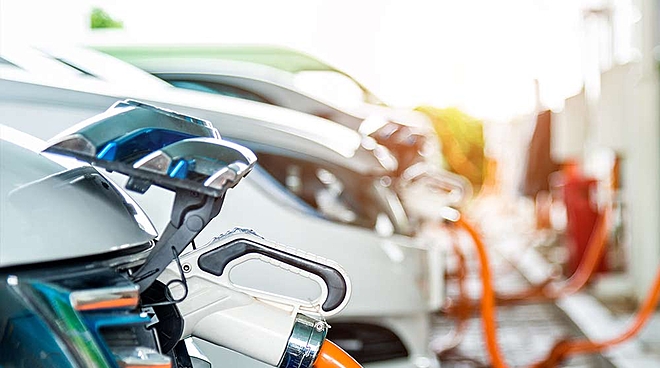

You may have heard of the funny story of Elon Musk's lament about 'challenges' in bringing Tesla to India. A couple of weeks ago, Tesla and SpaceX CEO Elon Musk was asked on Twitter when his cars would be available in India. He replied, "Still working through many challenges with the government." The response from the government - not official - was that Musk's statement was essentially a pressure tactic to force lower duties for fully built-up imported cars.
There were also several tweets from state ministers inviting Musk to set up a factory in their state. Maharashtra, Punjab, Telangana and West Bengal were the ones I noticed, with the West Bengal one unequivocally saying that the state was the most business-friendly one. I'm sure Tata Motors will be happy to vouch for this.
The interesting part was the large number of tweets from Indians telling Musk to basically not bother because the Indian government was not interested in bringing the best electric vehicles to India. Essentially, this is the electric car equivalent of India's Pfizer fan club on social media. There appears to be a body of opinion amongst some Indians that because Pfizer, which they consider to be the best vaccine, is not available in India, our vaccination campaign is not up to the mark.
As it happens, India's electric vehicle has an enormous amount of government support and is progressing quite well. For example, Tata Motors seems headed for more than 50,000 electric vehicles in 2022. There are more than 50 electric vehicles across all types in production or close to production. The strange thing about the Tesla noise is that if these cars are launched in India, they are unlikely to cost less than a crore of rupees. I'm sure Musk has a good sense of how many that would sell. In any case, India's move to electric cars will be a side story, and the real action will be in two/three-wheelers and buses.
It's a foregone conclusion that the internal combustion engine is on the way out and will hereon be rapidly replaced by electric propulsion. Globally, many automobile companies have terminated all research and design work on traditional engines, Hyundai being the latest one.
As investors, we have to be aware of the direction in which major industries are going. However, the greatest danger is imagining that the future will be just a projection of current trends. There is no bigger example than what happened to the computer industry over the last half-century. Till the early 70s, a computer was a large facility operated by a company to which 100s, even 1000s of 'terminals' were connected. These computers were 'mainframes', and IBM was the dominant company in the business. As the 70s and 80s progressed, computing power grew and the conventional wisdom was that mainframes would be replaced by smaller systems. In reality, what happened was that almost everyone has a computer in his or her pocket that is connected to a giant network, an outcome that was hardly expected 50 years ago.
However, here's the strange thing - mainframes are still around, and IBM is still the dominant mainframe company, and in fact, its mainframe business is larger than ever! Not just that, when you use an airline or a bank app on your phone, you are very likely interacting with a mainframe. So, in effect, the old computing model was not replaced, but another, entirely new model grew alongside it and became interconnected with it.
My gut instinct is that something like that will happen in transportation. What's least likely is that the entire model will remain the same but just the energy source of the vehicles will change from fossil fuels to electricity.
In any case, a vast industry has started a fundamental never-before shift. As a result, many new winners will arise, and old winners will become losers.
This editorial appeared in Wealth Insight February 2022 issue. To read the cover story and other insightful analyses, columns and articles
Ask Value Research 
 New episodes every Friday

 New Process Alert
 Seems like you've uploaded a wrong QR code. Please upload the QR code downloaded from MF Central platform.


