




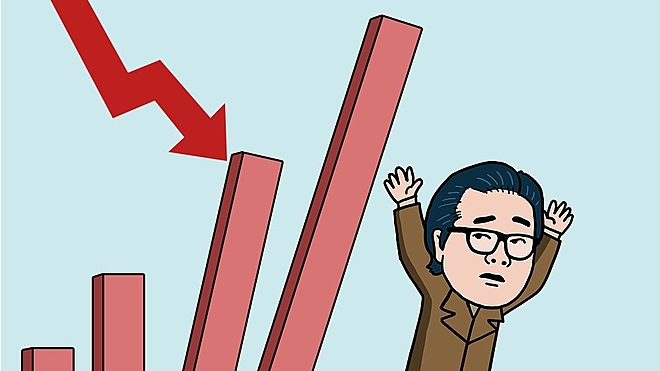
'Fund loses $22 billion in days, value goes to zero,' said the headlines. Others said it was $30 billion. The fund was not a mutual fund or a hedge fund but a 'family fund' and the fund manager was Bill Hwang, whose name is known only to some who have been following financial news for some years. Somehow, Mr Hwang had lost all the money which was there in this fund, whose name was Archegos.
Strictly speaking, it should not have mattered to anyone except Mr Hwang himself since a family fund is by definition a proprietary fund and he was the only investor in it. However, it turns out that all the money (and I do mean all) that this fund was investing was borrowed. The lenders were the usual suspects whom we all know so well from the nightmare of 2007-08: JPMorgan, Goldman Sachs, UBS, Credit Suisse and a few others. Added to that were 'regulatory loopholes' that prevented almost anyone from knowing what Mr Hwang was doing.
Of course, underlying all this was Mr Hwang's complete confidence that he knew what was going to happen to the stocks he had invested in with these vast billions that he had been foolishly lent. In one well-informed article that I read about the affair, I came across this gem: Archegos's lenders may have presumed that the fund wasn't simply long on all its stock. That is to say: They most likely believed Mr. Hwang balanced his risk by taking at least a few "short" positions, or betting on a fall in price like most funds.
Can you believe this nonsense? These masters of Wall Street gave a total of $20-30 billion in what basically amounted to a personal loan without actually checking and verifying what was being done with the money! They just assumed that Hwang was taking at least basic risk-mitigation measures. If this sum of money was one-tenth as much, no one would care. However, now there's some fearful speculation that this 'family fund' may not be the only one of this kind. There's a stink about this whole affair which has some resemblance to what was in the air in August-September of 2007.
Why do these things happen? Apparently, this Bill Hwang was supposed to be a great investor, a man with a Midas touch. On top of that, unlike many others, he was practically unknown outside a limited Wall Street circle. He started in 2013 with $200 million that he had left from a previous misadventure and grew it to somewhere around $20-30 billion by March this year and then lost it ALL in two days. So, what happened? Should one not assume that someone who could take a large amount of money and turn it 100 times in eight years through equity investing must necessarily be very good at investing and would not make mistakes on this scale? Surely, this kind of performance is proof of being a very good investor?
Come to think of it, it means the opposite. What kind of an investor would make 100 times in eight years? If you ask this question of a few investors, you would get two kinds of answers. Some would say that 100 times in eight years shows that you are a great investor. Others would say that it proves, beyond doubt, that you are a reckless punter who just got lucky. Someone who does so absurdly well can only do so by taking wild risks and abandoning basic principles like diversification and risk management. As events proved in the case of Bill Hwang, 100 times in eight years, and that too with such large sums of money, is practically a guarantee of a blow-up.
Taleb's original masterpiece 'Fooled by Randomness' has a lot to say on the inevitability of such blow-ups. When lakhs of punters are trying their blind luck in the markets, a handful can generate the illusion of great success for a long time, especially those to whom Wall Street is willing to lend billions!
One can only hope that unlike 2007-08, this is not just the tip of an iceberg.
Ask Value Research 

 New episodes every Friday







 New Process Alert
  Seems like you've uploaded a wrong QR code. Please upload the QR code downloaded from MF Central platform.


