


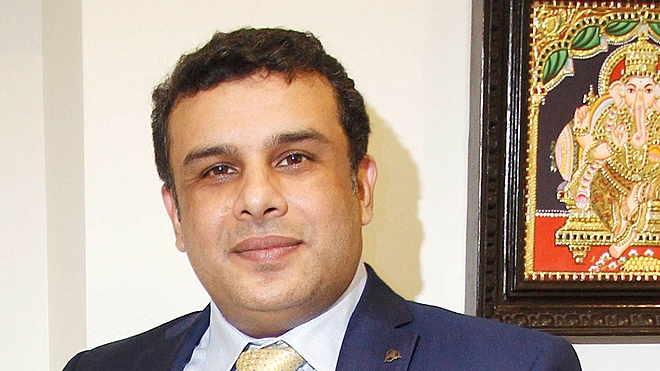
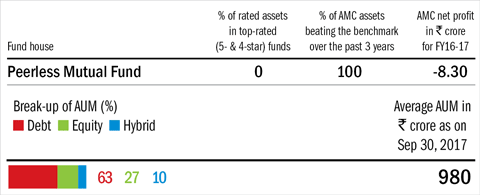
From a corporate perspective, we underwent a transition in the last one year. We are now a part of the $10 billion Essel Group, which is a matter of great pride for us. Also, Essel Finance, which houses all the financial businesses of the Essel Group, is led by Mr Amitabh Chaturvedi, who is a veteran of the mutual fund and banking industries.
In the last one year, we saw retail flows increasing and our retail funds growing in size. While this was in line with the industry trend, we can safely say that our growth rate in retail-oriented schemes was amongst the highest in the industry.
Managing return expectations
On the equity side, with inflation reducing, it only follows that the nominal growth rate would reduce as well. Since corporate profits and long-term stock performance respond to nominal growth rates, it also follows that the returns from equity markets will reduce as well. We have been highlighting this fact in our investor communication to ensure that investor expectations remain anchored in current reality.
Risk controls
Just as in bearish times, there are always stocks that are overvalued, in high-valuation times like the current ones, there are stocks which are undervalued. It is just a bit more difficult to identify them but our investment process is designed to cope with these challenges by filtering out the noise generated by the markets and focusing our efforts on the opportunities.
Rising industry assets
At the moment, we aren't facing a challenge managing increased assets and this is reflected in the consistent performance of our schemes. In addition to this, our schemes have also been able to retain high levels of liquidity, making them extremely agile.
Growing clout of domestic funds vis-a-vis FIIs
This is one of the main reasons why the market strength has surprised many, especially in the face of negative flows from FIIs. This domestic strength has been long overdue, given the historical underinvestment by domestic households in the equity markets. We are very happy that this is changing and we are also aware that this is just the beginning of the change. We feel that domestic institutions and households will play an increasingly large role in the market in the coming years.
Outlook for equity and debt
On equities, we continue to remain focused on long-term positives arising out of the developments in the last few years. GST, even though its short-term impact may be uncertain, will have a stellar impact on India's economy over the coming years.
On interest rates, we believe that after a pause, they will resume their downward trend. There have been some unpleasant developments like rising oil prices and a strengthening US dollar, which have vitiated the outlook for inflation somewhat, but we believe that these have run their course.
This article was originally published on December 22, 2017.
Ask Value Research 

 New episodes every Friday


 New Process Alert
 Seems like you've uploaded a wrong QR code. Please upload the QR code downloaded from MF Central platform.


