




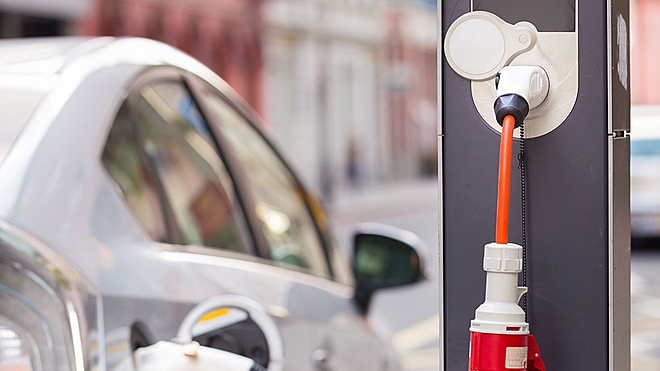
In my decades as an investor and investment analyst, I've seen a lot of unexpected changes in various industries, telecom being the biggest example. However, nothing has been as much of a surprise as what is now beginning to happen in the automobile and transportation industries. Theoretically, at the back of one's mind, one always knew that the day would come when there would be a fundamental change in the car industry. Still, as recently as five years ago, I wouldn't have blamed anyone for thinking that such a change would not arrive within our lifetime.
And yet, here we are, in the year 2017, and it's becoming increasingly clear that the last internal combustion engine may already have been designed. By the time young children of today will grow up to a car-buying age, petrol and diesel-driven vehicles will be a curiosity. Not just that, the very concept of owning a car may be passing into history. The impact on large swathes of industry will be huge. Auto manufacturing has been the cornerstone of modern economies, and oil has driven not just economies but much of the world's politics for decades.
The contours of the future that are now emerging are such that a far fewer number of cars could suffice to take care of the entire transportation demand. The way this is happening is a lesson for investors. It shows us that developments in diverse fields can combine unexpectedly to have a deep impact on specific industries. Electric cars have been around for a long time--more than a 100 years in fact. Electric-powered transportation--in the form of trains--has been commonplace for decades. Batteries have been around even longer, as have computers and wireless communications. However, the way they have combined in the last few years has been shocking.
One driving factor is something that wasn't even discussed till some time ago, which is the simplicity of electric vehicles. A modern petrol or diesel car has about 1500-2000 parts in its drivetrain, which is the engine and transmission. An electric vehicle has about 20 to 25 parts in its drivetrain. It's simple to manufacture, requires almost no service and does not need any of the consumables that petrol or diesel engines do. Think of the actual repairs or servicing that your car regularly needs. Electric cars don't need oil and lubricant changes, filters or carburettor cleaning, sensor changes, clutch plate repair or changes. This simplicity and low cost of maintenance is already showing up even in the crudest electric vehicles. The e-rickshaws that are rapidly taking over ultra-local transport in Indian cities are simple and low-tech and yet they are far more reliable than autorickshaws.
The direct effect of this is that electric vehicles can last over a much longer mileage than current cars. Which means that if they will be much more capital and cost efficient if they are driven all day long by a service provider, rather than being parked 90 percent of the time as personal vehicles do. Combine that with advances in solar power, and with the inevitable shift to self-driving cars that is now on the way, and a completely new personal transportation industry begins to take shape. It's a world where consumers will have full-time access to personal transportation, but as a service instead of having to buy, maintain and drive a vehicle themselves. The net result will be that the world could get by with barely 10 or 20 percent of the vehicles it now needs. I need hardly point out the shock that this will be for auto and ancillaries industries, as well as oil and energy.
As investors, this raises a further, more important question. Which other industries will be disrupted as severely as autos? For my money, finance is the next candidate. I'll be vastly surprised if the business of banking, saving and investments survives with only evolutionary changes for more than a decade. Rudimentary mobile wallets and blockchain-based functioning is only the beginning, the real impact is yet to come. And then, of course, looming above all this is 3D printing, which could easily be the biggest change in the world since the industrial revolution 250 years ago.
As investors, will we be able to cope with this rapidly changing world? I hope so.
Ask Value Research 

 New episodes every Friday

 New Process Alert
  Seems like you've uploaded a wrong QR code. Please upload the QR code downloaded from MF Central platform.


