 Widely read:


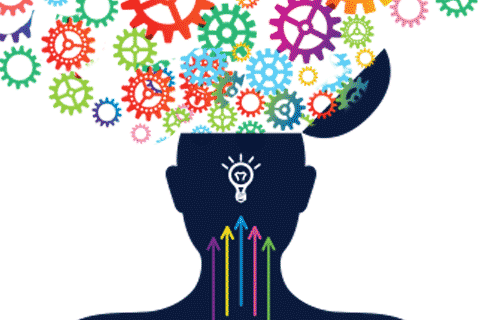
In some way, I was 'born right'(or wrong, depending on the prism you see this with). The ability to see things differently is a very important life skill; markets are just one application of such an ability. Most people are unable to internalise a thought that is diametrically opposite to what they see happening around, which is why 98 per cent of people get caught at the extremes of a bull/bear market. Even today, it is hard to stand by the seashore, look out over the sea and tell yourself that the earth is really round.
There are many such truths in life, which are not immediately obvious. While physical sciences have isolated some of them (the Earth being round is one of them; relativity is another one), the counterintuitive truths embedded in behavioural sciences are far more difficult to disseminate on a wide basis. Take this for example: we have three components of the brain that we work with. In the 'lizard brain' resides the instinct of self-preservation. In the 'monkey brain' rests our herding and social instinct. And in the 'human brain' lie our logical and emotion-processing capabilities. This is not an exhaustive description, but it will have to do for the purpose of this article.
The problem is that unlike our physical body, where we know when we are working the left arm and when we are working the right, with our mental state, we don't know when we are using which brain, so we don't instinctively know our own irrationality. Mostly, the 'animal brains' have loud voices and the 'human brain' shuts down under pressure. We tend to think that it is the human brain, but the wrong brain is active at the wrong point of time. This is when irrationality occurs. Considering that 80-95 per cent of the time we are using one or the other of our animal brains, it is very likely that on almost all of those occasions when we should be using our human brain, we are actually using our animal brains. The percentage is just an approximation, but it is evident that irrationality permeates most of our decision-making.
This is particularly evident in the economic domain. We have nothing in our brains that knows how to deal with money, which is just a 10,000-year-old invention and came after the concept of division of labour took root in our society. The human brain has not evolved much over the same period. At the neurological level, we still use the risk-reward mechanisms that relate to food-power-sex to process economic decisions, and we are very, very clumsy in doing this. That is why economics (and financial decision-making) are rife with irrationality.
In a sense, if you learn a string of perspectives in this direction, you (sort of) evolve to a higher state of existence, with the ability to perceive things that most people cannot. The ability looks magical, and the further you go down this path, the more you will distance yourself from the perspectives of the crowd. You become more 'godly' (or 'other-worldly'), just as Superman appeared odd (and gifted) here on planet Earth but must have been quite an ordinary Joe on the planet Krypton.
Mind you, this 'supernatural' power can be acquired by the simple expedient of reading, learning, accepting and internalising certain perspectives that come out of this (kind of) amorphous subject called behavioural economics, which simply does not define itself well; it takes perspectives from a string of nearby and faraway subjects that have anything to do with the human brain, from anthropology to neurology. In between, you might encounter a string of subjects like sociology, politics, psychology, even economics. Recently, I found myself linking sexology to evolutionary biology through the construction of the human brain. Go figure!
It's been an interesting journey, and every day at 9 am, I am brought back to the Earth by the opening bell and have to go back to options theory, where I find myself using these perspectives to 'imagine' the irrationality happening on the other side of my trading screen. That poor bloke on the other side, who is using his lizard or monkey brain to trade against my logical, human, rational algorithms, doesn't really have a chance. He doesn't really understand that the enemy is within. It is not the market which is irrational or the government which is stealing from him. Nor (much as he would like to believe) is Rakesh Jhunjunwala interested in his money.
Just getting people to accept that they are not using their mental faculties to the fullest and that a loudmouth goon in the brain (usually resident in their animal brain) ensures that the more sophisticated but quieter human brain steps aside while our animal perspectives hold forth would be an improvement. If you carry this as an 'internal truth', stand back from the various components of your brain, identify your animal perspectives and shut them up while allowing the logical/emotional human brain to 'speak'. You will find yourself rising up through the animal class and developing 'supernatural capabilities'. Understanding the stormy weather that is going on in other people's heads and quietening the same within your own will give you a perspective of the markets that you have never had before and most people around still don't seem to understand.
This may not make sense to someone until he has actually lost serious money in the markets, done it again and again and watched himself in the process. Once this acceptance is in, his real education (about the construction of the human mind) will start to become useful. Thereafter, it is a long and interesting journey, as he puts the various silos together, stringing together perspectives from different subjects, rather like Steve Jobs wandering into a calligraphy class and then 'connecting the dots'. If you do this early enough in life, it will start to come together around 45 (I am 54 now).
All right-brain learning goes like this. Laymen call it wisdom. You get logical left-brain learning from the IIT/IIMs. Thankfully, my MBA taught me nothing, leaving me 'virgin' enough to pick up everything that life threw at me.
The actual 'trading rules' are simply 'if-then-else' statements, expressed with numerical data. To make them more 'human-worldly', they are not absolute numbers, but probability density functions that 'cumulate' to give you cumulative probability density functions that tend to create broader bell curves that include a wider range of scenarios, including many black-swan scenarios. Embedded into these bell curves are some serious insights about people's behaviour, and certain probabilities are either ruled out (as compared to a symmetric bell curve) or included. This gives you a 'kinky' bell curve, which is superior to the traditional Black & Scholes symmetric bell curves available in options calculators. With practice, these algorithms are honed into very high levels of predictive accuracy, giving extraordinary returns.
The human brain (not to be confused with the animal brain resident in us humans) thinks in the same format - we call it the learning curve in MBA courses - and finds a narrow path to excellence, rather like a Sachin Tendulkar honing his cover drive, which all looks very similar under very different conditions and against different bowlers. The cover drives all have some common elements executed to perfection through repeated years of habit. They build a Sachin Tendulkar, who looks otherworldly in his results, but inside his head, he has a familiar path of certain neurons locking together in a synchronised response to a conscious stimulus. This is the similarity between Sachin Tendulkar, Pele, John McEnroe and Don Juan. At the neurological level, they all are the same and probably bored beyond belief by the repetitiveness of what they do!
The author teaches, trades and writes at spandiya.blogspot.com.
This column appeared in the June 2016 Issue of Wealth Insight.
This article was originally published on August 26, 2016.
Disclaimer: This content is for information only and should not be considered investment advice or a recommendation.
For grievances: [email protected]
Ask Value Research 
 New episodes every Friday


 New Process Alert
 Seems like you've uploaded a wrong QR code. Please upload the QR code downloaded from MF Central platform.


