 Widely read:


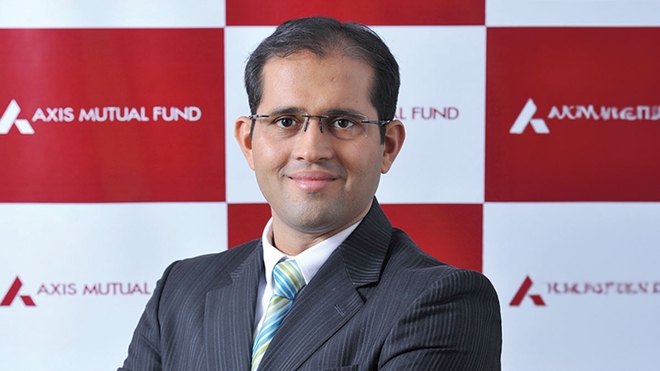
With stock prices high and global risks rising, fund manager Ashish Naik explains how Axis is making changes—like reducing small-cap exposure and adding new sectors—while staying true to its core strategy. In a market where valuations remain elevated and global risks are on the rise, Ashish Naik is focused on staying selective, agile and grounded in fundamentals. As Fund Manager at Axis Mutual Fund, he oversees assets of over Rs 40,000 crore across four schemes, including the multi-asset fund. In this conversation, he shares how the fund house is adapting its growth-and-quality approach to a more expensive and volatile environment. From trimming mid- and small-cap allocations to tapping opportunities in various sectors, Naik talks about how Axis is adapting to a changing landscape without straying from its core philosophy. We’re in a market where valuations across large-, mid- and small-cap segments are stretched. How are you approaching equity allocation in such an environment? Valuations have remained stretched. In fact, we’ve seen valuations across the board expand over the last few years, primarily because we are emerging from the Covid-era. Over the last two to three years, we’ve seen earnings expand across the market. There have been consistent domestic inflows, something we hadn’t seen much in the previous decade. These two factors, combined, have led to a situation where large caps today are closer to their five-year averages after the corrections in the last 12 months. However, mid- and small-cap stocks still trade at a significant premium, even compared to the last five years. Overall, the market seems to be at a premium over a longer-term period. So yes, one has to be cautious about high valuations. To that extent, we have reduced equity allocations across various asset classes. In hybrid funds, by around 10 per cent on average, and in other funds, there is a slightly higher cash level. Wherever possible, we’ve also increased exposure to large caps, reducing our weight in mid- and small-cap stocks. The global macroeconomic backdrop is shifting rapidly, whether it be Fed policy or supply chain disruptions. What are the biggest external risks you are watching right now? Yes, the global macro backdrop has been volatile, not just in recent months but over the past two to three years. We’ve seen rising geopolitical tensions, including regional wars across parts of the world. These issues have impacted markets and contributed to volatility, particularly since we’re a commodity-importing nation. Still, our domestic macro remains relatively stable. Inflation is within the RBI’s target range. But what’s new, and more concerning, is the rise in tariff wars, which have intensified in recent months. Every coun
This story is not available as it is from the Mutual Fund Insight August 2025 issue
Read other available articlesAdvertisement
 New episodes every Friday











 New Process Alert
 Seems like you've uploaded a wrong QR code. Please upload the QR code downloaded from MF Central platform.


