 Widely read:


 Anand Kumar
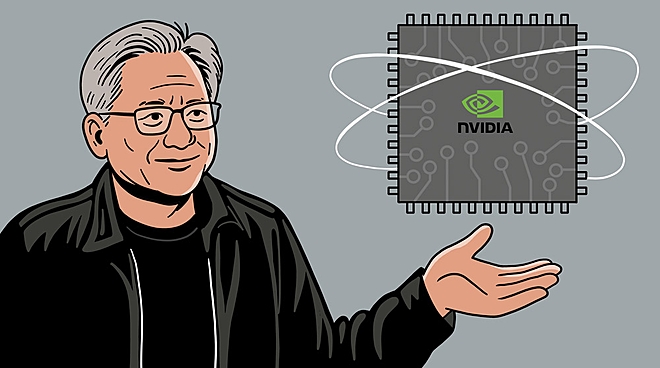
India’s richest are hiding in plain sight and getting away with it. A shocking new study reveals that India’s top 0.1% report just 1% of their wealth as income. That’s not a typo. Despite tighter laws, AI surveillance, and faceless tax filing systems, the ultra-rich are barely paying their dues, while middle-class Indians shoulder the burden. Why isn’t the system catching them? How big is the gap? And what does it mean for your money and the economy? This explosive investigation has the answers. Don’t miss it, because the numbers will leave you stunned. In June 2024 (and then again in June 2025), Nvidia surpassed Apple and Microsoft to become the world’s most valuable company, with a market capitalisation exceeding $3 trillion—a staggering ascent for a chip designer founded in 1993 over a Denny’s breakfast in East San Jose. As chronicled in Tae Kim’s ‘The Nvidia Way: Jensen Huang and the Making of a Tech Giant’, Nvidia’s journey, under the relentless leadership of co-founder and CEO Jensen Huang, is a masterclass in innovation, resilience, high-performance culture and strategic foresight. For investors in high technology, Nvidia’s story offers profound lessons on identifying companies with enduring value and defensible “moats” in the volatile tech landscape. A humble, but rocky start Nvidia’s origin story is quintessentially Silicon Valley. In 1993, Jensen Huang, a Stanford-educated electrical engineer, joined forces with Curtis Priem and Chris Malachowsky to create Nvidia, fueled by a vision to revolutionise computer graphics. Their initial focus was the nascent gaming market, where demand for 3D graphics was emerging. They sketched out plans at a Denny’s, aiming to build chips—graphics processing units (GPUs)—to power immersive visuals. The early years were brutal. Nvidia’s first products, the NV1 and NV2 chips, launched in 1995 and 1997, respectively, were commercial flops. The NV1, designed for 3D gaming, chose a technology that seemed more advanced than what was available but offered poor performance and compatibility issues with the market-leading game ‘Doom’. The company had misjudged the market needs f
This article was originally published on July 01, 2025.
 New episodes every Friday










 New Process Alert
 Seems like you've uploaded a wrong QR code. Please upload the QR code downloaded from MF Central platform.


