 Widely read:


 AI-generated image
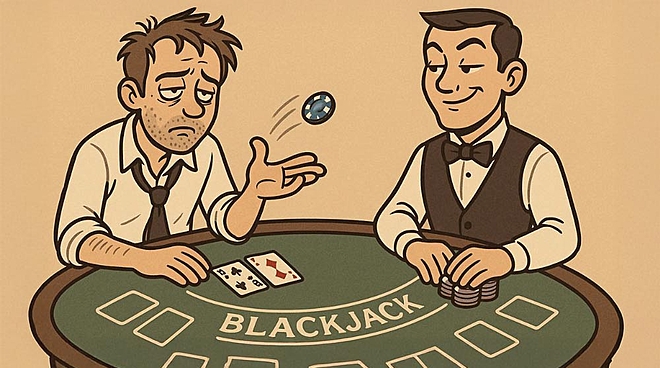
Dhirendra Kumar's Editor's Note, 'The gambling instinct', published on April 19, 2025, explored how our natural urge for quick gains often surfaces in fantasy gaming and F&O trading, straying many away from genuine wealth-building.
The piece drew strong responses from readers, who shared their views on risk, discipline and investing.
As a token of appreciation, we dedicate this section to our readers, whose insights foster discussions on thoughtful and responsible investing.
Summary
The meteoric rise of fantasy gaming platforms like Dream11, with Rs 6,400 crore revenue in FY23, reveals something fundamental about human nature. These apps have tapped into our gambling instinct while navigating India's legal landscape by positioning themselves as 'games of skill'. This distinction - skill versus chance - is crucial yet increasingly blurred in today's financial world.
The same gambling impulse manifests in financial markets. The explosive growth of F&O trading among retail investors mirrors the gaming app phenomenon. Both offer the thrill of quick gains and the 'just one more try' mentality after a loss. Both claim to require expertise but largely operate on chance.
For the average user, fantasy gaming and F&O trading are mathematically designed to favour the house. Gaming platforms take a cut regardless of who wins. Brokers earn on every F&O transaction, while institutional players extract value from retail traders. SEBI's finding that nine out of 10 F&O traders lose money is unsurprising - it's how the system works.
If you must indulge the gambling itch, fantasy gaming is arguably less destructive than F&O trading, where leveraged positions can wipe out much more than the initial capital.
Both activities are sold as skill-based. Fantasy gamers study player stats; F&O traders trust their technical analysis. For a tiny minority, this may yield results. For most, it's an expensive illusion.
The bigger cost is the mental bandwidth diverted from genuine wealth-building activities like career growth, business building or long-term investing.
Successful investors acknowledge the gambling instinct but separate it from serious investing - perhaps allocating 5 per cent of their capital for 'play' while managing the rest with discipline.
The greatest investment skill is self-awareness. As Charlie Munger said, "The first rule of compounding is never to interrupt it unnecessarily." The truly skilled investor knows when not to play at all.
What our readers say
Thanks very much for your email explaining the pitfalls of F&O and gaming!
This reminds me of some of the books I had read during my student days - Money, Super Money, Hyper Money or something like that. I forget the author's name, but he was a successful market player on Wall Street a few decades ago, only to sell all his holdings in the market, leave New York and then settle down in some remote, quiet place, finding peace of mind and good health.
Later, he decided to write the three books that I mentioned. They all had a few pearls of wisdom similar to what you have stated:
Never underestimate the power of compounding.
Do not ignore the opportunity cost in terms of time and health involved in all the juggling to beat the market or in search of higher returns.
Lead a content life with the interest earned on compounding of fixed investments.
I believe they still hold true to this day, volatility or otherwise. - Dr DS Hegde
Brilliant and incisive. You hit the nail on the head, explaining our evolutionary 'hardwired instinct' of the risk-reward relationship. - Nagesh Mittal
Very nice to hear from you. It is very insightful and realistic. Thanks a lot. - Arun Bhushan Prasad
Your note should be framed in golden letters in an investor's living room/study. Those following it in letter and spirit will have a comfortable investing journey. - N L Bedia
Welcome the consistent advice repeated regularly to keep us - the investors - grounded and reassured. - Naresh Subramanian
Reading your analysis and report on F&O options is very interesting. Since I am a retail trader, I do not gamble with this option as my CA told me 5-6 years back that it is not a retailer's cup of tea.
As you have stated, SEBI has also said that nine out of 10 players lose money. I feel SEBI should not be the provider of a gambling platform and should remove this sort of F&O trading practice as part of their CSR so that small retail players do not lose money.
F&O trading is designed for brokers and other players to make quick money.
Many people think trading in shares is a sort of gambling, similar to horse racing. I was also of this opinion. Hence, though I bought shares in the 1980s, secondary market trading started as late as 2015.
Since then, my old perception of the share market has changed to a positive opinion because I am neither an F&O player nor much into margin trading.
Nevertheless, I am interested in reading these notes. - Umesh Shanbhag
This article was originally published on May 16, 2025.
Ask Value Research 
 New episodes every Friday











 New Process Alert
 Seems like you've uploaded a wrong QR code. Please upload the QR code downloaded from MF Central platform.


