




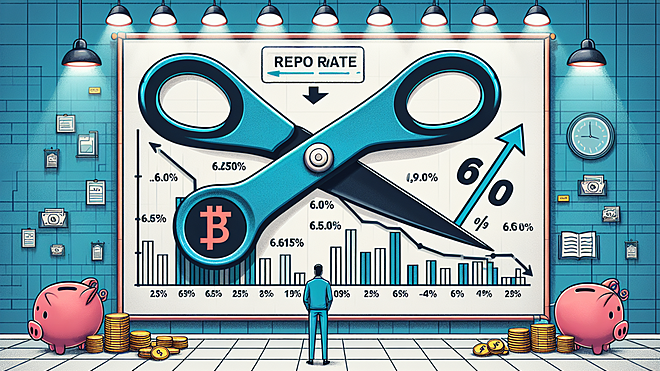
 AI-generated image
RBI Monetary Policy: A 25 BPS Repo Rate Cut
The Reserve Bank of India (RBI), under Governor Sanjay Malhotra, announced a 25 basis point (bps) cut to the repo rate, bringing it down to 6.25%. This move marks the first rate reduction in five years and comes as a response to evolving macroeconomic conditions.
Decoding the Decision
The decision, made unanimously by the Monetary Policy Committee (MPC), reflects a shift towards an accommodative monetary policy.
Impact on Lending Rates
This repo rate cut is expected to translate into lower lending rates offered by banks, potentially stimulating borrowing and investment across various sectors.
Boost to Economic Growth
Lower borrowing costs could encourage businesses to invest in expansion, leading to increased economic activity and job creation.
Inflation Outlook
The RBI's decision comes amid moderating inflation. The central bank projects headline inflation for FY25 at 4.8% and for FY26 at 4.2%.
Food Prices and Inflation
- Easing food prices have played a significant role in bringing down overall inflation.
Global Economic Context
The RBI's move aligns with the global trend of central banks adjusting monetary policies in response to changing economic conditions. Factors like global uncertainty and trade tensions may continue to influence the RBI's policy decisions going forward.
Market Response
The rate cut has been largely anticipated by the market, with economists and experts predicting this move. The market will now focus on the RBI's guidance for the future, especially on managing liquidity and ensuring currency stability.
Monetary Policy Transmission
The RBI will be closely monitoring how effectively this rate cut transmits through the banking system to ensure its intended impact on lending rates. The central bank's neutral stance on inflation and growth suggests its willingness to react flexibly to upcoming macroeconomic situations.
Disclaimer: This article was composed with the assistance of artificial intelligence. While we've taught our digital scribe to behave, we still recommend a pinch of healthy scepticism alongside your reading. Enjoy - and proceed with a knowing smile!.
Ask Value Research 

 New episodes every Friday

 New Process Alert
  Seems like you've uploaded a wrong QR code. Please upload the QR code downloaded from MF Central platform.


