 Widely read:


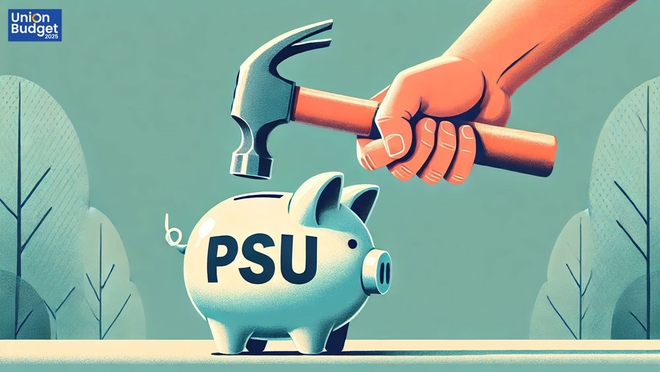
Ever wondered why the government sells its own companies? It's not a garage sale; it's a calculated move to refuel the economy, pay off debts, and promote efficiency. Disinvestment is like parting with family heirlooms — not an easy decision, but sometimes necessary to build a brighter future.
From turning around struggling enterprises to funding ambitious projects, India's disinvestment journey has seen bold reforms, historic milestones, and its fair share of drama. Let's explore how this tool reshapes economies, its challenges, and the iconic deals that have made headlines.
What is disinvestment?
Think of it this way: if you sell an old, underutilised asset to renovate your home, you're reinvesting for growth. Similarly, when the government reduces its stake in public sector undertakings (PSUs) or hands them over to private players, it's disinvestment in action.
In simpler terms, disinvestment is when the government sells part or all of its ownership in PSUs to raise funds, improve efficiency, or involve the public in ownership through stock market offerings.
Why does the government disinvest?
- Raise capital: The money from disinvestment funds social schemes, infrastructure projects, and even debt repayment.
- Boosting efficiency: Handing over PSUs to private management often improves performance and profitability.
- Promote public ownership: Public offerings of shares let individuals own a stake in these companies, promoting transparency and accountability.
How does it work?
Disinvestment begins with the government identifying PSUs ripe for sale. Then comes valuation, followed by selecting a method:
- Public offerings: Selling shares to retail and institutional investors via the stock exchange.
- Strategic sales: Selling a majority stake along with management control to private companies.
Here are some of the biggest disinvestments of the 21st century:
- ONGC (2004): Raised Rs 10,542 crore via a public offering.
- Coal India (2010): Collected Rs 15,199 crore in what was India's largest IPO at the time.
- Hindustan Zinc (2002): Sold to Vedanta, reducing the government's stake to below 30 per cent.
- VSNL (2002): Handed over to the Tata Group, showcasing how private management can turn around a PSU.
- Maruti Suzuki (2003): Divested shares, leading to its dominance in the Indian car market.
- Air India (2021): Returned to the Tata Group, finally freeing the government from its long-running losses.
- LIC IPO (2022): Generated over Rs 21,000 crore, making it India's largest IPO at the time.

Why is disinvestment important (and why is it tricky)?
Disinvestment is like a double-edged sword — it can unlock value but also stir controversy.
Benefits
- Fuel for growth: Encourages private investment and reduces the government's financial burden.
- Debt management: Helps manage fiscal deficits by generating funds.
- Economic momentum: Boosts market confidence and attracts foreign investments.
Challenges
- Valuation woes: Disputes arise over whether assets are sold at fair prices.
- Political pushback: Concerns over job losses and national security often spark resistance.
- Execution hurdles: Regulatory complexities can slow the process.
The evolution of disinvestment in India
India's tryst with disinvestment began in the 1990s but gained traction with the Disinvestment Policy of 2000, which formalised the process. In recent years, the government has focused on "strategic disinvestment", prioritising core and non-core sectors for sale.
Concluding thought
Disinvestment isn't just about balancing the books; it's about reshaping the economic landscape. It reflects a government's priorities, faith in the private sector, and its commitment to growth. While it's often a subject of heated debate, there's no denying its pivotal role in building a more efficient and self-reliant India.
As India continues its journey toward economic transformation, disinvestment will remain a key lever — one that blends pragmatism with progress.
Keep playing "Budget Lingo"
Revisit the previous term: Budget estimates: The nation's annual financial crystal ball
Learn the next term: Monetary policy vs fiscal policy: Tools of economic management
Stay with us as we continue to decode the terms that demystify India's Union Budget.
Disclaimer: This content is for information only and should not be considered investment advice or a recommendation.
For grievances: [email protected]
Ask Value Research 
 New episodes every Friday









 New Process Alert
 Seems like you've uploaded a wrong QR code. Please upload the QR code downloaded from MF Central platform.


