 Widely read:




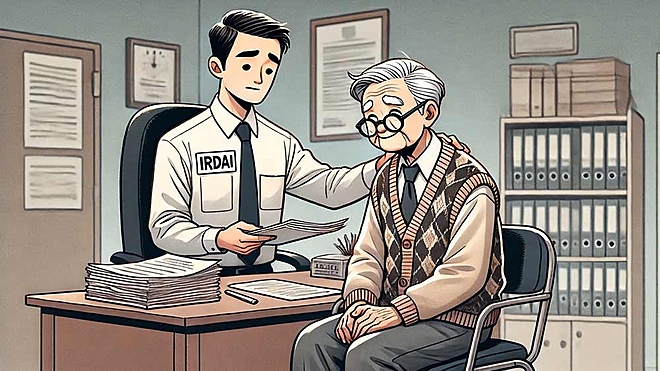

In a major relief, the Insurance Regulatory and Development Authority of India (IRDAI) has capped annual health insurance premium hikes at 10 per cent for senior citizens. This decision, effective immediately, comes after reports of steep premium hikes of 50-60 per cent for elderly policyholders.
If an insurer plans to increase premiums beyond 10 per cent or withdraw an individual health insurance plan for senior citizens, they must first seek IRDAI's approval.
The directive was issued through a circular on Thursday, aiming to control rising health insurance costs for senior citizens and ensure greater affordability.
Why private health insurance premiums are costly
Health insurance premiums are primarily influenced by the cost of hospitalisation, claims outgo, and administrative expenses.
Unlike the government's Pradhan Mantri Jan Arogya Yojana (PMJAY), where hospitalisation charges are centrally negotiated and standardised across hospitals, there is no such uniformity in private health insurance. As a result, hospitalisation costs vary significantly, leading to higher claims for insurers and steep premium increases for policyholders.
To reduce these variations, the regulator has further asked insurers to work towards a common empanelment of hospitals and negotiate standardised package rates, similar to the PMJAY model.
Companies must also publicly disclose the steps they are taking to support senior citizens, including details of the new premium hike cap.
The new directive is expected to bring stability to health insurance costs for senior citizens, ensuring affordability and predictability in premiums.
Additionally, it puts the onus on insurers to streamline hospitalisation expenses and explore cost-control mechanisms, ultimately benefiting both policyholders and the overall health insurance ecosystem.
Also read: 8 essential tips to choose the right health Insurance
This article was originally published on January 31, 2025.
Ask Value Research 
 New episodes every Friday






 New Process Alert
  Seems like you've uploaded a wrong QR code. Please upload the QR code downloaded from MF Central platform.


