




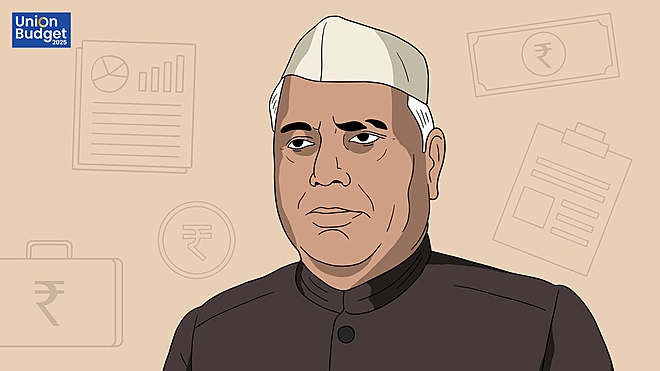
The Union Budget of 1973-74, famously dubbed the "Black Budget," marked a pivotal moment in India's economic history, reflecting a nation's resilience amid turmoil. Presented by Finance Minister Y. B. Chavan, it confronted a Rs 550 crore fiscal deficit - the highest in India's history at the time - while addressing the aftermath of the 1971 Indo-Pak war, a devastating drought, and a global oil crisis. Despite the grim backdrop, the Budget laid the foundation for long-term resilience, prioritising social welfare, food security, and self-reliance, and symbolised India's determination to transform adversity into opportunity.
Setting the stage: A country in crisis
The early 1970s were a turbulent time for India. Fresh from the 1971 Indo-Pak war, which led to the creation of Bangladesh, the nation faced staggering post-war expenses and the daunting task of rehabilitating over 10 million refugees. The aftermath of the war left the economy strained, with defence costs escalating to Rs 1,600 crore.
Adding to the economic strain was the 1972 drought, one of the worst in decades, which devastated agricultural production and triggered food shortages. Rural India faced famine-like conditions, while urban centres experienced power shortages and rising unemployment. The global oil crisis further exacerbated inflation, sending fuel prices soaring and widening the trade deficit.
In this backdrop of hardship, Finance Minister Chavan presented a Budget that sought not just to address immediate challenges but to build the foundation for self-reliance. Chavan declared: "This is not a time for hesitation but for bold action to secure our future."
Why was it called the Black Budget?
The Budget's stark financial reality earned it the title "Black Budget." The fiscal deficit of Rs 550 crore - unprecedented at the time - symbolised the immense economic challenges. Such a gap revealed the government's struggle to meet rising expenditures.
The deficit arose primarily due to:
- Defence expenditure: Rs 1,600 crore was allocated to secure the nation post-war.
- Drought relief: Rs 220 crore was earmarked to aid millions affected by crop failures.
- Industrial nationalisation: Costs related to nationalising coal mines, insurance companies, and copper industries added to the strain.
- Food imports: Rs 160 crore was spent importing 2 million tonnes of foodgrains to tackle shortages.
Key themes of the Black Budget
Social welfare above all
Chavan prioritised social justice despite fiscal constraints, allocating Rs 125 crore to welfare initiatives such as rural employment, nutrition programmes, and water supply.
"The economic well-being of the weakest among us is the truest measure of development," he asserted.
Food security amid crisis
With consecutive poor monsoons leading to widespread foodgrain shortages, Rs 190 crore was channelled into irrigation and agricultural development. Emergency imports ensured basic food supply while long-term plans focused on achieving self-sufficiency.
Vision for self-reliance
The Budget reflected a vision of economic independence, directing funds towards fertiliser plants, power projects, and irrigation infrastructure to reduce dependence on imports.
Tax reforms for equity
Wealth redistribution emerged as a theme, with higher taxes for affluent Hindu Undivided Families (HUFs) and partial inclusion of agricultural income in tax calculations - measures aimed at reducing income inequality.
A perspective from today
The Rs 550 crore fiscal deficit in 1973 may pale in comparison to today's deficits, often exceeding Rs 10 lakh crore. Yet, in proportion to the GDP, it represented a financial challenge of similar magnitude.
Many policies from the Black Budget resonate in modern times. The emphasis on food security echoes today's schemes like the PM Garib Kalyan Anna Yojana, while the focus on self-reliance finds parallels in the Atmanirbhar Bharat initiative.
A light in the darkness
Chavan closed his Budget speech with optimism: "India has the resilience to turn adversity into opportunity. This Budget, though heavy with challenges, carries seeds of hope for a better tomorrow."
The Black Budget was more than just a financial plan; it was a reflection of India's indomitable spirit. Despite the challenges of war, drought, and economic instability, it outlined a vision of resilience, equity, and growth.
As India continues its journey towards economic self-reliance, the lessons from the 1973-74 Union Budget remind us of the importance of bold decisions, even in the darkest times, to secure a brighter future.
Continue your journey through "Blueprints of a Nation"
Revisit the previous chapter: India's first Budget: The birth of economic sovereignty
Discover the next chapter: 1991: The Budget that changed India forever
Follow the unfolding story of how the Union Budget has served as a blueprint for India's growth and progress since independence.
Ask Value Research 

 New episodes every Friday








 New Process Alert
  Seems like you've uploaded a wrong QR code. Please upload the QR code downloaded from MF Central platform.


