 Widely read:


 Anand Kumar


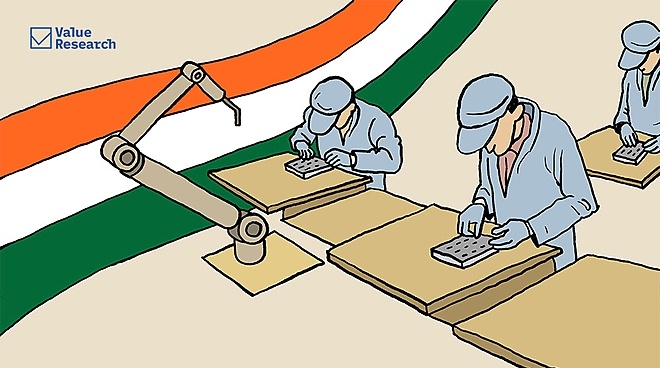
There's an old saying in business that being early is better than being wrong. But what about being late? Now that (finally) India is positioning itself to capture a larger slice of the global manufacturing pie. Investors will find it worth understanding the peculiar advantages and disadvantages of being a latecomer to the industrial party.
Conventional wisdom suggests that latecomers face big obstacles: established competitors, saturated markets, and a steep climb up the technological ladder. Pessimists fear that we're too far behind China. Yet, history tells a different story. Japan's post-war industrial miracle, South Korea's transformation in the 1970s, and China's rise since the 1990s demonstrate how latecomers can turn their position into an advantage. Each succeeded not by copying predecessors but by adapting strategies to their circumstances and the global environment.
What makes India's current manufacturing push particularly intriguing is its timing and context. Unlike its predecessors, India is attempting an industrial transformation in an era of fragmenting supply chains, heightened environmental consciousness, and rapid technological change. The old East Asian strategy of low-cost labour and scale-driven efficiency isn't enough anymore. Sustainability, automation, and digital integration are as important as cost competitiveness.
Our 'latecomer advantage' comes with built-in lessons. India doesn't have to repeat China's environmental missteps or Japan's asset bubble problems. We can leapfrog outdated technologies and build green manufacturing infrastructure. Our robust software capabilities mean it can embrace Industry 4.0 principles from the start. But the very advantages of being late can breed complacency, creating a false sense of security. While the current capital goods boom signals a promising start, sustaining this momentum requires more than just capital allocation - it demands the right balance between patience and urgency.
This balancing act is particularly crucial given our unique challenges. Infrastructure gaps, skill development needs, and regulatory complexities must all be addressed while keeping pace with global standards. Compared to earlier industrialisers, our job is different.
The stakes are higher, too. In an era of climate panics and geopolitical tensions, the margin for error is smaller than that enjoyed by previous late industrialisers. India can't afford to take the environmentally intensive route to industrialisation that China did, nor can it rely on the kind of export-led growth that powered Japan and South Korea's rise. The path to manufacturing prowess must be charted through a more complex terrain of sustainability requirements, labour standards, and technological integration.
That's the background, but we need to get into the details as investors. As one would expect, the capital goods sector offers a compelling entry point, as our cover story explores in detail. The sector's robust incremental returns on capital employed (I-ROCE) and massive order books suggest that companies aren't just riding a cyclical wave-they're positioning themselves for structural growth. However, the key to successful investing in this space lies in identifying companies that aren't merely expanding capacity but are building adaptable, future-ready capabilities. Look for players who understand that India's manufacturing story isn't about replicating past successes.
The global advantages may only last for a while. The world won't wait forever for India to get its manufacturing act together, but rushing headlong could squander the latecomer's advantages. Success in manufacturing is about more than just catching up. It's about choosing which race to run first and then running it in a way that multiplies your advantages. Being late isn't about being wrong or right. It's about being ready.
Also read: Ride India's growth engine
Ask Value Research 
 New episodes every Friday








 New Process Alert
 Seems like you've uploaded a wrong QR code. Please upload the QR code downloaded from MF Central platform.


