 Widely read:


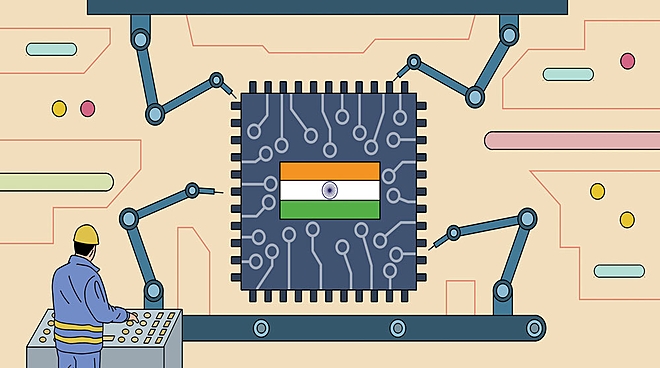
India is a rapidly growing consumer of semiconductors. Its market was worth $22 billion in 2019 and is expected to nearly triple to $64 billion by 2026, according to Counterpoint Technology Market Research. The Government of India (GOI) estimates that the market size could be $110 billion by 2030, which would be 10 per cent of the world demand. About 20 per cent of the world's semiconductor design engineers are from India. The GOI announced a semiconductor mission to encourage the development of a semiconductor ecosystem in India. Over $10 billion was allocated as incentives for manufacturers to set up fabrication, packaging and design facilities in the country, with a 50 per cent subsidy towards capital costs. Under this plan, some progress has been made in attracting investment from credible companies. The approvals The first fabrication (fab) facility that has gained approval is a $11 billion joint venture between PCMC (Taiwan-based foundry - Powerchip Semiconductor) and Tata Electronics. This partnership is setting up the capability to manufacture 110, 55, 40 and 28 nanometers (nm) chips. Though far from the cutting edge (to put this in context, TSMC (Taiwan Semiconductor Manufacturing Company) plans to launch a 2nm chip in 2025), these technology nodes nevertheless are used in the bulk of chipmaking, with 28nm being the most advanced node using planar CMOS transistors. The choice of technology limits the cost while still addressing a significant market. These chips are used in power management, display drivers, microcontrollers and high-performance computing. Tata Electronics will also build a $3.5 billion plant in Assam for outsourced semiconductor assembly and testing (OSAT) using wire bond and flip-chip technologies, with more advanced technologies planned for the future. A 60-year lease for 170 acres has b
This article was originally published on September 01, 2024.
 New episodes every Friday













 New Process Alert
 Seems like you've uploaded a wrong QR code. Please upload the QR code downloaded from MF Central platform.


