 Widely read:


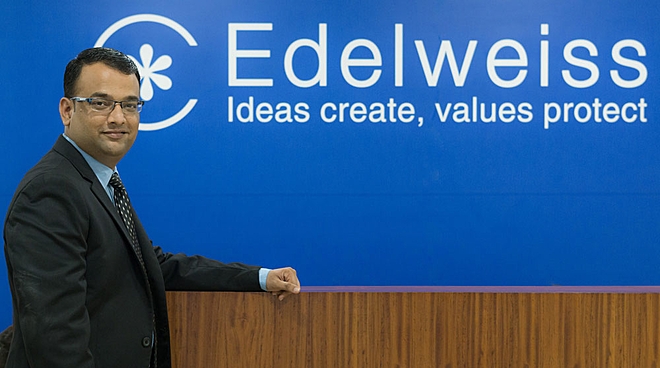

Factor investing, a widely recognized strategy in global markets, is now steadily gaining traction in India. Bhavesh Jain, co-head of factor investing at Edelweiss Mutual Fund, anticipates a significant shift in the investment landscape over the next five to 10 years, expecting many traditional funds to transition toward rule-based and factor-driven approaches.
In this insightful interview, Jain breaks down the concept of factor investing, discusses how he leverages various factors in his investment strategy and highlights the potential challenges.
Additionally, he shares the strategic outlook and exit approach behind the Edelweiss IPO Fund. Here is the edited transcript of the interview...
You are the co-head of factor investing at Edelweiss Mutual Fund. What exactly is factor investing, and how is it different from traditional investment strategies?
In equity markets, most people are aware of various investment styles, such as growth and value. However, factor investing may come across as a sophisticated investment style primarily focused on numbers.
For investors, the main ingredients to make returns are quality, growth, value, momentum or volatility. At Edelweiss Mutual Fund, we refer to these styles as factor investing.
Simply put, if you have to choose between two stocks that are similar in every aspect, you should choose the one growing faster. This is because a stock with faster growth is likely to yield higher returns in future. So, growth is a factor here. Similarly, if two companies are giving similar returns, you will prefer the one with lower volatility. In this case, we take volatility into account.
Again, if you're trying to find a multi-bagger between a company with a market capitalisation of Rs 20 lakh crore or Rs 2,000 crore, you would choose the company with a lower market cap. Therefore, size plays a significant role in stock selection.
Factor investing is a well-known phenomenon in the global markets, and in our markets, it has seen great acceptance in the last three to four years. But I think in the next five to ten years, you will see many funds changing the traditional investment style and moving to a more rule-based and factor-based investing philosophy.
What key factors do you focus on, and how do you determine their relevance and potential for generating alpha?
Factor-based investing extends beyond stock selection, serving multiple purposes. You can use it for both stock selection and asset allocation.
For example, we use factor investing in our balanced advantage fund for asset allocation and our business cycle fund for sector rotation. So, factor-based investing can be used in multiple ways.
When focusing on a specific factor, we choose to prioritise growth. This is because India is a growth market, and we expect that for the next 15-20 years, it can remain one of the fastest-growing economies in the world. Given this context, we heavily prioritise a growth-based strategy in our stock selection. We rank all companies based on growth, which can include sales growth, EBITDA growth, PAT growth and EPS growth.
The next filter is to look at the consistency of that growth. In the Edelweiss Business Cycle Fund, we prioritise growth, quality, value and momentum. Momentum instils confidence that those stocks that has been performing well over the past few months will continue to do so in the future. That's why we prioritise momentum as a strategy in some of our selected funds. So, you can say that the key factor that differentiates Edelweiss and other fund houses is consistency of growth and momentum.
Different funds have different investment mandates, so how does investing factor into such scenarios?
Yes, as you rightly pointed out, different funds have different mandates. So, in the business cycle fund, it has more to do with the sector rotation.
For a product such as a balanced advantage fund or even a large-cap fund, the focus will primarily be on quality and growth as the key factors. Regarding aggressive funds, the factor will be value and momentum. The beauty of factor-based investing is that you can have a bucket or basket of each and every factor and market cap. So, you can control your input depending on what kind of output you want.
Such strategies also help us manage more assets with fewer people. Today, a team of five members can manage assets worth Rs 35,000 crore because everything is rule-based, and we can track investments easily.
A fundamental fund manager or analyst, on the other hand, can track only about 50-60 stocks in a portfolio at best. So, suppose we have the NSE 500 as the universe or any other benchmark. It becomes easier to manage because everything is based on rules, and then that rule can be tweaked to manage all kinds of products and investments. We can manage everything based on philosophies such as stock selection, asset allocation and sector rotation.
What risk management practices do you have in place to mitigate these potential downsides?
The biggest risk of factor-based investing is that you don't dive deep into the fundamentals of a single company.
If a fund manager examines an FMCG company from a fundamental perspective, they will assess the company's sales growth, identify the fastest-growing segment and forecast future events and valuation trends over the next three to four years.
However, when it comes to factor-based investing, we can track 500 companies using a ranking methodology. The risk arises from tracking 500 companies, as we are not delving deeply into them. There can be issues related to corporate governance, liquidity, balance sheet issues, or some sector-specific news that can take a big hit on your factor-based portfolio.
That's why, as a risk management tool, we have extremely well-diversified portfolios.
As already stated, we don't restrict ourselves to a single factor, and we have portfolios of 50-60 stocks rather than a concentrated portfolio. In addition, our risk management team actively excludes certain stocks based on their analysis. They scrutinise promoters' track records, corporate governance, leverage and stock liquidity.
Our risk team may blacklists 40-50 stocks at given point in time out of the 500 companies in our universe, which we cannot purchase in any of our funds. So, in a way, we are trying to eliminate stock-specific risk in our portfolio.
Apart from that, various other risk management practices have been put in place to mitigate the downsides.
Since you don't deep dive into any particular stocks, how do you select the stocks for the various equity funds?
To give an example, suppose I want to select 10 stocks from the Nifty 50 companies based on the growth or growth plus momentum factor. Firstly, after every quarterly result, we will get growth numbers (basically sales growth) for all 50 companies.
Therefore, we will rank the stock with the highest sales growth first, while the stock with the lowest growth will occupy the 50th spot. Similar to the growth rankings, we also rank stocks based on EBITDA and profit after tax (PAT), following the same methodology as the growth rankings. After that, we compute the momentum score and average this rank. The stock with the highest return over the past three months will rank first in the momentum score.
The stock that has given you the lowest return in the last three months will be ranked 50th. We similarly rank them over their 12-month returns, too. We then calculate the average of the three-month and 12-month ranks, providing us with the momentum rankings.
So, let's say we have a mandate to create a portfolio that prioritises growth, we will select the top 25 stocks. From those 25 stocks, I will select 10 stocks that exhibit the most robust momentum.
As you can see, we are not making any predictions about the future. We are just ranking based on historical growth and returns. This is our 10-stock portfolio of growth plus momentum.
Can you give us an overview of the Edelweiss Recently Listed IPO Fund's strategy? What are your criteria for evaluating IPOs and selecting stocks for this fund?
We launched this fund in February 2018 as a closed-ended fund because it was the first product within the MF industry with an IPO theme.
We invest in all the upcoming and last 100 IPOs listed on the main board (BSE or NSE) through this fund. We always deploy 80 per cent of the assets in the last 100 IPOs as per our mandate. So, on the selection question, we, as a fund house, get the opportunity to meet the lead managers, the investment banker who is coming up with the IPO, and even the company's management. We also have the opportunity to visit the company's plant, factories, and offices, which gives us access to more information than a typical retail investor. Therefore, our selection process is significantly superior to that of a typical individual investor.
While evaluating any company, we consider various factors, the most crucial of which is whether the company will experience secular growth or cyclical growth. Based on this factor, we decide whether to participate in the IPO, stay away, or even take a tactical position.
What's the typical holding period for stocks in this fund, and under what circumstances do you decide to exit a stock?
The primary reason to divest from the stocks in this fund is a shift in the management's stance.
So, if during the IPO, they say they are raising money for something and within six months they use the money for some other thing that is likely to impact their profits, we exit the company. Our holding period is typically two to three years because 35-40 new IPOs enter the market every year.
Secondly, we exit a stock if there is some negative news or a corporate governance issue in the portfolio company. This is not only applicable for the IPO fund, though.
Even when we reach our price target, we withdraw from that stock, and in certain instances, the prices have surged significantly beyond the fundamentals.
We can exit the stock in various ways, but the most crucial one is if I find a better opportunity, either due to its valuation or growth potential.
Also read: Interview with Akhil Chaturvedi of Motilal Oswal AMC
Disclaimer: This content is for information only and should not be considered investment advice or a recommendation.
For grievances: [email protected]
Ask Value Research 
 New episodes every Friday






 New Process Alert
 Seems like you've uploaded a wrong QR code. Please upload the QR code downloaded from MF Central platform.


