 Widely read:




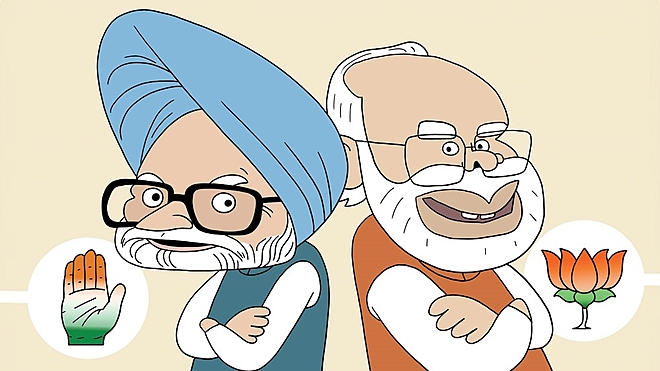
Elections are a good occasion to test popular narratives against verifiable facts. Let us pick a few and try to verify them. By the time you read this column, voting will have been completed nationwide. This is deliberate, as the purpose is not to contrast prime ministers, governments or political parties. But to drive home the point that narratives tend to be motivated, and thus, we must be careful before buying into them. Is the NDA less populist than the UPA? According to data from RBI, the fiscal deficit was 4.91 per cent of GDP when Atal Bihari Vajpayee first became prime minister in May 1996. In less than a month, H D Deve Gowda took over the office. Eight months later, I K Gujral was elected prime minister and remained until March 1998. Then, Vajpayee returned as prime minister in October 1999 for a full tenure till May 2004. During his term, the fiscal deficit remained above the 5 per cent mark. In his last year (2003-04), it fell to 4.34 per cent of GDP. This is when India's GDP growth increased in tandem with a global economic boom and coincided with Manmohan Singh becoming prime minister. The tax-GDP
This article was originally published on June 01, 2024.

 New episodes every Friday











 New Process Alert
  Seems like you've uploaded a wrong QR code. Please upload the QR code downloaded from MF Central platform.


