




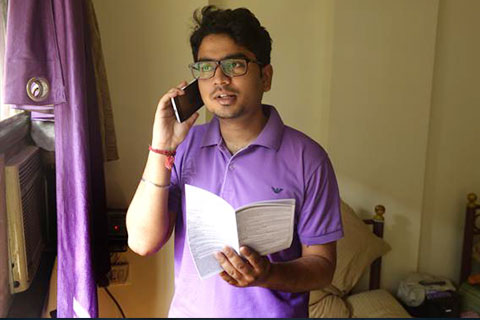
For Rajdeep Ganguly, the first paycheck was not about spending all of it. "I bought watches for my parents and some gifts for my friends. The rest I saved as I live in a paying guest accommodation in Mumbai and there are expenses like rent," said the 24-year-old who has been working as an associate analyst at a global fast moving consumer goods (FMCG) firm since mid-June.
This is his first job. Ganguly plans to spend his salary judiciously, keeping in mind expenses such as rent and utilities. "Even during weekends, I try to keep a cap of Rs1,500-2,000, whether it is watching a movie or eating out," he said.
What about savings and investments? "As of now, savings have not been very great. There is one tax-saving instrument I invest in. I am aware of instruments such as systematic investment plans (SIPs) and wish to start investing in them in a couple of months," said Ganguly. He plans to consult his brother, a finance professional, for these investments.
Ganguly is at a stage where he can get a good head start with his savings and investments if certain conditions are met. Here are five things you can do so that your first 'money' steps are in the right direction.
Save, even a small amount
Start saving right from the beginning of your career to build a healthy corpus as well as an emergency fund. "Try and save 20-25% of your salary. It is a matter of cultivating a habit," said retired Major Ashish Chadha, chief operating officer, Chadha Investment Consultant Pvt. Ltd.
For these funds, you can look at options that also help save on taxes. "(Such) savings could be through Public Provident Fund (PPF) or an equity-linked savings scheme (ELSS). Depending on the tax bracket, one could invest up to Rs1.5 lakh under section 80C (of the income-tax Act)," said Dilshad Billimoria, director, Dilzer Consultants Pvt. Ltd.
However, "It is also important to use tax-saving options judiciously and in line with your financial goals," said Vishal Dhawan, founder and chief financial planner, Plan Ahead Wealth Advisors.
For example, a product that will mature after 10 years is not suitable if your goal is higher education in 3 years.
Set clear goals
Have a clear set of goals right from the start, as that will provide direction. If the goal is long-term in nature, your savings will benefit from the power of compounding.
Whether you want to buy a new bike, a hi-tech gadget in the first year or, say, a car in 5 years, define the goals. Even a big decision like starting a venture on your own in some years has to be defined at this stage. Setting goals and their timelines help in better asset allocation.
"Initially, one may think of saving only for tax purposes," said Billimoria. For example, if you plan to buy a car, you can start planning for its down payment. If you plan to be self-employed, use this time to build up adequate savings through investments with low lock-in periods. "You must have at least 2 years of living expenses saved up in this case so that you give your venture enough time," said Dhawan.
Ganguly, for example, plans to buy a bike in a year's time and has been saving Rs5,000-10,000 a month with that target in mind.
Plan investments
Having big-ticket investments at this stage may not be possible as salary levels are lower. However, it is best to keep track of income and expenses for future investments. "Make a statement of incomes and expenses. Consider the rent and EMIs, among others, to know the surplus of income over expenses and that amount must be saved. This money can then be invested based on a person's financial needs, age, type of risks she can take, and other factors," said Surya Bhatia, managing partner, Asset Managers, a Delhi-based financial planner.
Experts caution on the individualistic nature of such investments. "Avoid investing just like your friends and colleagues. Their position and responsibilities can be different. Also avoid investments that only help you save tax but are not aligned with your goals," said Dhawan.
Keep unnecessary debt away
While one may want to enjoy the first salaries by spending it, beware of taking on debt. If you have taken an education loan, take stock of it and plan the repayment. "If you have a huge amount of 'bad debt' like a personal loan, then we encourage you to clear that," said Billimoria.
Look at all loans in terms of cost of borrowing. "When an investment is done, is the return from that going to be better than the cost of borrowing after adjusting the taxes? If the return is better, then it is a good loan to retain," said Bhatia. The approach can be different based on the type of loans as well.
The new salaried phase also opens up options of credit cards as most of them are offered with the salary account. "Credit card debt can be one of the costliest. In some cases, people over-leverage the credit and the debt can get difficult to repay," said Rajiv Raj, co-founder and director, CreditVidya.
The key lies in using credit cards judiciously and building a good credit score. "For those just starting their careers, credit cards are an important instrument to build a credit history," Raj added.
Know your salary structure
If this is your first job, one of the key challenges may be understanding the components of the salary structure. Understand components such as house rent allowance (HRA) or medical reimbursement, and how these affect the in-hand salary. "One comes into a world of jargon. People usually raise queries on what is a provident fund (PF) and why that gets deducted, and so on," said Anil Rego, founder and chief executive officer, Right Horizons.
Read about investment options such as different types of mutual funds. Often, parents ask their children to invest in traditional products such as recurring or fixed deposits. "You need to educate yourself and your parents about different products," said Bhatia.
An early beginning along with discipline and fiscal prudence can help in better finances now and later.
In arrangement with HT Syndication | MINT
This article was originally published on December 20, 2016.
Ask Value Research 
 New episodes every Friday

 New Process Alert
  Seems like you've uploaded a wrong QR code. Please upload the QR code downloaded from MF Central platform.


