 Widely read:


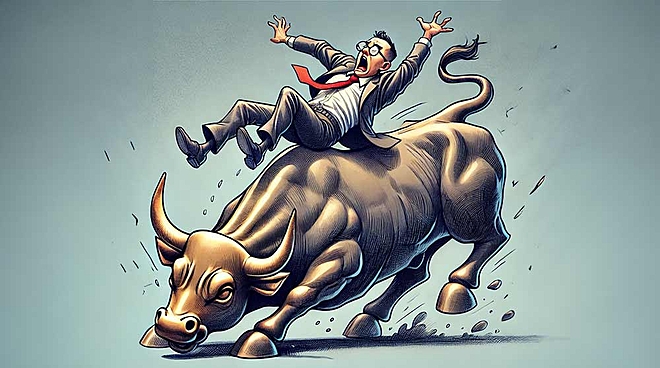 AI-generated image

We are all overconfident. We have this natural assumption that if we are doing something ourselves, we'll do it better than anyone else. Psychologists call this 'control bias', and it applies to all sorts of areas of human behaviour. I came across it in an article by an American security expert named Bruce Schneier.
He is a cryptographer and computer security specialist who has evolved into a thinker and writer about all kinds of risks and security. I find it interesting that some of his ideas about risk and human reactions to it have great relevance to investing. A couple of years ago, I wrote about how people tend to overrate the risks they face from rare but dramatic events and underestimate the risks that they face from everyday events.
Suggested read: Understand and control
According to this article, we tend to underestimate risks in situations where we are in control and tend to overestimate risks in situations when we are not in control. The most common example is the fear of flying versus the perception of risk while driving. There's clear evidence that flying in a commercial airliner is by far the safest mode of transport. In contrast, Indian roads are quite unsafe. Yet, many sensible people have a deep fear of flying but are quite unconcerned about taking huge risks while they are driving.
Worse, people take slippages in safety levels on the road unthinkingly. They chat on their phones while driving (it's not unusual to see two-wheeler riders type SMS messages while driving); they drive after having had a couple of drinks; they drive when they know their brakes or tyres are not good; they overtake while turning, so on and so forth — the list is endless. And yet, they are scared of flying.
Suggested read: What's risky and what isn't
All these could be examples of 'control bias'. When we are doing something ourselves, we have an illusion of control, which feeds a biased view of safety. We underestimate risk because we are in possession of all the facts, and we feel that we can control the situation when, in reality, we can't. When flying, we really don't know what's happening, so we do not have the illusion of control.
I find that this illusion of control is exactly what makes investors underestimate risk while investing. Many investors don't actually know enough to be dabbling in stocks. Yet they do so because they have a large amount of information, which makes them believe that they know enough to be in control. Someone sells investors a story about a stock, and that story appears to have enough information to give an adequate illusion of control. If the story is dished out by a broker's employee and is dressed up as research, then it appears to be all the more believable.
This is also the reason why many knowledgeable investors advise even newbies against investing in mutual funds. Experienced investors have enough information about stocks but feel inadequately informed about what is going on if their money is in a mutual fund. The mutual fund investment manager is like a pilot and you don't know what he's doing, so naturally, you assume the worst.
Unfortunately, investing also has its equivalent of driving drunk or without good brakes and tyres. Almost no individual stock investor follows any systematic risk-control procedures on their portfolio. They don't diversify properly. They allow their portfolio to have odd concentrations in one or two stocks or sectors and they don't track what is happening to the stocks they own. The fact that they are doing things themselves gives them the illusion that they know what's happening, and if the situation gets tricky, they'll manage to get out of it.
Also read: What's in your hand and what isn't
Ask Value Research 
 New episodes every Friday







 New Process Alert
 Seems like you've uploaded a wrong QR code. Please upload the QR code downloaded from MF Central platform.


