 Widely read:


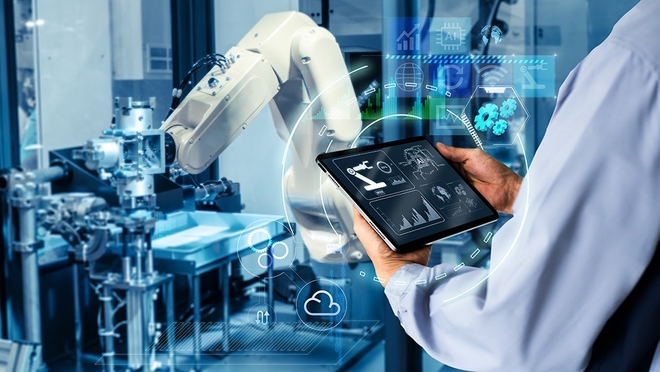

In the rapidly evolving world of technology, the electronic manufacturing services (EMS) industry stands out as a dynamic sector in the global market. Not only have several companies within this industry recently been listed, but they have also performed well. Evidently, the buzz around this industry primarily stems from its growth potential. As per Frost & Sullivan, the Indian EMS industry is expected to grow at an annual rate of 34 per cent until FY26, reaching a staggering value of Rs 4.5 lakh crore. This growth is attributed to the ongoing 'China plus one' trend, where companies (mostly in developed countries) are seeking to diversify their supply chains and moving away from a sole dependence on China. In a bid to boost this growth further, the Indian government has introduced the PLI (production-linked incentive) scheme, which will attract investments as well as offer incentives to manufacturers. So, we chose to dive deep and see how the companies in this industry operate and the factors to look at while analysing such companies. Understanding EMS: Operations and categories Companies in this industry operate as contract manufacturers for global consumer brands. Initially, these companies focused solely on segments like manufacturing and assembling products. However, over the last few years, they have expanded operations into the designing of products. The operations of these companies can be classified into four main categories: Original design manufacturing : Companies (original design manufacturers or ODMs) manufacture products as per the specifications provided by the original equipment manufacturers (OEMs). Electronics manufacturing services: It is the most prevalent model in India , where companies manufacture products based on customers' specifications. Job work: Companies are only responsible for assembling the products. Very small-sized companies follow this model. After-sales services: Companies are responsible for maintaining their customer's brand identity in the market. In India, the typical services offered by the companies in this industry include printed circuit board (PCB) assembly, box builds of electronics (manufacturing the final product, including adding the OEM's logo and dispatching to the warehouse for selling) and contract manufacturing of consumer electronics. Let's have a look at the most common features of the companies within this industry. Key features of EMS companies Client relationships and revenue concentration: Companies in this industry usually have a limited client base due to the high scale of manufacturing and quality standards. Therefore, maintaining strong relationships with them is essential for future growth. Customer retention ratio and the duration of client associations are key indicators of strong client relationships. For instance, Cyient DLM 's prominent customers have been associated with it for over 11 years, as of FY23. However, a limited client base may lead to concentrated revenue sources. This means that a few customers contribute to the majority of the revenues. This is very common in an industry like this, and due to this, their trade receivables are also high. For instance, the top five customers of Cyient DLM contributed to more than 65 per cent of the revenues in FY23. The loss of any significant client can substantially impact the company. Revenue concentration DCX Systems' largest customer accounted for about 56 per cent of revenue in FY22 Company Revenue from top five customers (FY22)

 New episodes every Friday













 New Process Alert
 Seems like you've uploaded a wrong QR code. Please upload the QR code downloaded from MF Central platform.


