 Widely read:


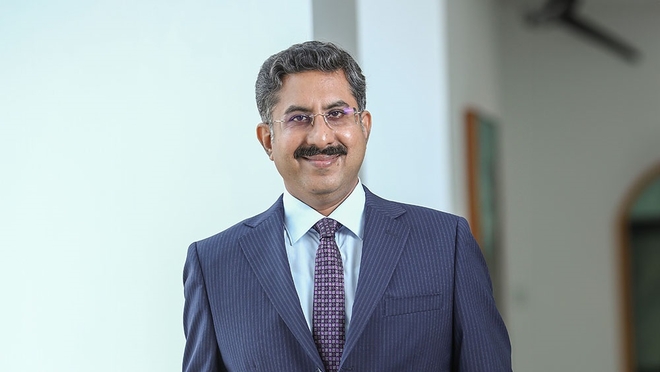

Ajay Tyagi, head of equities at UTI Asset Management Company (AMC), discusses his insights from his two-decade career in asset management. He discusses his investment strategy and why he has stayed with the same fund house for the past 23 years. Edited transcripts... You started your journey at UTI AMC way back in 2000 as an analyst through campus placement. Did you have a brush with markets while you were studying? If you look at my family background, none of my elders has been in the financial sector. So, it was a new domain for me, with no background or understanding of the markets. But when I was in college, Indian markets started inviting foreign investors, and there was a lot of news and glamour associated with the financial markets. Indian equities were coming out of the erstwhile traditional broker-driven markets and entering the more professional-driven markets. Some of the foreign brokerages, domestic private sector and mutual funds had already started making a splash. Those changes in the financial markets, post-liberalisation, caught my attention to start my journey in the financial world. Can you tell us about your starting days and what it was like to analyse stocks for the biggest fund house in the country? I would say analysing stocks was not materially different from how we do it today. As I said, at least three or four years before I joined in the year 2000, you did have a lot of professionals enter the market. We had an advantage to the extent that we knew exactly what processes needed to be followed. Of course, those processes have been refined time and time again over the last two and a half decades here at UTI. Earlier, we used to rely a lot on the annual balance sheets and we would put those numbers into Excel sheets and then analyse them. There weren't as many 'analyst calls' as you see now. I remember when I joined, the most popular analyst call was the one conducted quarterly by Infosys, while the majority of companies in India would have one physical analyst meet at Nariman Point (in Mumbai). And very rarely, if at all, a few companies did a quarterly teleconference, which has now become part of the course. So, I would say the methods were slightly different. Access to information was not as free-flowing and easy as it is today. But the framework, I don't think, has been materially different between now and what it used to be 24 years ago. When did you start managing the funds, and how has your work as an analyst helped you in fund management? I will answer the second part of your question first. I would say it is imperative for any fund manager to actually be an analyst for some time before they start to manage money. This is because the basic framework gets clearer to you only when, as an analyst, you've been crunching numbers, you've been trying to figure out what the value of a company is by using different techniques, and you've been analysing balance sheets. I think the basic groundwork is extremely essential to becoming a successful investor or fund manager, and there is no better training than being an analyst. So that's the second part of your question. When did I finally start managing money? This was basically around the financial crisis of 2008 when I moved from the role of an analyst to that of a fund manager. You've been with UTI for over two decades. What made you stick to one fund house? And how have things progressed for you? As far as what made me stay back, it is basically this question, which I always ask myself, which I still ask myself: "What would be the reason fo

 New episodes every Friday








 New Process Alert
 Seems like you've uploaded a wrong QR code. Please upload the QR code downloaded from MF Central platform.


