



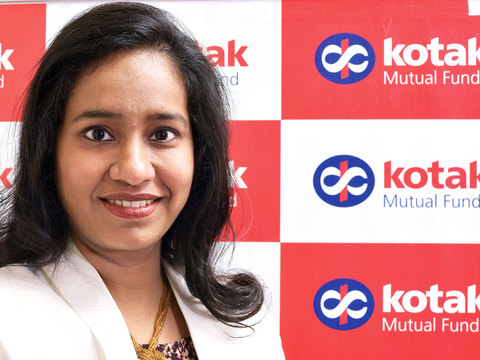
Despite overseeing debt funds worth about Rs 75,000 crore, Lakshmi Iyer, chief investment officer (debt) & Head of Products at Kotak Mahindra AMC is always cool as a cucumber. A big advocate of equity exposure, she says it's time for retail investors in India to warm up to fixed income funds as 'financialization' of assets picks up the pace. Kumar Shankar Roy caught up with Iyer to understand how interest rates would move and how she uses risk mitigation in fixed income investment selection, among other things.
Edited excerpts
Do you think the taxation of debt funds should change?
Yes, India is one of the few places where long-term for debt and equity assets means two different things. When it comes to equity, long-term means 1 year. However, for debt, it means 3 years. In fact, equity is a riskier asset class than debt. One should take exposure to equity but also do proper asset allocation and invest in debt as per risk profile.
We just had a RBI rate cut in August. Where do you see interest rates going and do you expect a rate cut in December?
If you ask for the near-term, it's a bit complicated. First of all, the RBI changed gears and brought it from fourth gear to neutral. Secondly, the rate cut was done with inflation in mind. If that remains the case, a December rate cut is a possibility. By March 2018, a rate cut will definitely happen if everything plays out well. A surprise rate cut may well happen. We just saw Indonesia announcing a surprise rate cut.
Do you think real rates have a bearing on how RBI thinks?
Real rates today are close to 2.5%. This is unique to India because in the rest of the world real rates are extremely low. Actually, it's difficult to recollect when real rates were this high in India. We were negative in terms of real rate for a long time. After Raghuram Rajan started inflation targeting, the situation started improving. RBI does not have an official target for real rates.
What is your advice to savers in the current high real rate scenario?
Savers should invest. Financialization of assets is happening. So, they should come and invest in debt MFs. Some say they have invested in NSC and PPF. But there are caps in those avenues. Assured return schemes limit your gains. The upside is captured in market-linked products like corporate bond funds, short term funds or even hybrid funds. I meet a lot of investors through investor awareness programmes and tell them these things.
What do you tell investors when you meet them?
I tell them a few simple things. Firstly, don't ignore inflation effect. Second, get out of dead assets like gold. Thirdly, money lying idle in bank accounts does not serve any purpose. It isn't intelligent asset allocation. Don't keep lazy money in banks.
There are so many different types of debt funds. Not all investors have the same time-horizon for investments. How do they decide what to do?
Different investors have different needs and time-horizon. Any money which you want to invest for less than 3 months, you should only keep in liquid funds. Any money that you want to invest for 3-12 month, put them in ultra-short term. There may be occasions when you want to invest in debt for 1-2 years, then investors should consider short term funds or accrual funds. For investments with 3-year time-horizon, you should look at bond funds and gilt funds.
When should one invest money in dynamic bond funds?
Dynamic bond funds adopt a different investing style. Money with a 3 year or more time horizon, as I said, should be put in bond funds. Dynamic bond funds come in this category. Just like in equity you have large-cap growth and large-cap value funds, dynamic bonds are active bonds funds where trading is an important activity. Dynamic bond funds are best suited for 3 years or more because the fund may perform well even in 6 months but there could be high interest risk.
Banks are saddled with NPAs from corporates. In this scenario, is buying corporate bonds safe?
Sometimes, even after a lot of groundwork, downgrades happen. Investors should understand that every downgrade does not mean default.
Ask Value Research 

 New episodes every Friday


 New Process Alert
 Seems like you've uploaded a wrong QR code. Please upload the QR code downloaded from MF Central platform.


