 Widely read:


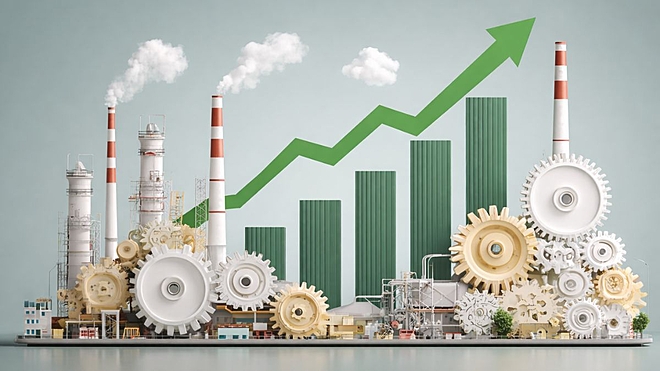 Aditya Roy/AI-Generated Image

Summary: Not all growth stories are built to last. Some look exciting on the surface but struggle to turn expansion into steady profits. This piece looks at where durable industrial growth really comes from, and why the most reliable compounders often sit far from the spotlight.
Every market cycle produces its share of growth stories. New themes emerge, large capex announcements grab attention, and select companies dominate investor conversations.
Yet over time, many of these stories fail to deliver. Revenues rise, but profits lag. Margins look impressive briefly, only to fade. Capital keeps getting reinvested, but returns struggle to compound.
This disconnect explains a growing sense of investor fatigue. Growth is not scarce. Sustainable growth is.
The difference lies not in how fast a business grows, but in how reliably that growth converts into earnings across cycles.
Why headline-led growth often disappoints
Popular industrial stories usually operate in visible end markets. They benefit from policy tailwinds, capex cycles, or thematic enthusiasm. Their order wins make headlines.
But visibility can hide fragility.
In many such businesses, growth relies on aggressive pricing, frequent customer churn, or continuous capacity expansion just to maintain momentum. When utilisation dips or costs rise, profitability comes under pressure.
The issue is not growth itself. It is where the company sits in the value chain.
Businesses closer to the end customer often face higher competition and lower switching costs. Those deeper in the system, supplying critical components, enjoy far greater durability.
Where durable industrial compounding actually comes from
Across industrial history, some of the most consistent compounders share three characteristics.
- They operate in low-visibility but mission-critical segments.
- They reinvest steadily in capacity and capability, not opportunistically.
- They prioritise delivery reliability and precision, not volume at any cost.
These companies rarely attract attention early. But they convert growth into profits far more consistently over time.
Their products may not be visible, but without them, the end system simply does not function.
A quiet but indispensable part of the value chain
Consider electric motors and generators used in railways, metros, power plants, industrial machinery, renewable energy installations, and large infrastructure projects.
While the finished equipment is visible, its performance depends on precisely engineered internal components. These parts determine efficiency, heat loss, vibration, and operating life.
Suppliers of such components operate deep inside OEM value chains. Their products are not discretionary. Reliability matters far more than headline pricing.
Once approved, these suppliers become embedded in customer programs for years, often decades.
Why switching suppliers is so difficult
Supplying critical motor and generator components is not a commodity activity.
Each component is customised to a specific design. Tooling is dedicated. Tolerances are tight. Qualification involves extensive testing under real operating conditions.
For an OEM, switching suppliers is not a procurement decision. It is an engineering decision involving redesign, testing, certification, and operational risk.
This creates high switching costs, long-term relationships, and strong pricing discipline. Volume growth follows end-market expansion, while margins remain resilient.
This is the foundation of durable industrial growth.
The importance of moving up the value chain
Another underappreciated driver of earnings quality is value-chain progression.
The strongest industrial compounders do not remain stuck at basic component supply. Over time, they expand into assemblies, precision machining, and integrated solutions.
Each step increases value per unit, deepens customer integration, and improves margin stability. Growth becomes less dependent on volumes and more driven by content per unit.
Crucially, this evolution tends to be gradual. Capacity is added when demand visibility exists. Capital is deployed incrementally. Execution risk remains controlled.
The result is growth that looks unspectacular quarter to quarter, but compounds steadily over years.
Why this phase matters for investors
In many such businesses, there comes a point where years of investment begin to show up clearly in financials.
Capacity creation slows. Utilisation improves. Higher-value segments contribute more meaningfully. Operating leverage kicks in.
At this stage, profits start growing faster than revenues, a strong indicator of improving earnings quality.
Yet markets often miss this transition. Near-term balance-sheet noise, working-capital pressures, or raw-material issues tend to dominate attention, even though the underlying economics are improving.
This gap between perception and reality is where opportunity often emerges.
What the numbers typically reveal
An execution-led industrial business entering this phase usually starts to show the following pattern:
| Metric | Investment phase | Earnings upcycle |
|---|---|---|
| Revenue growth | Moderate, steady | Sustained, visible |
| EBITDA margin | Stable | Gradual expansion |
| PAT growth | In line with revenue | Faster than revenue |
| Capex intensity | High | Moderating |
| Return on capital | Suppressed | Improving |
This is not driven by pricing heroics or cyclical spikes. It is driven by utilisation, mix improvement, and operating discipline.
Why valuations often lag fundamentals
Despite improving earnings quality, such businesses are rarely expensive early.
Markets tend to extrapolate visible risks as structural. Customer concentration, raw-material constraints, and leverage look intimidating in isolation.
In reality, many of these risks are visible, monitorable, and time-bound. They delay value recognition rather than impair long-term economics.
This creates a window where valuations remain reasonable even as earnings durability improves.
Who this opportunity is meant for
This is not a story for investors chasing quick re-ratings.
It suits those who understand that:
- Compounding takes time
- Earnings quality matters more than excitement
- Businesses embedded in long-cycle demand often surprise on the upside
It also requires patience through periods when the story feels dull and the stock remains volatile.
The quiet risk of ignoring such businesses
The biggest risk here is not short-term volatility.
It is waiting for the story to become obvious.
By the time these businesses attract widespread attention, much of the value is already reflected in prices. Recognition tends to follow execution, not precede it.
Want to know which company fits this profile?
We have recently identified one such low-visibility industrial business that is entering this exact phase, where years of disciplined investment are beginning to translate into stronger profitability and improving returns on capital.
The name is not obvious. The narrative is not flashy. But the numbers are starting to change.
To understand which company this is, why it matters now, and how it fits into a long-term portfolio, explore the full recommendation inside Value Research Stock Advisor.
Reveal the Stock
Disclaimer: This content is for information only and should not be considered investment advice or a recommendation.
For grievances: [email protected]
Ask Value Research 

 New episodes every Friday













 New Process Alert
 Seems like you've uploaded a wrong QR code. Please upload the QR code downloaded from MF Central platform.


