 Widely read:


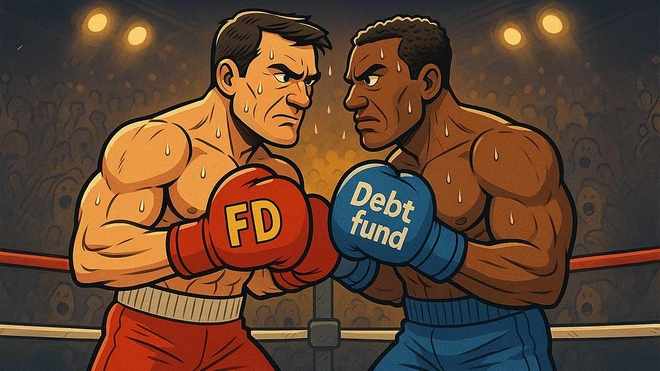 Nitin Yadav/AI-Generated Image

Summary:Think FDs and debt funds are taxed the same now? Think again. The tax rate may be identical, but the timing isn’t. And that subtle difference could cost you lakhs. Discover how a small shift in strategy can help your money grow smarter. Log in to read the full story. Fixed deposits feel safe, predictable and reassuring. For many investors, they’re the default option for preserving capital and earning steady interest. But what if your FD is quietly eroding your returns, not because of the bank, but because of the taxman? Since April 2023, debt mutual funds and FDs are taxed identically, based on your income slab. That wasn’t always the case. Until March 2023, debt funds enjoyed a key advantage: if you held them for over three years, your gains were taxed at just 20 per cent after applying indexation. This significantly reduced the tax bite. But that benefit is now gone. From April 2023 onwards, all gains—whether short or long term—are taxed as per your slab. So, yes, the tax rates are now the same. But one crucial difference remains: when the tax gets applied. The hidden difference: When you pay tax FDs: Taxed every year Interest from FDs is taxed annually, even if you don’t withdraw it. So, your money gets taxed before it can compound fully. In effect, the taxman takes a cut every year. Debt funds: Taxed at exit Debt funds only attract tax when you redeem. Until then, your returns grow uninterrupted. It’s like giving your money a longer runway before the tax drag ki

 New episodes every Friday








 New Process Alert
 Seems like you've uploaded a wrong QR code. Please upload the QR code downloaded from MF Central platform.


