 Widely read:


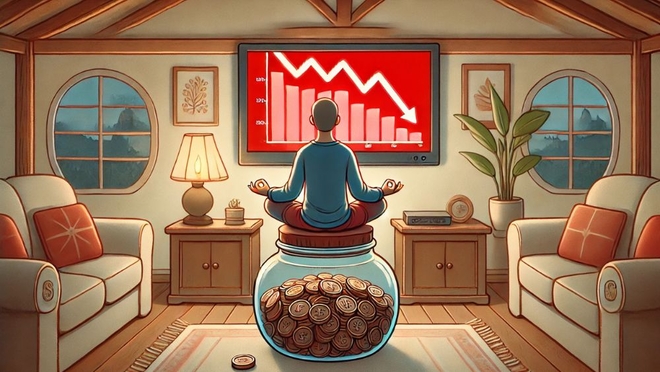


As I write this, the Sensex is down nearly 2 per cent today, with a single-day drop of over 1,400 points. After reaching peaks in September 2024, it shed almost 15 per cent from its highs. Notably, it's still in the green over a one-year period. The experts, predictably, have explanations aplenty.
Some blame President Trump's aggressive 25 per cent tariffs on Canadian and Mexican imports and the additional 10 per cent levy on Chinese goods. Others point to the strengthening US dollar and rising Treasury yields, which have hit 4.8 per cent. These have triggered significant foreign capital outflows - over Rs 27,889 crore from Indian equities so far this year, following a massive Rs 1 lakh crore exit in the last quarter of 2024. The depreciating rupee, now past 87 against the dollar, has only compounded these worries.
Suggested read: Keep calm and invest on
The financial media, always hungry for dramatic narratives, frames each market decline as if it were a gripping soap opera, complete with victims, villains, and plot twists. Every percentage point drop comes with fresh analyses of how Trump's trade war will reshape the global economy or how FII outflows signal a fundamental shift in India's investment landscape.
What's remarkable isn't the market's movement - markets have always moved up and down - but the consistency with which these movements trigger the same predictable cycle of expert commentary and investor anxiety. If you've been investing for over a few years, you might experience a peculiar sense of déjà vu with each market correction. It's like watching a movie you've seen a dozen times before, yet somehow still getting anxious about how it will end.
Suggested read: The great moderation: Volatile headlines vs the steady reality
I've been writing about this phenomenon for years. Yet, each time markets tumble, my inbox fills with messages from worried readers asking essentially the same question: "Is this time different?" The short answer is no. The slightly longer answer is still no, but with historical context.
Since the 1990s, the Indian markets have weathered the Harshad Mehta scam, the Asian financial crisis, the dot-com bubble, the 2008 global financial meltdown, demonetisation, the COVID-19 pandemic, and countless other "unprecedented disasters." Disciplined investors who maintained their regular investments have created substantial wealth. The key wasn't sophisticated market timing or expert predictions - it was simply showing up consistently and refusing to be swayed by the crisis du jour.
Suggested read: It's (not) different this time too
This isn't to dismiss investors' real anxiety when they see their portfolios declining in value. In the short term, that anxiety is natural, even rational. Your brain correctly perceives a loss, and loss aversion is hardwired into human psychology.
The challenge isn't to ignore your natural emotional responses - nearly impossible - but rather to create an investment approach that accommodates those emotions while preventing them from driving your decisions. This is why SIPs have proven so effective for many investors. They remove the emotional decision-making component, turning investing into a mundane, regular habit.
Suggested read: SIP maths vs psychology
For those who have already accumulated substantial portfolios, ask yourself: has your fundamental investment thesis changed? If you invested in quality businesses or funds based on their long-term prospects, have those prospects materially changed, or are you simply reacting to price movements?
The second question is whether your time horizon has changed. If you're investing for goals decades away, today's market movements - no matter how dramatic they seem - are noise in a much longer signal. Responding to that noise by selling quality assets at depressed prices is the financial equivalent of taking antibiotics for a common cold - ineffective and potentially harmful.
What's most remarkable about successful long-term investors is not what they do but what they don't do. They don't obsessively check their portfolio values during market downturns, seek expert opinions to validate their anxiety or disrupt well-considered investment plans based on temporary market conditions. In essence, they've mastered the art of beneficial inattention.
So when you see those red numbers on your screen, perhaps the most valuable thing you can do is close the tab, put down your phone, and go for a walk. The market will still be there tomorrow, but your anxiety might not be - and that absence of anxiety, more than any clever investment strategy, might be the most valuable financial asset you can cultivate.
Also read: Don't worry, be happy
Ask Value Research 
 New episodes every Friday











 New Process Alert
 Seems like you've uploaded a wrong QR code. Please upload the QR code downloaded from MF Central platform.


