 Widely read:


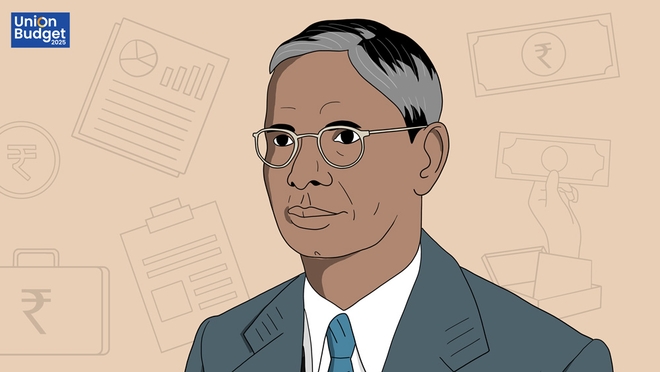
On November 26, 1947, R.K. Shanmukham Chetty, India's first finance minister, stood before the nation to deliver more than a financial statement. The first Union Budget of independent India was a lifeline for a country ravaged by partition, struggling with communal violence, and sheltering millions of refugees. Beyond its modest numbers, this Budget was a bold declaration of India's resolve to rise from its tumultuous beginnings and lay the foundation for a self-reliant, united, and prosperous nation.
A moment of historic transition
As India emerged from the shadows of British rule, the socio-economic landscape was one of stark contrasts: boundless potential versus immediate crises. Partition had torn apart the fabric of the subcontinent, resulting in a chaotic migration of nearly 15 million people, widespread communal violence, and fractured industries.
The first Union Budget, covering August 15, 1947, to March 31, 1948, was drafted amidst this upheaval. It was not merely a financial exercise; it was an act of nation-building. Chetty, in his speech, expressed cautious optimism, stating, "India's economy is more balanced than most countries, and her natural resources and financial strength will enable her to rise."
Partition's economic shadow
Chetty's speech vividly described the economic disarray caused by partition:
- Migration crisis: Millions of refugees poured into India, fleeing violence with little more than the clothes on their backs. The government allocated Rs 22 crore for their relief and rehabilitation - a staggering sum at the time.
- Resource division: India retained industrial dominance, while Pakistan took a larger share of agricultural resources. The complementary nature of the two economies had been disrupted, creating long-term uncertainties.
Despite these challenges, Chetty emphasised that cooperation between the two nations was essential to safeguard the economic interests of their citizens.
A modest financial blueprint
The Budget was pragmatic rather than ambitious, given the circumstances:
- Revenue and expenditure: Revenue was estimated at Rs 171 crore against an expenditure of Rs 197 crore, leaving a deficit of Rs 26 crore.
- Defence spending: Rs 92 crore (nearly half the total expenditure) was allocated for defence, reflecting the ongoing communal tensions and the reorganisation of armed forces.
- Focus on food security: Chetty highlighted food security as a top priority, noting that India had imported over 10 lakh tonnes of food grains for Rs 42 crore. He called for agricultural self-sufficiency to reduce dependency on imports.
To address the deficit, Chetty proposed minor adjustments, including higher export duties on cotton. He avoided imposing additional taxes, recognising the hardships faced by the common man.
India in 1947 was a paradox. Politically, it was a sovereign democracy taking its first steps, yet socially, it was reeling from the trauma of partition. The communal violence that accompanied independence had not only claimed countless lives but had also decimated trust between communities. Economically, the severance of ties with Pakistan left a void in industries like textiles and agriculture.
The British-era financial framework was still in place, making it hard for the government to adjust or manage its spending and finances freely. Yet, this Budget attempted to craft an economic identity distinct from colonial priorities, rooted in self-reliance and inclusive growth.
Echoes of today
The 1947 budget resonates even now, offering lessons in resilience and unity. Consider the refugee crisis then and how India's social welfare systems today, like Pradhan Mantri Awas Yojana (PMAY) and Mahatma Gandhi National Rural Employment Guarantee Act (MGNREGA), continue to uphold the vision of inclusive development. Similarly, the focus on food security in 1947 mirrors ongoing government initiatives like the Pradhan Mantri Garib Kalyan Anna Yojana.
An enduring legacy
Chetty concluded his speech with a powerful appeal for unity: "The disciplined effort of all Indians is needed to realise our destiny as a leader in Asia and take our place among free nations." This Budget was not just a financial statement; it was a declaration of intent - a promise to build a self-reliant, prosperous India. From the ashes of partition, it charted a course toward a democratic and resilient nation-state.
As we analyse modern Budgets, it is worth reflecting on the extraordinary challenges faced by the architects of independent India. Their vision of a self-sufficient, inclusive, and united country continues to guide the nation's economic trajectory.
Embark on the journey of "Blueprints of a Nation"
This is just the beginning of our exploration into how the Union Budget has shaped India's destiny.
Read the next chapter: The 1973 Black Budget: India's bold economic leap
Stay with us as we explore the history of the Union Budget and its role in shaping India's economic story since independence.
Disclaimer: This content is for information only and should not be considered investment advice or a recommendation.
For grievances: [email protected]
Ask Value Research 

 New episodes every Friday








 New Process Alert
 Seems like you've uploaded a wrong QR code. Please upload the QR code downloaded from MF Central platform.


