 Widely read:


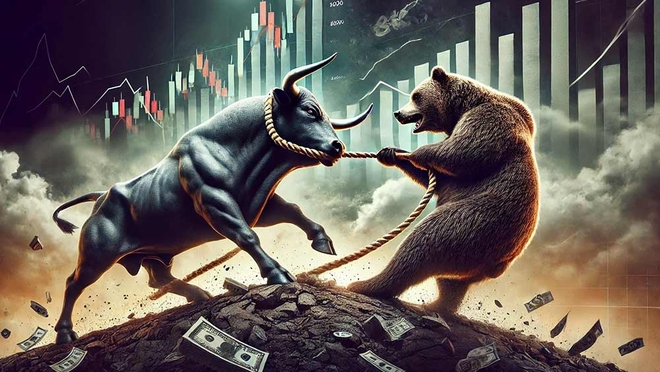
Few voices in the world of investing command as much cachet as Howard Marks does. As the co-founder and co-chairman of Oaktree Capital Management, Marks has not only navigated the complexities of global markets but also distilled his learnings into profound and practical wisdom. His memos, often eagerly awaited by seasoned investors and novices alike, are considered required reading for anyone looking to make sense of the market's ebbs and flows.
Marks' deep understanding of market cycles—born from decades of navigating booms, busts, and everything in between—has made him a beacon of clarity in a noisy financial world. His insights are tools that empower investors to recognise patterns, manage risks, and seize opportunities. Below, we have laid out his framework for decoding market cycles as explained in one of his lectures.
The psychology behind cycles
"Why are there cycles?" Marks asks. "Because economies and markets are made up of people, and people have feelings." Marks explains that cycles are less about mechanics and more about human behaviour. Optimism, euphoria, and greed push markets to unsustainable highs, while fear, pessimism, and despair drag them to crushing lows.
Excesses and corrections
At its heart, a market cycle is a story of excesses followed by corrections. Marks points to periods when stock prices far outstripped the intrinsic value growth of the companies themselves. "The value of companies may grow six, eight, or ten per cent a year on average. But in the 1990s, the S&P 500 appreciated 20 per cent a year." Such optimism causes the market to reach excesses.
The result? Excesses then lead to inevitable corrections. "Companies anticipating high demand might overbuild factories, resulting in a glut of inventory. Earnings disappoint, factories close, workers are laid off, and growth slows—or even reverses".
Key drivers of excesses
Marks identifies three primary drivers behind market excesses:
- When optimism runs high: Excessive optimism causes prices to rise beyond their fair value. Marks notes that this excitement results in the fear of missing out trumping the fear of losing money, blinding investors to risks. He puts it succinctly, "If I could know only one thing about an investment, it might be how much optimism is priced into it."
- When risk aversion vanishes: Risk aversion makes investors exercise caution, demand a margin of safety, and conduct rigorous analysis, Marks points out. But in euphoric markets, risk aversion disappears and gives way to recklessness. "'The more risk I take, the more money I make,' becomes the prevailing mindset that often precedes a crash."
- When capital is abundant: When too much money chases too few opportunities, the result is "bidding wars" that drive prices to unsustainable levels and bring prospective returns down, Marks remarks.
The anatomy of a market cycle
Marks breaks market cycles into four distinct phases:
- The upcycle: It's when fundamentals improve, earnings rise, and optimism drives prices higher.
- The top: At this point, prices peak, returns diminish, and risk reaches unsustainable levels.
- The downcycle: Then comes the inevitable fall. In this stage, fundamentals begin to deteriorate, earnings fall, and fear drives investors away.
- The bottom: Here, prices hit rock-bottom, offering "'ultra-high" prospective returns, yet fear keeps most investors on the sidelines.
"At the bottom, prices are attractive, but psychology is at its lowest," Marks observes. "Most investors can't move forward."
Positioning for success
Marks' teachings are easily summed up in his own words—"understanding cycles and human behaviour is key to investing success". He reminds us that by recognising optimism, risk aversion, and capital availability, investors can navigate cycles and avoid being swept up in the extremes of euphoria or despair. You can find his insights in more detail in his lecture.
Before you leave
With the right guidance, navigating market cycles becomes less daunting. This is where Value Research Stock Advisor comes in. Our proprietary advisory tool equips investors with meticulously researched stock recommendations and ready-to-invest portfolios, made to stand firm against market fluctuations.
By leaning on such expertise, you can turn market hiccups into stepping stones toward long-term wealth creation. Subscribe to Value Research Stock Advisor today and take charge of your financial future.
Also read: How to hunt 'gorillas' of the market, according to Utpal Sheth
This article was originally published on January 07, 2025.
Disclaimer: This content is for information only and should not be considered investment advice or a recommendation.
For grievances: [email protected]
Ask Value Research 
 New episodes every Friday











 New Process Alert
 Seems like you've uploaded a wrong QR code. Please upload the QR code downloaded from MF Central platform.


