




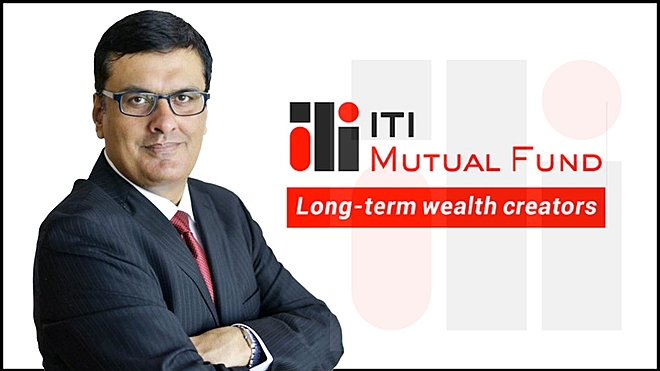


A commerce graduate, Rajesh Bhatia spent his undergraduate days immersed in library study sessions and tea break discussions. It was during one such break that his interest in financial markets sparked. Bhatia recalls that one of his friends "put all the financial accounting and business concepts I had studied in college very creatively into practice. I thought this was an interesting way to look at businesses and also make a lot of money". This set him on a path to understanding businesses and setting foot into the financial markets.
Throughout his distinguished career, Bhatia has worn many hats—from managing portfolio businesses to co-founding long-short and long-only equity funds and later overseeing proprietary investments.
Under his leadership, several ITI Mutual Fund's equity schemes have shown impressive performance over the past year. The ITI Smallcap Fund ranks second among 33 small-cap schemes, while the ITI ELSS Tax Saver and ITI Multicap funds are third in their respective categories.
In this interview, Bhatia discusses the factors contributing to these funds' outperformance and outlines the robust processes in place to ensure consistent returns and effective risk management.
Your career in the equity markets spans three decades. What lessons from those experiences shaped your approach to fund management and influence your current role?
I realise that my foundation years were the most important because the initial years shape your investment philosophy and, more importantly, temperament. Of course, you can develop skills over time, but you must learn quickly to have a good temperament. I started my journey with very successful private investors who actually believed in researching companies and thinking about them from a long-term perspective. Therefore, I was fortunate to be surrounded by individuals who dedicated their entire time to conducting thorough investment research. The first lesson I learned was about the magic of compounding.
The second lesson focused on developing stock selection skills - which is a powerful driver of returns. It encompasses identifying companies with an ability and opportunity to grow substantially over a long period of time. These companies usually also had traits of good capital allocation, effective management and fair valuations. So, we realised that stock picking is an extremely important component in helping with the power of compounding. I also realised that the cycle of fear and greed made opportunities cheap and expensive and had to be taken advantage of in the stock-picking process.
The final learning is avoiding the permanent loss of capital, which can destroy the power of compounding. I'll give you an interesting story. During the internet boom phase, one of my friends invested Rs 2 crore in a company; later, those investments went up to Rs 50 crore during the internet bubble. However, when the bubble burst, the value of his investment dropped to Rs 1 crore, resulting in a loss for him. So, I think a permanent loss of capital can jeopardise the power of compounding. The most important lesson in equities, as I said, is that if you compound over a long period of time and find good stocks, you can really become rich.
Over the last 30 years, the equity markets have undergone significant changes. Looking back, what differences do you see in the market?
Three decades ago, there was only the Bombay Stock Exchange (BSE). It was a closed system with no transparency. Investors never knew what price your stockbrokers bought the share at. The brokerage fees ranged from 2 per cent to even higher at that time. The BSE displayed corporate results on its board, requiring us to physically copy them; there was no digitisation of information. But today, there is a democratisation of financial markets. Television screens and websites quickly display a company's results. There is transparency; now, people know what they are buying and what the brokerage charges are.
The markets have also been institutionalised. Earlier in the 1980s and 1990s, stock brokers and few investors were the only people who understood markets. Only a few communities participated in the stock markets. But today, it's a nationwide issue; we at ITI Mutual Fund get money from the nooks and corners of the country. People are experiencing the power of capital growth through mutual funds and betting on systematic investment plans (SIPs). There is discipline in their investments, and I think the huge change that has taken place over the last 30 years is all for the better.
How is managing retail money (mutual funds) different from managing hedge funds or AIFs?
It's a very interesting question. Mutual funds are more retail-oriented, and money is far stickier. Compared to sophisticated investors, retail investors have a tendency to think long-term and build wealth. They desire consistent performance. Nobody wants an outstanding return in one year and a very depressed performance in the next. So, I would say that those are some of the distinguishing features of the retail money/mutual fund market.
How would you define yourself as an investor? What kind of stock or situation excites you?
Today, India is on the cusp of being one of the fastest-growing economies in the world and is poised to become $8-10 trillion in the next few years. Therefore, I prefer businesses that can seize the multi-year growth potential in India, are managed efficiently, possess strong execution skills, and generate profits. I would be interested if I could secure such a business at a price that does not fully capture the potential upside. I'm not saying it should be available at 15 P/E, but the valuation has not captured the multi-year upside opportunity. These are my happy situations because I know that once I make that decision, I can sit on it and take advantage of the wealth opportunity that comes with it.
When and what kind of stock becomes a compelling buy for you?
In the world of equity investments, many investors say that we only buy franchises or growth opportunities. However, we don't like it that way; we want to buy "mispriced securities", which can come in any form, whether growth or value. Sometimes, it can be steady-growth companies; other times, it can be fast-growth companies or dividend-yielding companies. The idea is that the opportunity should be compelling, and stocks should have a low downside and fairly good equity upside. A few years ago, market participants believed that substantial wealth creation could be possible by investing in consumer franchises because they have strong moats. People justified 80 P/E for such stocks. But what happened later was most of the stocks in that category underperformed. So, it became a valuation risk rather than a business risk, and that's why you underperformed as an investor.
Remarkably, public sector enterprises, previously shunned by most market participants, experienced significant growth. You could find mispricing in, say, public sector banks, which had gone through a 10-year cycle of writing off all non-performing assets (NPAs) and were ready to move on with low credit costs and expanding margins. Markets provide these opportunities from time to time, and when there are such mispricing opportunities, we are more than happy to participate.
Several of the funds, such as the Midcap, Smallcap, Multicap, and ELSS funds, have seen sharp improvements in their performance. What are the key reasons behind this?
Around 2022, the new management took over, and we hired a new set of fund managers, bringing fresh perspectives to the fund management process. Currently, there are six fund managers, and they are an experienced team. The average experience of the fund manager at ITI Mutual Fund would be over 20 years, so we built up the new team. We also established a strong process to ensure consistent returns and good risk management. The process stipulated that we would refrain from aggressive cash or sector calls. Instead, we will focus on stock picking. We defined risk management in terms of the quality and composition of the portfolio; that's more granular, but there are risk measures that we have taken to ensure that the quality of the portfolio always remains healthy. Therefore, we have implemented robust processes and effective risk management, in addition to having a highly experienced team. That's why we have done quite well across our products.
The portfolios are well diversified across industries, be it autos, banks, non-banking financial companies (NBFCs), or capital goods, among others. So, having such a broad composition of sectors has certainly helped us. We have achieved a fair level of diversification while maintaining a focus on stock selection. Therefore, I would argue that no single sector has significantly impacted our overall performance. There has been a slight emphasis on capital goods and public sector enterprises for the past two years, but that's because we saw value there, and we have benefited enormously from that wave.
You have Zomato across three key funds; what makes you so confident about the stock or company?
I can't comment on any specific stocks. However, given our country's high internet penetration rate, sectors such as food delivery and quick commerce present excellent opportunities for investment. We anticipate growth in these sectors over the next few years. These are the oligopoly businesses. Business economics are improving; companies have become fairly disciplined towards their path to profitability and have reached a certain scale. So, if we find a company that brings value to the customer, has good execution capabilities, and innovates on a continuous basis, there's a large runway of growth.
Currently, finding value in the mid and small-cap spaces can be quite a task. Are there specific sectors or industries where you see potential value today?
India is currently in a bull market, and we are in the early stages of an economic cycle. That said, recent market run-ups have made valuations more expensive. But we are in a capital expenditure-driven cycle that is going to last for seven to 10 years. I'd like to give an example from the power sector. We are currently living in a world of artificial intelligence (AI), and if AI continues to grow, we will need a significant number of data centres. To run those data centres, we will need power. Electric vehicles and the electrification of all villages require power. As a result, capital expenditure in the power sector must rise sharply in the next decade. Experts estimate that India will likely spend around half a trillion dollars on power infrastructure alone. So, this is a multi-year opportunity. Yes, the valuations have become a little expensive. But if you extend your time horizon, a lot of these opportunities are still going to make money for you.
Also read: Meet Cheenu Gupta, the coder who became a Rs 37,000 crore fund manager
Ask Value Research 
 New episodes every Friday

 New Process Alert
  Seems like you've uploaded a wrong QR code. Please upload the QR code downloaded from MF Central platform.


