


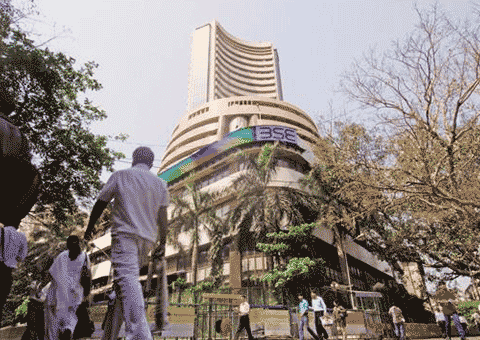
Nearing the end of two years of rule by the Narendra Modi government, the stock markets appear dispirited. The S&P BSE Sensex is well below the heights it soared to in March last year. The euphoria that accompanied the coming of the Modi government to power in May 2014 has long faded. The high, perhaps unreal, expectations from the central government have been tempered.
Or have they? As any fund manager will be the first to tell you, it's all a matter of relative performance. With global markets so integrated nowadays, no individual market can be immune to trends elsewhere. What we have to look at, in order to judge the attractiveness of a market, is its performance relative to others.
Seen from this perspective, the India premium in the markets is alive and well. Investors' faith in the ability of the present government to deliver remains robust.
A look at the accompanying chart will tell the story.

The chart compares the MSCI India Index with the MSCI Asia ex-Japan Index (which shows how India has performed among markets in the region) and the MSCI World Index (a gauge of the performance of developed country markets). All indices have been re-based to 100 as on 1 January 2014.
Let's look at the trajectory. Notice how the distance between MSCI India and the other indices slowly widens as the markets factor in a Modi win in the May 2014 general election. At the beginning of June 2014, with a new government in the saddle, the re-based MSCI India was around 117, while both MSCI Asia ex-Japan and MSCI World were around 104. The difference between the Indian index and the rest was around 13 percentage points.
This gap continued to widen and by the end of 2014, MSCI India was around 22 percentage points higher than both the other indices. By March 2015 that difference had gone up to almost 30 percentage points, as India benefited immensely from the sharp drop in oil prices. By September that year, as China tottered and money fled back to developed markets, the difference between MSCI India and MSCI Asia ex-Japan continued to be around 30 percentage points, but the gap between MSCI India and MSCI World was whittled down to around 20 percentage points. The chart shows how MSCI World started outperforming MSCI Asia ex-Japan.
And now, as on 25 April, using this yardstick, the India premium is around 17 percentage points over MSCI World and around 26 percentage points over MSCI Asia ex-Japan. That is more than what it was in June 2014. While there remains a substantial gap between India and Asia ex-Japan, the World index has been performing better on account of the strengthening of the US economy, while funds have also flowed to Europe on hopes of a recovery there.
In short, the India premium in the equity markets may have lost a bit of its lustre, but it remains very shiny in the eyes of global investors.
In arrangement with HT Syndication | MINT
Ask Value Research 

 New episodes every Friday


 New Process Alert
 Seems like you've uploaded a wrong QR code. Please upload the QR code downloaded from MF Central platform.


