





Some of the main worries about life after retirement are healthcare costs and being able to meet expenses, finds a study by DBS. Overall retirement wellness index in India was at 69 points, with health having a slightly stronger impact than social and financial aspects on successful retirement. Across the three aspects, Indians are more prepared on the health aspect. Among the six cities in the study, respondents from Delhi were most prepared for retirement (75 points), while those from Kolkata were the least prepared (58 points). In terms of gender, women showed higher levels of preparedness (72 points) versus men (66 points), while those in the higher age group of 50-60 years did better, though marginally, than the 40-49 years group.
The survey was conducted using quantitative online interviews during the 7-24 November 2015 period. The sample size was 1,004-with 538 men and 466 women; 642 respondents in the 40-49 years age group and 362 in the 50-60 years age group, from Delhi, Mumbai, Bengaluru, Chennai, Hyderabad and Kolkata. Those with personal income of over Rs.1 lakh or assets under management of Rs.30 lakh were considered affluent; 322 respondents were from this category and 682 were from the mass or emerging affluent category.
The ability to afford their medical cost emerged as the top concern among Indians when they retire. Further, 1 in 3 were not sure how to estimate health care costs during retirement. Having to dip into savings to cover these costs was also a cause of worry. Respondents were also unsure of which type of insurance to buy to be able to cover healthcare and medical expenses.
Those from Hyderabad and Delhi were the most confident (78 points each) in terms of being prepared for health related issues. But respondents from Kolkata (64) and Chennai (70) were the least prepared.
Retirement ready
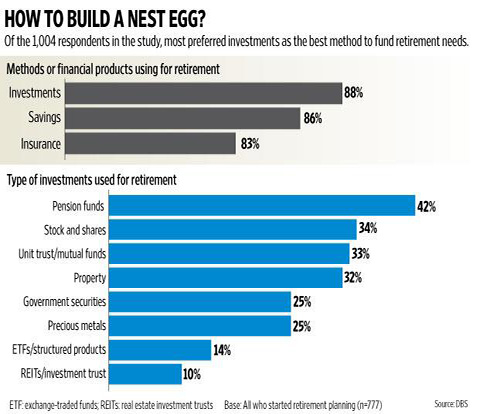
Among those who participated in the study, the average age at which they started to plan for retirement was 40 years. And to build a corpus, they set aside 26% of their monthly income to prepare for retirement at 61 years of age.
Confidence levels were high but actual preparedness did not meet the same levels. More than 70% participants said they were confident of their ability to pursue a comfortable retirement while another 62% are confident of ensuring that their savings and investments are able to cover them fully during retirement. But the estimates about how much would be needed per month after retirement seems to be on the lower side.
In arrangement with HT Syndication | MINT
Ask Value Research 
 New episodes every Friday

 New Process Alert
  Seems like you've uploaded a wrong QR code. Please upload the QR code downloaded from MF Central platform.


