 Widely read:


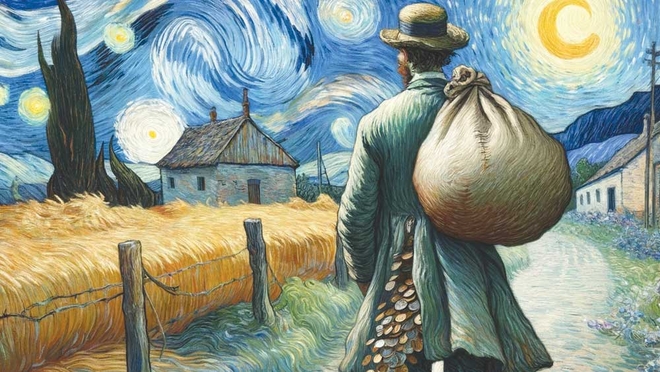
In the previous part of the story we established that the markets will always be crazy. However, this is actually good news - we ought to be glad that it is crazy. If they were sane, there would be no way of generating outsized returns. Think about it. A non-crazy - or efficient - market, would mean every bit of public information about a company would be correctly reflected in the share price. Investors would have realistic expectations and no one could make outsized returns. So you need markets to be crazy. You need market participants to behave irrationally and make mistakes. Even Howard Marks (a successful fund manager who is also a great writer about investing) agrees with us. He says, "The best opportunities for investment returns aren't created by companies, exchanges or paper securities; they result from the mistakes other investors make." We are loyal followers of Marks. His writings are a great learning medium. We think that he has taken the mental model of inversion to heart. Rather than talk about what investors should do and why they succeed, Marks almost always focuses on the inverse. That is, why investors fail to generate returns. So, we went back to the annals of time and looked into a few of his memos to figure out the mistakes investors make. I know vs I don't know In a memo written in May 2004, Marks stated that over time he has realised that the investment community is divided into us and them. The "them" (or the "I know" school) refers to investors who think it is important to know the future direction of economies, interest rates, and markets for investment success. Moreover, they are happy to share their views about the future with others. They are also confident that they can achieve outsized returns. The "us" (or the "I don't know" school) is the complete opposite. Students of this school generally believe that you can't know the future. More importantly, they believe that you don't have to know the future. To achieve investment success, you need to accept that you can't know the future and do your best. The table 'Which side do you belong to?' highlights some of the traits the investors in both camps exhibit. Can you guess which side Marks belongs to? One of the traits of the "I know" school is a foolproof way to lose money - short-term fixation. The market regulator Securities and Exchange Board of India (SEBI) released a report in January 2023 that backs this notion. Let's take a peek. The lure of the quick buck SEBI analysed the performance of individual traders in the equity futures and options (F&O) segment. The sample size consisted of individual traders who traded through the top 10 brokers in the equity F&O segment in FY22. These accounts formed nearly 67 per cent of the individual client-level turnover in the NSE equity F&O segment during FY22. So,
This story is not available as it is from the Wealth Insight January 2024 issue
Read other available articlesAdvertisement

 New episodes every Friday








 New Process Alert
 Seems like you've uploaded a wrong QR code. Please upload the QR code downloaded from MF Central platform.


