 Widely read:


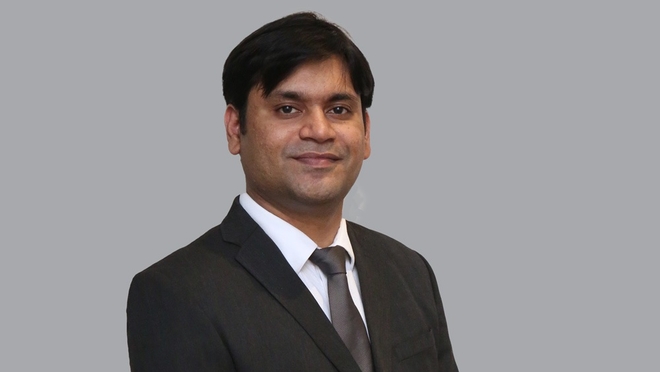
Ashutosh Bhargava oversees eight funds and heads the equity research division at Nippon India Mutual Fund. Of them, he is the lone fund manager of Nippon India Passive Flexicap FoF and Nippon India Quant Fund. In this interview, Bhargava describes his investment philosophy and emphasises that although valuations are crucial, quality of growth is more important. He further highlights how overpaying does not result in better medium- to long-term performance. Here's an edited transcript of the interview: You started working here in 2008. How do you remember the period of the global financial crisis (GFC)? It was a challenging environment. Just before the GFC, we believed that markets could only go up. Some had forgotten that markets are cyclical, risk management is a virtue, and leverage is a double-edged sword. More importantly, I realised that fear is a powerful emotion to encounter. But if you are patient, you will safely reach the other side. Hence, being more patient, being more systematic, and trying to remain more level-headed were the virtues that helped me navigate the tough times in 2008. We have seen time and again that even after the GFC, there have been periods where we encountered this kind of volatility, so these learnings have helped. How do you balance running four sizeable funds and managing a team of analysts? It's a blessing to have the opportunity to lead the whole team and our research and contribute whatever learnings I've had over the last 18 years. Most of our investments rely on research, our investment team's backbone. Once I began managing the team and tracking stocks with the analysts who are experts in their domain, my learnings helped me express those ideas to the various funds that I co-managed. Thus, we are being more bottom-up in our approach. Also, having a dual role is a complementary kind of thing where learning from research helps fund management. At the same time, having one foot in the shoes of the fund manager ensures that we understand the gaps in the research that we need to correct over time. What is the focus of your research? How big is your team? In terms of research, we don't marry into a particular style. Our approach is more balanced. So, we are neither too much on the growth side of the spectrum nor heavily tilted towards a value investing style. In investing, we prefer a type of growth at a reasonable price (GARP), which we also encourage at a research level. We cover more than 470 stocks and have a 15-member research team. The approach is straightforward; we must identify the right sectors and companies. We look at factors like the opportunity size, competitive environment, management quality and governance. A lot of focus is on numbers and being ranked on estimates from a profit and loss (P&L) and cash flow perspective. Our message to our research team members is to be thorough in numbers but have a medium to long-term timeframe and avoid getting swayed by shorter-term volatile effects. Can you describe your overall investment philosophy and approach to managing equity portfolios? We are style-agnostic and rely heavily on data and insights to identify stocks. The focus is more on growth and earnings than just valuation. The valuations are essential, but the quality of growth comes much before valuations for us. So, this is a broad framework. Then, we look at the edge of most of those individual companies' managerial competence, governance, etc. For smaller companies, we also place a greater emphasis on management quality. It's a mix of everything, but more focused on bottom-up rather than top-down and more evidence-based. We give everyone enough freedom to express themselves because every sector has nuances. No one size fits all, but the b

 New episodes every Friday











 New Process Alert
 Seems like you've uploaded a wrong QR code. Please upload the QR code downloaded from MF Central platform.


