 Widely read:


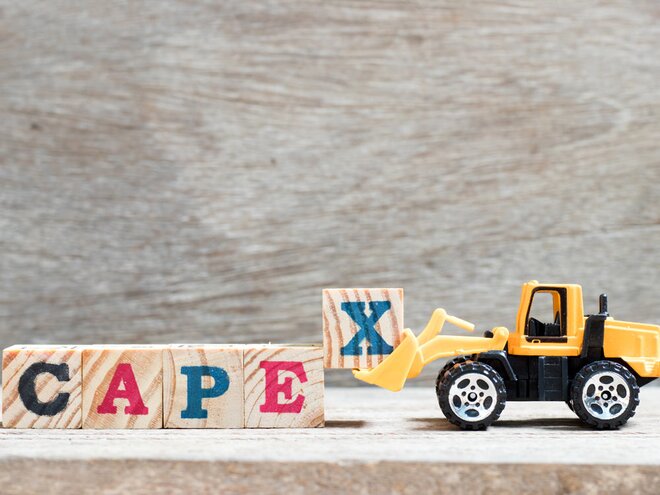
Capital expenditure is the money spent on installing new capacity such as plant and machinery. Naturally, an increase in capex is positive as it indicates higher revenue and profits in the future. However, capex doesn't immediately yield results; its effect is felt over time. For instance, Reliance Industries incurred significant capital expenditure for its telecom venture Reliance Jio during the last five years. Jio has now started yielding results for its parent. Since capex cycles are long term in nature, they require patience on the part of investors before they come to fruition. However, capex alone doesn't mean much unless it's put in perspective. Capex as a per cent of revenue is a better indicator rather than just looking at capex in isolation. This is because increase in capex as per cent of total revenues indicates the growth orientation of a company. The table below lists companies whose capex as per cent of revenue has risen at least four times in the last five years. Rising capex Company name Net capex as % of revenue FY18 FY17 FY16 FY15 FY14 Reliance Industries 17.6 25.1 17 16.8 13.8 Bharti Airtel 30.2 38.5 28.4 22.7 20.3 Glaxosmithkline Pharma 13.4 8.9 7.3 4.8 1.2 Havells India 17.4 3.9 2.8 2 2.1 Syngene International 25.6 25.5 26.6 23.7 13.9 SRF 23 13.3 12.6 10.7 19.7 NLC India 41.1 38.1 21.5 20.2 33.6 Dilip Buildcon 19.3 19.1 4.1 37.7 28 Asahi India Glass 16.6 7.9 5.7 3.4 4.4 Chambal Fertilisers 32.7 11.6 7.1 2 1.6 Hindustan Copper 23.5 7.7 29.9 15.3 5.9 MOIL 15.7 10.8 15.6 11.5 7.5 Granules India 26.5 22.4 11.9 11.4 24.2 Himatsingka Seide 32.6 18.7 6.6 -0.5 2 Brigade Enterprises 48.2 18.2 44.6 16.7 16.3 Prakash Industries 16.2 10.5 7.6 6.2 8.2 Sanghi Industries 28.1 7.5 6.1

 New episodes every Friday


 New Process Alert
 Seems like you've uploaded a wrong QR code. Please upload the QR code downloaded from MF Central platform.


