 Widely read:


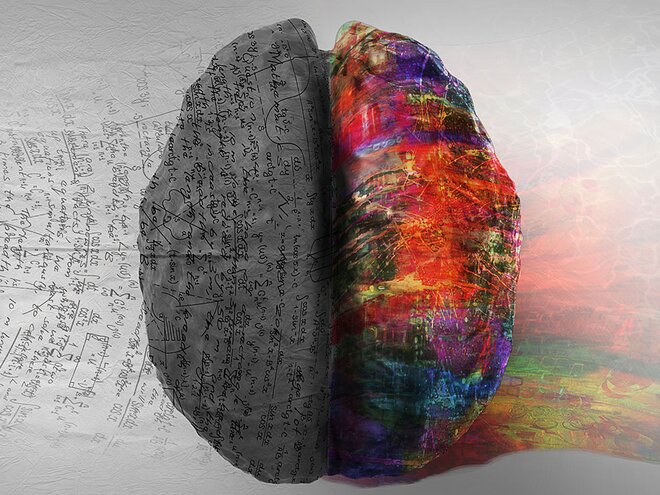
"Too large a proportion of recent 'mathematical' economics is mere concoctions, as imprecise as the initial assumptions they rest on, which allow the author to lose sight of the complexities and interdependencies of the real world in a maze of pretentious and unhelpful symbols." - John Maynard Keynes The world once believed that the Earth was flat, some 400 years after Newton had discovered gravity. It was logically possible to deduce that if there is gravity and there is water on Earth, then it could only be spherical. Yet we believe only what we can see, so it took Galileo's telescope to look at other planets in the Solar System, before people came round to the view that it was possible that the Earth was round. The point is that bad ideas have often taken over our collective understanding, and have stayed there despite evidence to the contrary. Such ideas are all over the place. In religion and in sociology, they oppress women to control their sexual availability. In politics and in nationalism, they send millions to their deaths to feed someone's ego. In sciences, they provide tools that fool you into believing that you have a parachute so that you jump from the airplane, only to discover that you only have an umbrella. Economics is one such 'science'. In fact, the very claim to be a science is itself a bad idea. A science sits on an underlying bed of axioms and 'facts' that don't change when they are observed. By this criterion, economics is not even a science. Its application is not constant, changing according to the condition
This article was originally published on October 28, 2017.

 New episodes every Friday


 New Process Alert
 Seems like you've uploaded a wrong QR code. Please upload the QR code downloaded from MF Central platform.


